






Are you struggling to build a robust digital reputation of your tourism business? It’s quite a challenging task, especially in today’s hyper-connected tourism landscape. A glossy brochure, an attractive flyer, or an annual travel planning checklist is no longer enough to define a travel brand’s credibility. How the brand appears and is perceived online does! Accurately implemented effective tourist business reputation strategies can be the ultimate engine for your travel brand’s reputational growth.
Do you know that 90% of travellers are more likely to be influenced by online reviews and 72% of new tourists won’t prefer booking a trip from a travel agency until they read reviews?
Thus, every star rating, comment, feedback, and shared photo equally contributes to your travel business’s online reputation. In this article, we will explore a complete strategy guide on mastering tourism business reputation management and driving more bookings through a stellar digital image.
What Is Tourism Business Reputation Management?
It refers to the proactive process of analysing, building, monitoring, and managing a travel business’s digital image – how the business appears and is perceived across digital platforms. Your travel brand’s online reputation has a direct influence on tourists’ booking decisions, customer trust, and revenue growth.
5 Core Pillars of Tourism Business Reputation Management
In today’s competitive travel industry, managing a tourism brand’s digital image is a non-negotiable strategy. The following are five core pillars of tourism business reputation management.
- Multi-platform Monitoring: This requires travel brand owners to track online reviews, ratings, and brand mentions. They must focus on popular digital channels, such as Google Reviews, TripAdvisor, Trustpilot, Online Travel Agencies, and social media platforms.
- Consistent Response: This is about responding to guest reviews on time, at least within 2-3 days. Tourist businesses must maintain an empathetic yet professional tone while responding and avoid public arguments.
- Active Review Generation: Now, they must prioritise collecting authentic feedback from tourists by using automated emails, SMS, or QR codes.
- Operational Intelligence: Tourist business reputation strategies require you to treat customer reviews as data, not just complaints or criticism. This data allows them to identify strategy gaps and recurring issues.
- Policy Enforcement: Last but not least, if reviews are damaging or violate policies, travel businesses flag and report that malicious feedback.
Why Must Tourism Businesses Implement Reputation Management Strategies?
When you implement an online reputation management strategy for your travel business. It directly impacts your customer trust, search visibility, and overall business revenue. Modern tourists mainly rely on the experiences of others before they book any service from a tourism brand.
Thus, your online reputation is an asset to your travel business!
Here’s why you cannot ignore implementing tourist business reputation strategies.
1. More Service Bookings and Revenue Are on the Way!
Your travel brand’s positive reviews play the role of word-of-mouth recommendations. According to a 2026 WiserReview study, 88% of consumers trust online reviews just as much as personal recommendations. No matter whether you run a travel agency or own a boutique hotel, your potential customers tend to know about the experience of your satisfied customers before they consider your offerings.
Effective reputation management strategies allow you to generate more positive reviews from your satisfied tourists and guests and build a glowing online review profile.
2. It’s Time to Build Customer Trust & Brand Credibility.
When you follow a strategic approach in managing your travel business reputation, it requires you to put everything in front of your prospects. So, no room for secrecy, no matter whether it’s about handling negative tourist reviews or! A positive reputation across multiple online platforms helps travel businesses establish a credible brand image.
Your potential tourist clients will definitely feel safe regarding their investment in your tourism offerings once they come across your flowing digital image.
3. Win Over Your Rival Travel Brands.
Proactive tourist business reputation strategies make your brand stand out in today’s competitive tourism industry. How? Let’s understand this in detail!
Imagine you and your local competitor brand offer similar travel packages. If you implement effective reputation management strategies, it helps you earn a great star rating online by actively responding to every review you receive. On the other hand, if your rival brand doesn’t prioritise reputation management strategies, they may fail to earn a higher rating due to unaddressed reviews.
4. Complaints Can Be Transformed into Opportunities!
A crisis can occur at any time, sometimes without any prior sign! A negative tourist experience can lead to online criticism or a legitimate complaint. But a strategic approach requires travel brands to professionally address those complaints without any aggressive reaction. When you respond and address a negative review, it shows that your travel business cares about its customers’ opinions. It also demonstrates excellent customer service to future clients.
Do You Know? Complaints are a perfect resource for customer data insights regarding areas that need to be improved about your travel brand.
5. Say Yes to More Local Visibility & More Foot Traffic!
The more reviews your travel business receives, the better reputation you can build online, and the more visible your brand will be across search engine results pages (SERPs). Google prefers businesses with high-quality, genuine customer reviews and ranks them higher for local user queries.
Effective tourist business reputation strategies help you gain better visibility on Google Maps and other online travel platforms, such as TripAdvisor. Collecting positive reviews on TripAdvisor helps you seamlessly drive organic foot traffic to your physical store and more local bookings through effective TripAdvisor review management strategies.
10 Essential Tourism Business Reputation Management Strategies You Can’t Ignore
In this section, we will explore the top 10 tourist business reputation strategies. Implementing these strategies can help you build a stellar digital image for your travel business.
Hiring professional brand reputation management services can help you ensure the success of your tourism reputation strategy plan.
Strategy 1: Capture Every Guest Story across the Travel Landscape
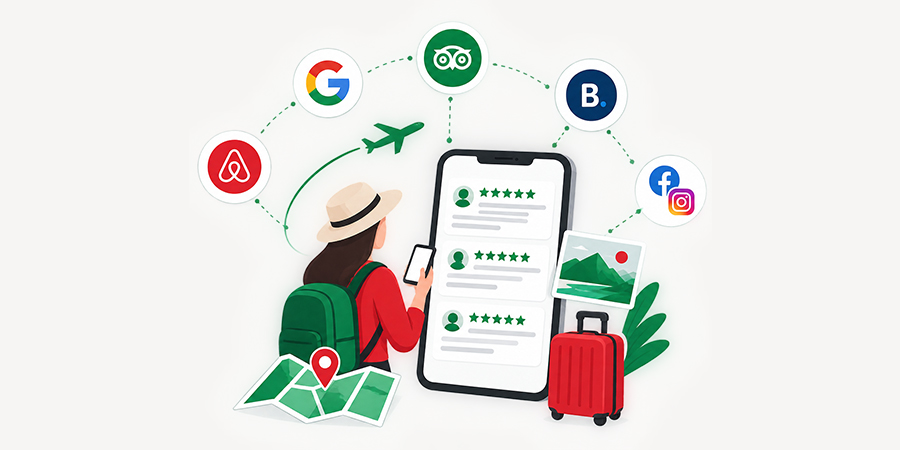
This first strategy is to monitor your tourist reviews across all online platforms. If you run a travel company, you shouldn’t avoid a single platform when collecting reviews from your tourists or guests.
Now the question is –
Which platform should you prioritise while examining your travel brand’s overall digital reputation?
You can monitor Google Business Profile, TripAdvisor, Booking.com, and Yelp to know what your customers are saying online across these popular channels. For social media, you can track Facebook and Instagram to follow the discussions and reviews regarding your travel company.
An easy way is to set up automated real-time alerts or employ dedicated tourism business reputation management software to get notified of every new review posted online. Apart from these, you can follow these techniques –
- You can spot recurring patterns and concerns related to your tour packages, pricing, accommodation, booking system, transportation, and customer service.
- Studying these changes and trends in your review data can help you find areas for improvement.
A Pro Tip! Travel businesses can create weekly or monthly review-monitoring checklists. They can also assign separate responsibilities to their team members so that they know who needs to respond to reviews and when.
Strategy 2: Encourage Every Tourist to Drop a Genuine Review

Generating authentic and positive reviews is one of the most effective tourist business reputation strategies. The foundation you can build for your travel business reputation is through ensuring a steady stream of genuine customer reviews.
But consistently generating genuine reviews is a tricky game! Let’s resolve it with some effective strategies.
- Make sure that you ask for reviews at the perfect time. You must request feedback immediately after a tourist has completed a trip, hotel stay, or tour – this encourages them to share feedback more, as memories of their trips are still fresh in their minds.
- When you request a review, personalise the message based on the specific trip, tour package, or hotel stay. You can craft tailored emails. SMS and messaging app requests.
- You can also print QR codes of your review platforms on brochures, welcome cards, receipts, and other types of departure materials.
- Make the review submission process quite easy so that tourists can seamlessly access the correct review platform just by clicking on a link.
- You can ask satisfied customers to talk about the specific aspects of their trip experiences in their reviews.
Strategy 3: Master the Art of Responding to Tourist Reviews
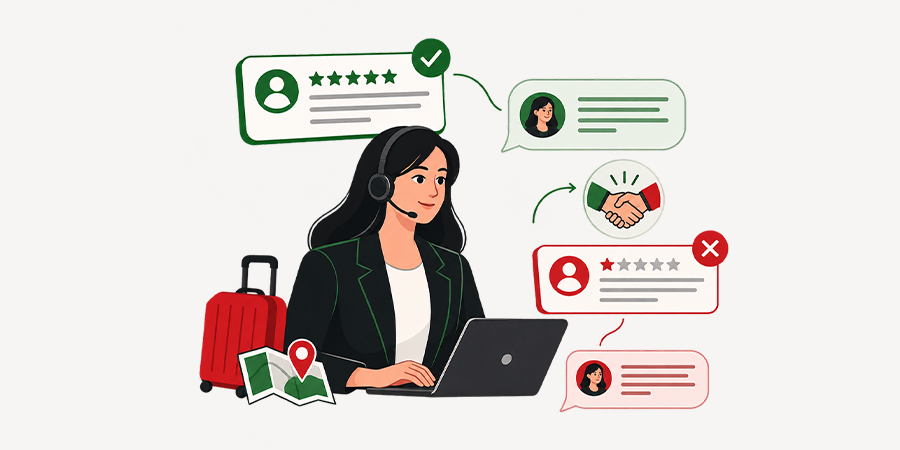
Responding to a positive review is not at all like responding to a negative review. You need to follow a strategic approach to master the art of responding to every kind of review – this is one of the most significant tourist business reputation strategies.
Review generation can only be successful if you respond to those reviews professionally without engaging yourself in any public argument.
For Positive Reviews,
You need to thank the tourists while responding to positive tourist reviews. Additionally, you must mention specific details from the tourists’ experiences while responding.
For Negative Reviews,
You must acknowledge negative reviews and apologise if necessary. For example, a trip gets cancelled due to a sudden natural calamity, and your travel brand starts to get negative reviews. Instead of just informing your tourists regarding the cancellation, you must explain the steps you will take to address the issue (when you’re rescheduling the trip or whether you’re planning for a refund).
Such initiatives often help resolve complex complaints and provide opportunities to regain the customer’s trust.
If nothing works, you can prioritise seeking professional help. For example, if your travel company is struggling with damaging reviews on the TripAdvisor platform, you can hire tailored negative TripAdvisor review removal services.
Strategy 4: Put Your Travel Brand on Everyone’s Social Media Feed
Tourism is a highly visual industry. If you understand the social media game, you can use the platforms to shape public perception, showcase your tourist experiences, and engage with more followers or prospects.
Here’s how you can use social media to manage your travel brand’s online reputation.
- Effective tourist business reputation strategies require you to maintain accurate, active, and consistent profiles across popular social media platforms, such as Facebook, Instagram, and TikTok.
- On your social media business pages, we suggest that you share authentic photos, videos, behind-the-scenes content, destination guides, and yearly tour packages.
- You can also share your tourists’ tour experiences, their reviews and testimonials on your social media profiles. But always take permission from the tourists before you use their reviews for promotional purposes.
- Travel companies must respond to comments, mentions, and DMs they receive on social media pages.
A Tip for You! To make the process seamless, you can create a weekly social media calendar where you can plan and schedule your promotional content along with testimonials and travel guides.
Strategy 5: Top-notch Experiences for the Tourists are Non-negotiable!
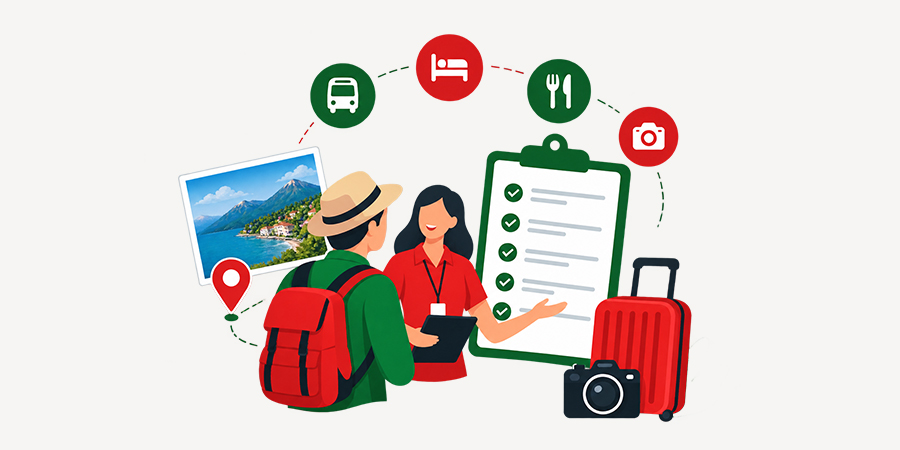
Before you start generating reviews from your satisfied customers, you must ensure that you deliver the best possible tourism services. The better the experience, the better the opportunities to collect positive reviews – it is what our tourist business reputation strategies say.
Operational quality, active review oversight, and proactive communication are three main pillars of ensuring positive reviews.
To ensure the best quality for your tourism services, you need to –
- You need to maintain top-notch quality of your tourism offerings, regarding tours, transport, pricing, packages, and customer touchpoints.
- Assign your employees to certain segments, such as safety, communication, hospitality, and problem-solving.
- Always maintain ultimate transparency while providing any information to your tourists or guests, be it trip cancellation news or anything about itineraries and facilities.
- Keep the processes of trip booking, payment, cancellation, and refund seamless to provide peace of mind to your tourists.
- Always set realistic expectations regarding travel timings, weather conditions, local customs of destinations, and the like.
Strategy 6: Prioritise Your GBP Profile & Online Listings for Maximum Impact
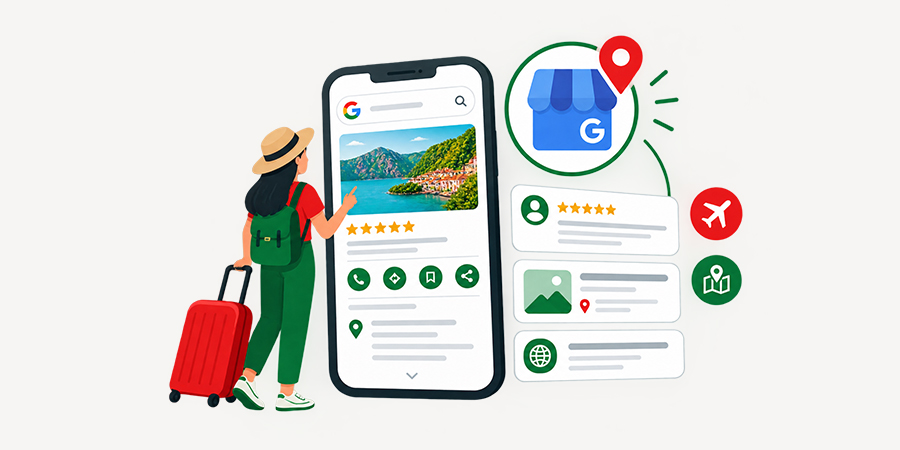
Your travel business’s online listings must be extremely accurate and consistent across all the platforms. When you accurately frame your Google Business Profile and other online listings, it helps travellers easily find, assess, and contact your business.
By implementing your personalised tourist business reputation strategies, you should always keep your travel business name, location, and website, along with its operating hours, accurate and consistent across all the platforms. Don’t forget to add details regarding your tourism services, tour packages, booking links, and amenities to your GBP profile to provide enough information.
Key Point to Remember:
- Always select a relevant business category, your service areas, and updates about seasonal offers, new trip packages, and other trip information.
- You can also consider adding high-quality images of your covered destinations, your guests’ images, their memories, facilities, and experiences to your GBP listings.
Travel companies must focus on auditing their major business listing and update essential information if necessary.
Strategy 7: Ultimate Transparency & Authentic Communication is the Key!

A tourism business reputation depends largely on the level of transparency and honesty they maintain. One of the major tourist business reputation strategies is maintaining transparency and genuine communication with your tourists and guests.
Honest communication is the key to success in today’s modern tourism sector. The more honest your travel brand appears across the web, the more trust its customers show in investing their money, time, and expectations in its services.
To maintain ultimate transparency and honesty through your tourism services –
- You must publish clear pricing, facilities, additional charges, and amenities offered.
- Always have clear discussions about trip bookings, cancellation policies, refund process, and rescheduling guidelines with your tourists.
- If you own a website, you can update these details on it through advertisements and descriptions.
- Always explain possible concerns during a trip, such as lack of transportation, weather changes, local restrictions, and seasonal conditions before a trip starts.
Strategy 8: Excel in Handling Negative Tourist Reviews
Complaints and negative reviews can be your most valuable resource to know where you have gone wrong and what you need to improve in your plan for tourist business reputation management.
How you address and handle negative reviews helps you determine your travel business’s online reputation. Handling negative tourist reviews is not a cakewalk! It’s one of the trickiest tourist business reputation strategies. You need to respond strategically to negative reviews from your tourists.
Here are some tips and tricks for travel companies to effectively handle negative reviews –
- Outline a list of issues that keep coming through the negative tourist reviews, such as pricing, communication, safety, transportation, punctuality, cleanliness, or staff behaviour.
- You can identify systemic triggers to investigate the underlying cause of a sudden spike in negative reviews.
- You can organise regular meetings with your staff and managers to discuss the recurring issues.
- Always try to create a defined complaint-resolution workflow and assign your staff accurate roles and responsibilities.
- Inform the reviewers about the steps and actions you’re planning to take to resolve the issues.
- Complaints are not always criticism! You can learn from them and improve your tourism services and related offerings.
For example, an Airbnb can receive negative reviews online. The management can either address that feedback professionally and try to resolve the issue. If nothing works, they can hire professional Airbnb review removal services from a reliable agency.
Strategy 9. Collaborate with Travel Influencers – Leverage their Voice & Digital Reach for Promotion

Proactive tourist business reputation strategies require you to partner with popular travel influencers and utilise their voice. Selected influencer partnerships can improve your tourism business reputation by boosting its visibility and strengthening its brand credibility in today’s competitive tourism industry.
Strategic collaboration with travel influencers helps you expand your tourism brand’s digital reach. A 2025 Expedia study has claimed that 73% of travellers’ trip booking decisions are more likely to be encouraged by social media influencer recommendations.
To ensure a seamless partnership with social media travel influencers –
- Travel businesses can consider partnering with relevant travel creators, hotels, destination businesses, tourism boards, local guides, and restaurants.
- You must initiate the partnerships well before you actually need their help to promote your tourism offerings.
- Before you choose the right influencer to collaborate with, you must evaluate their audience relevance to your tourism business, engagement, content quality, and brand credibility. You shouldn’t just consider their follower count!
- When promoting your tourism services through social media influencers, you must clearly disclose your sponsored collaborations and other material connections.
- You must monitor the influencers’ audience reviews before you choose them for collaboration.
- Never incentivise or offer rewards to any influencer to share false claims about your tourist business.
Strategy 10. Understand Whether Your Tourist Business Reputation Strategies Are Working

Last but not least, you need to measure how well your tourism business reputation management plan is performing. Identifying whether your tourist business reputation strategies are working or not is crucial to refine your strategy and maximise the impact.
KPIs to Measure –
The following are some key performance indicators travel businesses must measure:
- Average ratings across major review platforms
- Online review volume and the proportion of recent reviews
- Average review response time and coverage
- Recurring complaints and customer sentiment
- Customer satisfaction score
- Number of new reviews every month
- Repeat-booking rate
- Complaint-resolution time
- Referral enquiries and bookings
A Tip for You! Travel businesses can prioritise building a simple monthly dashboard of online reputation metrics with customer service and booking data.
Top 5 Tools that Make Tourism Business Reputation Management More Seamless
Now that you know how you can effectively build and manage a stellar reputation for your tourism business, let us make the process a little easier for you.
No, you don’t need to do it all alone.
There are some helpful tools available online – you can employ those to maximise the impact of your tourist business reputation strategies.
| Reputation Management Tools | Features to Use |
| 1. Birdeye | ● Automated SMS review requests ● A centralised inbox for 250+ review and chat channels ● Offers prompt-level corporate audit trails and citation analytics |
| 2. Trustpilot | ● Verified customer review collection ● Directly displays real-time social proof on your booking site ● Sentiment insights to reduce tourists’ anxiety related to booking ● Professional Trustpilot review removal services help you take down damaging tourist reviews. |
| 3. TripAdvisor | ● Active online review collection ● Management centre analytics to track popular guest themes ● Direct booking integration to elevate search rankings |
| 4. Reputation.com | ● Cross-platform listing accuracy for Google Maps and search ● AI reputation scoring ● Post-visit survey automation to plug experience gaps |
| 5. Brand24 | ● Real-time social listening across web, video, and social channels ● AI sentiment and emotion analysis ● Instant negative review spike or crisis alerts for tourism campaigns |
What Tourism Businesses Shouldn’t Do: 5 Most Common Reputation Management Mistakes
Till now, we were talking about what travel brands must do to implement proactive tourist business reputation strategies. But making some silly mistakes can actually ruin all your efforts to build a robust tourism business reputation.
Below, we have enlisted 5 most common reputation management mistakes that travel brands often make – but they shouldn’t. Let’s have a look!
Mistake 1: Ignoring Negative Tourist Reviews
Strategically handling negative tourist reviews without engaging in any kind of argument is an art. If you leave negative reviews unaddressed, it can make your travel business appear careless and unbothered. On the other hand, it can make you look defensive if you aggressively respond to negative customer feedback. This can deter those tourists who read reviews before booking any tourism services.
Mistake 2: Overpromising while Underdelivering
Do you use heavily edited photos for your travel brand’s promotion? Or does your brand promise luxury amenities that it doesn’t even offer? If yes, it’s a huge mistake! Overpromising while you’re underdelivering tourist experiences can lead to disappointed guests, more refund requests, and low online ratings.
Mistake 3: Neglecting the Power of Social Media
If you run a travel business, let us tell you that you’re currently operating in a highly visual industry. Social media platforms like Facebook and Instagram offer you the space to attractively promote your travel brand offerings. If you’re ignoring the power of social media or your business page appears almost dead or irrelevant online, you’re missing out on major opportunities to attract more bookings.
Mistake 4: Buying Fake Reviews to Boost Online Image
Generating authentic online reviews is one of the most crucial tourist business reputation strategies. You should never consider buying fake reviews or incentivising your customers to share positive feedback just to boost your review profile. Travel review platforms like Google and TripAdvisor can easily detect fake reviews because of their unique algorithm. It can result in severe penalties and warning badges – even your travel brand’s online review profile can be banned.
Mistake 5: Not Planning a Crisis Communication Strategy
As a reputation crisis can occur at any time, having no communication strategy planned can get you into trouble. For example, if a chaotic, silent, or unbothered response is shared from your travel brand’s end during a crisis like a natural disaster, safety incident, or sudden trip cancellations, it can majorly damage your brand reputation. Thus, you must prepare a crisis communication plan well in advance.
Conclusion
In today’s hyper-digital tourism industry, you’re not only promoting flights, tour tickets, travel packages, and hotel rooms. You’re selling memories and dreams for the tourists. Thus, how your tourist business appears online – whether with a positive or negative reputation – plays a major role.
Effective tourist business reputation strategies are not a damage-control routine, but an essential and effective process to build and manage how your travel brand is perceived across digital platforms.
Our comprehensive guide on tourism business reputation management will definitely help you navigate the complex landscape. If you want to consider professional help, you can partner with a reliable online reputation management agency to seek their expert services.
FAQs
Here are some frequently asked questions and answers related to tourist business reputation strategies.
Q. 1 Which platforms should tourism businesses monitor for customer reviews?
Ans. Tourism brands must prioritise monitoring online and local directories, online travel agencies (OTAs), and dedicated travel review platforms. You can focus on Google My Business, Google Maps, TripAdvisor, Booking.com, Expedia, Trustpilot, and other social media platforms.
Q. 2 How can a travel agency start-up improve its online reputation?
Ans. A travel agency small business or start-up can build trust, monitor tourist feedback, and actively collect authentic reviews. They can also promote those reviews across online platforms to boost their online reputation.
Q. 3 How often should a tourism business monitor its online reputation?
Ans. A tourism business must prioritise monitoring its online reputation daily and weekly. For reviews and social media comments, you can monitor on a weekly basis. However, travel agencies must perform detailed performance reviews once a month.
Q. 4 How long does it take to improve a tourism business’s reputation?
Ans. If you implement proactive tourist business reputation strategies, it generally takes 4-8 weeks to see positive changes in your travel brand’s online reputation. On the other hand, you can witness a significant shift in public perception and compound results related to your travel agency’s online reputation within 3-6 months.
Q. 5 What role does SEO play in tourism business reputation management?
Ans. Strategic search engine optimisation shapes how your tourist clients perceive, trust, and find your travel business across the web. When you implement SEO. it helps you navigate your travel brand’s first impression across search engine results pages and AI rich snippets.

