






Imagine delivering top-notch services for your customers and building a stellar reputation online, but when your potential customers Google your brand name, are the search results desirable for you? A simple SEO optimization may not help your brand appear in the most positive light online, mostly because today, a brand’s reputation is synthesized in fractions of a second by AI algorithms, Google AI Overviews, and conversational search assistants. Implementing semantic SEO can help you build a strong reputation in today’s highly competitive digital world and proactively shape the digital narrative.
While traditional SEO involves stuffing target keywords into your web content to rank higher in search results, semantic search engine optimization is driven by machine learning and natural language processing, allowing you to optimize your brand content around topics, meaning, and user intent.
Wondering how you can leverage semantic search engine optimization to boost your brand reputation online? Welcome to the ultimate guide to semantic search engine optimization. In this comprehensive guide, we will explore how semantic seo can help you improve your online reputation and the strategies you must implement to achieve your brand reputation goals.
What Is Semantic SEO?
It refers to the practice of optimizing your brand’s online content around relevant topics and user intent rather than exact-match keywords. This optimization technique specifically focuses on the meaning, context, and relationships between different concepts. Semantic seo specifically helps AI-driven search engines like Google and ChatGPT to truly understand and rank your content higher in their search results.
- How Does Semantic Search Work?
Traditional search simply scans your online text content for isolated keywords, while semantic search engines work in a completely different process.
- Firstly, it translates the search queries and documents into mathematical representations.
- Secondly, it uses advanced machine learning models to plot these vectors in a high-dimensional space.
- Thirdly, it calculates the mathematical similarity between the user intent and indexed content.
- Fourthly, it re-ranks online search results based on the user’s location, context, and search history to surface the most accurate match.
Here is a detailed explanation of how semantic seo works for building and improving a brand’s online reputation:
- Natural Language Processing (NLP)
It is the AI engine that teaches computers to decode human communication nuances specifically. NLP performs multiple critical functions to understand the context of the content, instead of treating a search query just like a disconnected list of words.
- It analyzes the sentence structure and then phrases it to understand what the users have tried to accomplish through the content.
- It majorly resolves ambiguity by understanding the different meanings of the same word.
- It recognizes synonyms and conceptual phrases to understand which search query conceptually matches the content.
- Entity-Based Search
Semantic seo treats people, places, concepts, and things (which can be entities) as standalone data points rather than just text strings. Let’s have a look at how this works under semantic search engine optimization:
- It identifies the unique nouns and concepts in the search query by linking them across the online world.
- It catalogs the characteristics of these entities, along with their attributes and relationships.
- Topic Clusters and Knowledge Graphs
AI-driven search engines organize the internet by using topic clusters and knowledge graphs to connect related pieces of information with relevant search queries.
- What are Topic Clusters? This refers to how structured content is logically arranged, involving the ‘pillar page’ that broadly covers a topic, which is surrounded by linked ‘cluster content’ that dives into specific subtopics. This interconnected structure signals to search engines that a website possesses comprehensive subject authority.
- What are Knowledge Graphs? It is a vast database of interconnected facts that map out how entities relate to one another. So when someone searches, the engine directly pulls data from the graph to give you instant overviews or direct answers.
How Does Semantic SEO Benefit a Brand’s Online Reputation?
A study has revealed that AI assistants like ChatGPT and Gemini now receive 56% of global search volume.
Now you can imagine why it’s important for modern brands to consider optimizing their web content to rank for semantic or AI-generative search engines that prefer content that focuses more on meaning and user intent than on stuffing relevant keywords.
But now the question comes: how can semantic seo benefit your brand’s online reputation? In this section, we will talk about this:
- Builds Brand Authority through Contextual Relevance
The role of AI in reputation management is crucial; it helps your content be credible enough to be positively consumed by modern consumers. So does semantic SEO.
It protects and enhances your brand’s digital image by completely shifting focus from keyword implementation to content optimization for deep and conceptual meaning. It aligns the content with how NLP algorithms interpret the context and intent. In simple terms, semantic search engine optimization helps you control what people think about your brand online.
- Helps to Create Content that Demonstrates Expertise
Semantic search engine optimization requires you to create content that can target complete user needs and multi-step questions rather than just matching simple word strings. When you optimize your online content for semantic search engines, you need to prioritize writing authoritative articles that feature structured entity citations, trustworthy references, and verified author bios.
- Establishes Topical Authority within Your Industry
For ranking in semantic search results, brands need to group comprehensive content around core ‘pillar’ pages linked to specific and detailed ‘cluster’ subtopics. Then the broad and deep exploration of a content topic signals to the search engines that your brand domain is a definitive source of truth.
It also helps your content stand out from negative search results, as a highly comprehensive and interconnected content ecosystem makes it difficult for negative and third-party results to rank on page one of search results.
- Improves Brand Visibility across the Search Ecosystems
In the overall online search ecosystem, semantic seo helps brands improve their visibility. It ensures that users, as well as machines generating search experiences, can easily recognize your brand online.
- AI Search Engines
AI-driven search engines and large language models often surface answers based on their conceptual meaning rather than text matching. AI models evaluate how your business entity connects to industry terms and pull your content into a synthesized summary.
- Traditional Search Results
Semantic optimization requires you to optimize your content for broader topics. This practice helps your website naturally rank for thousands of related and long-tail semantic keywords. Other than that, it builds deep relevance that creates a stable SEO foundation for the content so that it can seamlessly survive the sudden algorithmic updates.
- Voice Search
When you optimize your content for semantic search engines, it specifically captures the conversational phrases that help your content rank for voice searches. The semantic formatting of the content helps the search engines easily extract your spoken-style content to answer the verbal user queries.
- Knowledge Panels
Semantic optimization requires you to use explicit Schema.org structured data that maps your brand’s relationships to your products, locations, and social profiles. As the websites that detail clear entity relationships are more likely to trigger a dedicated and official knowledge panel on Google, it also unifies the scattered brand mentions into one authoritative dashboard.
- Featured Snippets
When you optimize your content for semantic search engines, it structures your content and allows search engine algorithms to place your business directly at the top of SERPs. Additionally, it also uses semantic analysis to find the most concise and helpful section of your article to answer a question.
- Helps Search Engines Understand Your Business
Search engines no longer just match keywords to show perfect results of user queries; they map the relationships between concepts using natural language processing. Semantic optimization helps algorithms identify and contextualize your brand.
- Entity Optimization – It requires brands to define their businesses, products, services, and locations to rank in the Google Knowledge Graph, instead of just stuffing keywords in the content.
- Structured Data Implementation – It uses Schema Markup to provide explicit and machine-readable clues on the backend. Additionally, it ensures that the search engines never confuse your brand with unrelated concepts available on the web.
- Consistent Brand Information – Search engines use semantic analysis to find the most relevant, concise, and helpful section of your article to answer a user query.
- Enhances Brand Credibility
Do you know that most users search for answers, compare available options, and seek verification when researching a company online? Yes, you heard that right! They rarely search using strict keywords.
Semantic optimization ensures that your brand content addresses these real-world consumer needs through the following best practices.
- Publish In-Depth and Authoritative Content
It requires businesses to create comprehensive resources that can fulfill the user’s information needs and prevent them from bouncing back to the search results. You must focus on publishing detailed and authoritative content to showcase your brand as a knowledgeable resource in the niche market.
- Cover Topics Comprehensively
Semantic optimization requires you to group related web pages into topic clusters to showcase to the users and search engines that you, as a brand, perfectly understand the subject (that you have written) deeply. The content you have shared online must comprehensively cover the topic.
- Rank for Topic-Based Searches
Your content will naturally align with the user intent when you optimize it for semantic SEO. It will rank many related, long-tail user queries rather than just one specific primary keyword. And eventually, your brand content will become the go-to resource for the early-stage buyers and help you build positive brand awareness well before the transaction phase.
- Appear in Related Searches
Semantic optimization allows brands to dominate the ‘People Also Ask’ section on Google and AI summaries like AI overviews. It actually increases your website’s visibility and reinforces your brand’s online reputation as the industry leader in the market.
- Strengthens Your Brand’s E-E-A-T Signals
Search engines like Google rate content’s quality based on their E-E-A-T framework to evaluate the search results. This E-E-A-T framework stands for experience, expertise, authoritativeness, and trustworthiness. Semantic seo helps you build these pillars for your content by promoting clear and fact-based information.
- Experience – It requires you to showcase the first-hand insights, case studies, and author bios to prove your brand believes and offers what it discusses.
- Expertise – It requires brands to link the interconnected content to prove you, as a brand owner, have a deep understanding of your industry.
- Authoritativeness – It helps you position your brand as a leading resource in the market when multiple webpages are answering the same user query accurately.
- Trustworthiness – It allows you to provide a seamless and accurate experience that can easily build user trust, lower the bounce rates, and naturally achieve high-quality brand mentions and links.
Top 5 Semantic SEO Strategies to Build a Better Online Reputation for Your Business
Now that you know how semantic search engine optimization can benefit your business in building a robust online reputation, it’s time to reveal the strategies you must implement to build a strong online reputation for your brand.
Here is a quick semantic optimization strategy guide for your brand reputation online:
Strategy 1: Create Topic Clusters
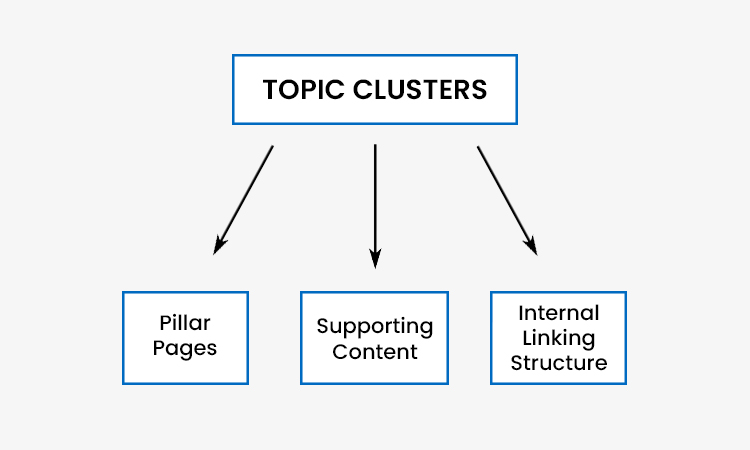
Firstly, you need to organize your website content into tight semantic themes to prove your topical authority to the AI-driven search engines and suppress the negative or irrelevant search results.
Below are the types of content you need to optimize for creating topic clusters:
- Pillar Pages
You need to create broad hub pages that can seamlessly cover your core business capability. These pillar pages of your website must provide even the most comprehensive overviews of macro topics. Always ensure that these pillar pages of your website signal your brand’s core operational expertise to the search web crawlers.
- Supporting Content
Now we will discuss the supporting content for your site. Ensure that these detailed and niche sub-pages of your brand website address long-tail variations. The content you have created must dive deep into specific user questions and subtopics. Additionally, it should mitigate the negative online narrative risks by populating the niche spaces.
- Internal Linking Structure
To optimize your internal linking strategy, you need to hyperlink and connect cluster pages and pillar pages. You hyperlink connecting cluster pages back to the central pillar. Additionally, you need to add context to the anchor texts that describe clear semantic relationships. It helps you describe and distribute ranking equity directly to your most critical brand assets.
Strategy 2: Optimize Your Content for Search Intent
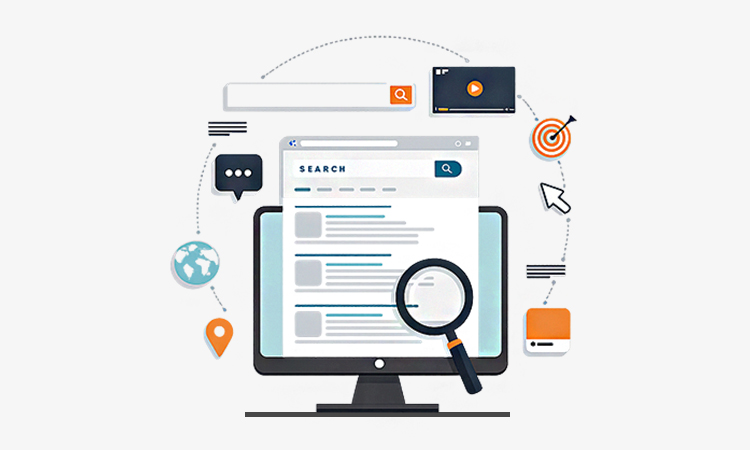
Now we will know how you can optimize your website content for the search intent. Do you know that reputation crises can occur when a brand fails to provide accurate answers to users’ queries?
Yes, the fact is true! Thus, you must align your content with intent to control what users see during different phases of their interaction with your brand.
- Informational Intent
When users have an informational intent, they are more likely to learn or solve an educational problem. You need to create ‘how-to’ articles and FAQ blocks to target informational user intent. It positions your brand as a helpful and trusted educator in the industry.
- Navigational Intent
Semantic SEO requires you to target a user’s navigational intent by optimizing your website’s clear brand-name pages, contact URLs, and store locators. Users with navigational intent often search for solutions to their navigational queries. Additionally, it directs the confused users to your web properties instead of third-party forums.
- Commercial Intent
Users with commercial intent tend to investigate options and try to look for solutions before committing. Brands need to publish comparison sheets, explicit product breakdowns, and transparent case studies to make their content rank for searches with commercial intent.
- Transactional Intent
There are also users who have transactional intent, as they want to buy, download, or subscribe. To meet their queries, you need to optimize your content by streamlining your product offerings, checkout steps, and clear pricing grids. You need to ensure that the positive transaction signals dominate the user queries around your conversions.
Strategy 3: Focus on Entity Optimization
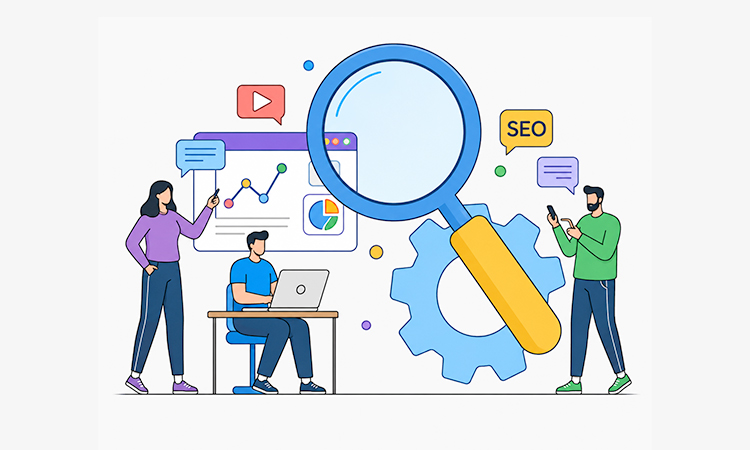
In the third strategy, you need to focus on the entity optimization of your content. Search engines like Google often use ‘Knowledge Graph’ to understand web content as a network of places, people, and things, rather than just a bunch of text.
- Brand Entity Development
Firstly, you need to develop your brand entity to match your web content with user queries and intent.
No matter how premium products and services you offer and how exceptional customer support you provide, if you don’t have a clean brand entity across the web, you may not be able to optimize your content for semantic search engines.
- Establishing a clear digital identity
To establish your brand’s clear identity across digital platforms, you need to define its core values, primary topics of authority, target audience, and more.
We suggest that you consistently align your web content with related industry entities to build a contextual depth for it. You can conduct thorough research on your niche industry entities to identify the most suitable one.
- Ensure Consistent Brand Information
Always ensure that your business information is accurately consistent across the website, social media profiles, online forums, Google Business Profile, and more.
AI-driven search engines validate your brand’s existence by cross-referencing your data across different platforms. Search engines validate your business’s existence by cross-referencing your data across different platforms. Don’t forget to add accurate NAP details, such as the name, address, and phone number of your brand, along with other operational details, to your online profiles. Check if these details are identical across these platforms –
- Website – For your website, you need to update the ‘About Us’ section as well as the ‘Contact Us’ page with verified information.
- Social Media Profiles – You should always maintain an active and uniform presence on networks that are relevant to your target audience.
- Business Directories – Brands need to register their business with accurate details on trusted local citation sites and directories.
- Review Platforms – You need to monitor and manage your online brand presence on popular industry-specific review sites as well, so that your customers don’t need to struggle to find your business page while sharing their reviews.
Strategy 4: Utilise Structured Data Markup
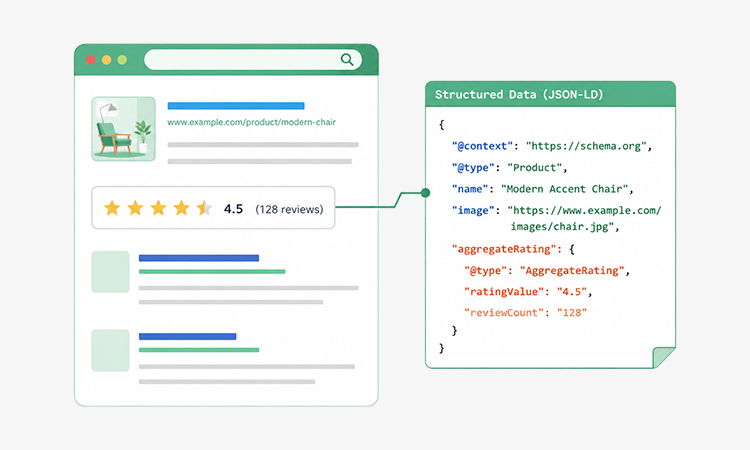
Another way to implement semantic SEO in your brand content is to use structured schema markup. It will transform your text content into machine-readable code, so that the search engines exactly understand what your content means. Schema markup makes your content more valuable for semantic search engines and featured snippets.
The following are the 5 major types of schema brands can consider implementing:
- Organization Schema
Implementing an organisation schema in your content will allow you to define your brand as a legal entity. It helps you add details like your brand logo, official name, corporate contact information, and social profiles.
- Person Schema
This is ideal for highlighting the founders, authors, managing department members, and other key experts within your business. Persona schema boosts your content’s E-E-A-T by connecting it with individual credentials, published works, expertise, and more.
- Review Schema
This specific schema adds star ratings to your online search results. For example, someone has searched your brand name on Google. If you have implemented a review schema to your content, the search results will show the online star ratings and reviews your brand has received from your existing and potential customers.
- FAQ Schema
Implementing FAQ schema allows your brand to directly answer common users’ search queries and increase your chances of capturing those queries on SERPs.
- Article Schema
This specific type of schema helps you to highlight news, blog posts, and editorial content. Implementing article schema allows search engines to effectively display the publication dates, authors, and featured images of the content.
Strategy 5: Create Reputation-Focused Content
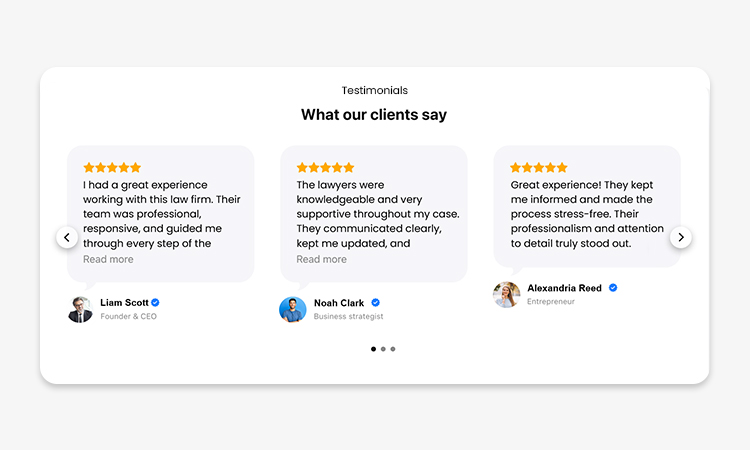
Now it’s time to create reputation-focused content to rank higher in semantic search results. Creating reputation-focused content can help you position your brand as a recognised entity in today’s highly competitive digital age.
This specific strategy allows search engines and AI-driven snippets to map your brand’s expertise, trustworthiness, and authority across online platforms.
Below, we have discussed the reputation-focused content brands can consider creating to target higher rankings in semantic search result pages:
- Brand Story Pages
Brands can create story pages on their websites to detail their foundation journey, mission, values, and core principles. This specific page strictly forms the foundational entity of your business for search engines, so that the search engines understand who your brand is and why you exist. It will help you connect your commercial brand goals with the people behind them. Thus, your brand must create story pages on its website.
- Leadership Profiles
Brand owners must highlight their expertise and real-world experiences of their executives and key team members. It will help brands connect with individuals associated with your brand and external platforms. Algorithms of search engines like Google help brands verify your team’s background, overall journey, mission, and vision to build strong entity trust.
- Customer Success Stories
Another reputation-focused piece of content you can add to your website is customer success stories. You can develop a separate and dedicated page on your website to promote your positive client testimonials. You can publish authentic client accounts that detail how your products, services, and other details have solved specific problems.
This is one of the narrative-driven pages where you can implement long-tail keywords and highlight tangible results your business delivers for its customers.
- Case Studies
These are more detailed client stories than standard testimonials. They break down the exact methodology, outcomes, and data of a specific project. You must develop structured and data-backed case studies to provide definitive proof of your brand expertise. Through these case studies, you can also serve as highly authoritative and linkable business assets.
- Industry Insights
Another reputation-focused content is industry insights that help you establish topical dominance. When you publish authoritative commentary on emerging trends, regulations, and challenges in your market, these industry insights showcase the active involvement of your brand in your industry by answering specific user intent queries.
- Press Mentions
When you highlight prominent press mentions across your online profiles, it showcases third-party validation. For this, you need to highlight the media mentions, such as articles, awards, interviews, and other external media. When you highlight these mentions on your website, it creates vital co-occurrence signals that search engines like Google often use to confirm your brand’s online reputation across the web.
5 Most Common Semantic SEO Mistakes That Can Harm Brand Reputation
Now that you have a clear idea of the strategies you need to implement to leverage semantic search engine optimization to boost your brand’s online reputation. But making certain mistakes can adversely impact your online reputation as well as ruin your reputation management efforts.
Here in this section, we will talk about the 5 semantic SEO mistakes that brands often make while implementing strategies for managing their online reputation:
Mistake 1: Keyword Stuffing
If you are forcefully stuffing exact-match keywords into your text, URLs, and meta tags to trick AI-driven search engines, you are making a big mistake. This malicious practice can create a robotic, unnatural reading experience for the users and severely harm your brand reputation. It will be quite easy for the users to immediately recognize spammy tactics. It can severely reduce your potential and existing customers’ trust in your brand’s reliability and professionalism.
The Fix: You can naturally integrate semantically related words, entities, and context-rich language to fulfill the user’s needs through your content.
Mistake 2: Publishing Thin Content
As a brand owner, you shouldn’t create pages on your website that lack substance. If the webpages have very little word count or provide no original value to the reader, it may ruin your semantic seo efforts. The majority of users expect a thorough and authoritative answer to their search queries. Content with a low word count often signals to the reader and the search engine algorithms that your brand majorly lacks expertise.
The Fix: You must prioritize creating comprehensive and high-quality content that thoroughly answers the query and outperforms your market competitors.
Mistake 3: Ignoring Search Intent
Brands often publish content that fails to match their actual goal, such as selling a product to a user who is just looking for a ‘how-to’ guide for a product. If your content doesn’t resolve a potential customer’s query,
Publishing content that fails to match the actual goal (e.g., trying to sell a product to a user who just wants to learn “how to” do something). If your visitors don’t find what they’re looking for, they are more likely to bounce. It often wastes the user’s time and frustrates them, damaging their online credibility.
The Fix: You need to identify the four common search intents: informational, commercial, transactional, and navigational. You must directly map your content to the specific stage of the user’s journey.
Mistake 4: Inconsistent Brand Information
While optimizing your website content for semantic search engines, many brands often keep their brand information inconsistent. If your business name, addresses, and phone numbers (NAP) are not consistent across your website, social media profiles, and local directories.
Inconsistent brand information often creates extreme confusion among your potential and existing customers. Imagine that one of your potential customers finds incorrect phone numbers or business hours online; they will certainly feel alienated and may choose your competitors over your brand.
The Fix: You must standardize your brand assets; you need to run an audit of your business information available across the digital platforms. This practice will help you identify any inconsistencies.
Mistake 5: Failing to Update Outdated Content
If you let your old articles, pricing pages, and blog posts be on your site without any regular review, you are making a huge mistake. Why? Let’s understand it in detail. For example, a visitor who needs modern solutions to a problem lands on an article published two years ago. The visitor is more likely to lose faith in your brand’s authority and reliability, as outdated facts and details can be misleading.
The Fix: We suggest that you audit your online content regularly. Firstly, refresh all the statistics, add new information, and fix the broken links, if any. Additionally, you must update publishing dates to maintain strong trust signals.
6 Best Tools of Semantic SEO for Reputation Management
Now we will talk about the best tools businesses can use to manage their online reputation by leveraging semantic SEO. Employing these tools can help you make the brand reputation management process more seamless and prompt.
Here is the list of the top 6 semantic search engine optimization tools for effective reputation management:
| Tools Name | Features to Use |
| SEMrush | An all-in-one SEO and brand monitoring toolHelps in tracking targeted brand mentions, reviews, and keywords across more than 40 directories Best for comprehensive competitor analysis, tracking search visibility, and AI review replies |
| Clearscope | AI-powered content optimization tool Helps you ensure your web content covers semantic subtopics and NLP-related entities that perfectly match the user intent Tracks if your brand is cited in modern AI platforms like ChatGPT and GeminiBest for enterprise-level content discoverability and optimizing pages for Google and AI. |
| Google Knowledge Graph | Ideal structured entity database Secures a knowledge panel that ensures users searching for your brand get accurate and verified information directly on the search results Best for controlling the ultimate ‘source of truth’ and claiming branded search results |
| InLinks | An entity-based SEO and internal linking automation tool Automates schema markup and builds semantically relevant internal links Builds deep semantic topical authority using your existing content inventory |
| Birdeye | An all-in-one local business review and customer experience software Automatically requests, collects, and manages online reviews from hundreds of platforms to boost local search engine rankings Transforms unstructured feedback into semantic data to identify customer pain points |
| ReviewTrackers | Ideal review analytics and customer feedback management tool Translates vast amounts of unstructured ratings and reviews into actionable sentiment data Best for multi-location brands that need deep and analytical insights into review trends and brand sentiment |
Conclusion
We know that semantic seo is not your regular reputation management strategy. The process is tricky but a non-negotiable one when it comes to making your brand rank for AI-driven search queries.
It’s not just about adding primary keywords throughout your content, but also about making your content optimised for user intent, meaning, and context.
We hope that our blog will help you understand why it’s so crucial for you to make your brand content optimised for semantic SEO to build a stellar reputation online and how you can implement this strategy seamlessly. If you want to seek professional assistance, you can consult with a renowned online reputation management agency for expert advice.
FAQs
Below are the trending frequently asked questions and answers related to semantic seo:
Ans. Yes, semantic search engine optimization is a highly effective strategy to remove negative perception from online sources. However, it doesn’t directly remove or delete the negative articles, but you can neutralize the search results by pushing them down the search engine results pages and replacing them with accurate and original content.
Ans. Semantic SEO helps AI search engines understand content not from the perspective of keywords but from the perspective of meaning, context, and relationships between concepts. It helps build the topical authority of content and search models and efficiently synthesizes, retrieves, and cites the content in Google’s AI overviews.
Ans. No, the concept of keywords is not dead in the semantic search landscape. But how we used to use the keywords in our content has completely changed. To optimize your content for semantic search engines, we don’t need to chase the exact-match phrases and stuff them into the text; rather, we optimize them for the topics and meaning to make them perfectly match the user intent.
Ans. Businesses can measure the impact of semantic search engine optimization on their online reputation by tracking the brand sentiment. It monitors the shifts from search engine results pages to AI-generated search results, such as rich results and featured snippets. Additionally, it also measures the suppression of negative content for branded search queries.
Ans. Semantic search engine optimization typically takes 3-6 months to show measurable results in search visibility. On the other hand, it takes 6-12 months to significantly shift broader brand reputation and establish deep topical authority.

