






Have you thought that the customer reviews you have earned with your hard work can only be accessed by your site visitors? But why limit your glowing reviews’ reach to just your direct-to-consumer storefront – your website? Review syndication allows you to distribute your reviews, star ratings, and visual testimonials to multiple third-party retail giants and commerce platforms and promote your expertise.
Making your customer feedback and testimonials appear on third-party sites where products are sold can help you to reach a broader audience base as well as establish a positive online reputation for your brand. Additionally, it builds customer trust and brand credibility.
Do you know that displaying customer reviews can increase conversion rates by as much as 270%?
To leverage the full potential of customer reviews collected, you must prioritise syndicating them to grow your brand by driving exceptional sales. In this blog, we will talk about how you can proactively syndicate your collected customer reviews. Let’s have a look!
What Is Review Syndication?
It refers to a strategic process of collecting online reviews and ratings on one platform, specifically a brand’s own direct-to-consumer (DTC) site and distributing that feedback, testimonials, and success stories across various major retail sites, third-party commerce platforms, and social and search channels where the product is sold.
- How Does Review Syndication Work?
Now let’s explore how the process of customer feedback syndication works:
- Review Collection: Collecting text-only feedback, ratings, and customer photos on a brand’s own DTC website or via post-purchase campaigns
- Review Matching: Matching collected customer reviews to the same product on the retailer’s website by utilizing specific product identifiers like Global Trade Item Number (GTIN), Manufacturer Part Number (MPN), and Universal Product Code (UPC) codes on syndication software
- Review Distribution: Automatically pushing or distributing customer feedback and star ratings regarding the brand’s products on third-party retail and commerce sites’ product pages, advertising platforms, and search channels
8 Key Benefits of Review Syndication for Businesses
Customer feedback syndication is an automated process that allows you to distribute reviews from your direct-to-consumer (DTC) site to various retailer platforms and search engines. From building customer trust and improving your brand’s online visibility to establishing a strong online reputation for your brand, effective customer feedback syndication comes with a list of benefits for every business.
Explore the list of 8 major benefits that customer feedback syndication provides:
- Builds Consumer Trust
According to the 2026 BrightLocal study, 2 in every 5 consumers read online reviews whenever they look for a business. When your consumers come across the same positive ratings and reviews on third-party channels, just as they are present on your DTC sites, they’re more likely to trust your brand expertise. Because syndicated reviews reinforce your brand’s credibility and encourage your potential shoppers to purchase your brand.
- Improves Online Brand Visibility
When you syndicate your online reviews, it helps you make your brand appear in front of a wide audience base, enhancing your brand’s overall visibility across the digital world. It works by placing your products and services in front of the consumers who are browsing different retailer websites to find brands that can meet their requirements.
For example, customer feedback syndication ensures that your newly listed products on external networks like Walmart.com don’t launch with empty and unreviewed pages.
- Enhances Social Proof
Customer feedback syndication allows brands to distribute their customer success stories and testimonials that serve as social proof. These proofs majorly drive successful purchases as they reflect a brand’s credibility and reliability. When you collect a large volume of reviews across all your retailer channels, which a majority of your potential customers mostly access to find genuine customer reviews, it generates a sense of trust among them.
- Boosts Conversion Rates
Do you know that 70% of consumers heavily rely on reviews before finalizing a purchase? This statistic shows that customer reviews directly influence purchase decisions and drive sales for a business. For example, if one of your products features positive reviews and visual testimonials, it will significantly drive a higher number of purchases and conversions by converting the prospects to become loyal customers.
- Expands Reach Across Multiple Channels
As feedback syndication allows brands to distribute customer reviews across multiple retail channels and commerce platforms, it expands your business reach by putting your brand in front of a large audience base. If you don’t prioritise review syndication, your brand is more likely to be isolated within a single website. Apart from this, syndicated authentic reviews can easily reach shoppers through mobile apps, major national retailers, social commerce, and digital ads.
- Establishes Stronger Brand Reputation
What is the first thing a consumer does when they decide to purchase something online? They’re more likely to check multiple websites to find various businesses with similar offerings and compare them based on their requirements and budget. Your multiple retail and commerce platforms showcase your online ratings and reviews; your potential customers see a unified narrative whenever they come across your offerings online.
- Ensures Better Search Engine Performance
Major search engines like Google rank keyword-rich and fresh content in their search results. They mostly prioritise quality and quantity as ranking factors. When you properly structure your syndicated reviews, they tend to appear on generative engine search results and AI overviews. The more syndicated your reviews are, the higher your products will rank across search engines and shopping networks.
- Increases Customer Engagement
Proactive customer feedback syndication and management drive exceptional website traffic and return on investment for a business. It requires businesses to promptly and professionally respond to every rating and review your business receives across online platforms. This majorly maximises a brand’s customer engagement as syndicated customer insights improve your product messaging as well.
4 Most Popular Platforms for Review Syndication
Professional review management services involve effective and strategic syndication of customer reviews. Now we will talk about the popular platforms that brands must prioritize to simplify the process of customer feedback syndication.
Here is a list of 4 types of online platforms that play a huge role in syndicating customer feedback:
- E-commerce Marketplaces
Most shoppers tend to rely on marketplace ratings when deciding whether to purchase from a brand. You can choose e-commerce marketplaces like Best Buy, Target, and Walmart to distribute your customer reviews and promote your brand’s reliability.
- Walmart Marketplace – It is a highly visible alternative to Amazon and Shopify. In Walmart, you can syndicate and display online reviews for a budget-conscious audience base.
- Target – This specific platform relies on certified review syndication partners to effectively syndicate reviews and Q&A to the platform itself. It can be integrated with tools like Yotpo, Wholescale, and PowerReviews to allow brands to leverage their customer reviews and increase their product visibility.
- Best Buy – Most brands use Bazaarvoice to display verified product reviews on this specific platform. The Bazaarvoice platform takes consumer-generated content from multiple collection sources and authenticates it for publishing specifically on the Best Buy Content Sharing Program.
- Industry-Specific Review Sites
There are vertical-specific platforms designed for collecting and managing a variety of business reviews across industries. These platforms provide highly trusted and targeted feedback for niche products and services. These also build deeper credibility with a niche audience.
Brands syndicate ratings and social proof through their social media business pages within the Facebook ecosystem. It connects various online storefronts to establish strong connections and engage with the connected communities.
- Third-Party Review Platforms
Brand owners can also employ dedicated syndication and reputation tools to automatically distribute their customer reviews to some of the biggest trusted networks. Here are 4 key review platforms brands can consider distributing reviews to:
- Trustpilot: It offers broad and globally recognised ecommerce coverage for brands. You can syndicate your online or physical store’s ratings across search channels.
- Yelp: This is another popular review platform, ideal for localised services and businesses that offer them. Yelp allows customers to find your brand ratings when they search for a local business.
- G2: This is a leading destination for B2B and software solutions. This specific platform complies with verified customer reviews and tech citations.
- Capterra: It’s one of the premier destinations for B2B tech and software syndication. This platform accurately matches buyers with verified user experiences.
How Review Syndication Works for Businesses: A Complete Step-by-Step Process
The process of review syndication may seem complex to you as it involves multiple critical steps like review collection, taking customers’ consent before distributing the reviews to other platforms, choosing a suitable syndication software and more.
However, by following the right steps, brands can master strategically syndicating their reviews and leverage them to acquire more customers by establishing trust.
Below, we have provided you with a detailed step-by-step guide to effectively perform customer feedback syndication:
Step 1: Collect Authentic Customer Reviews
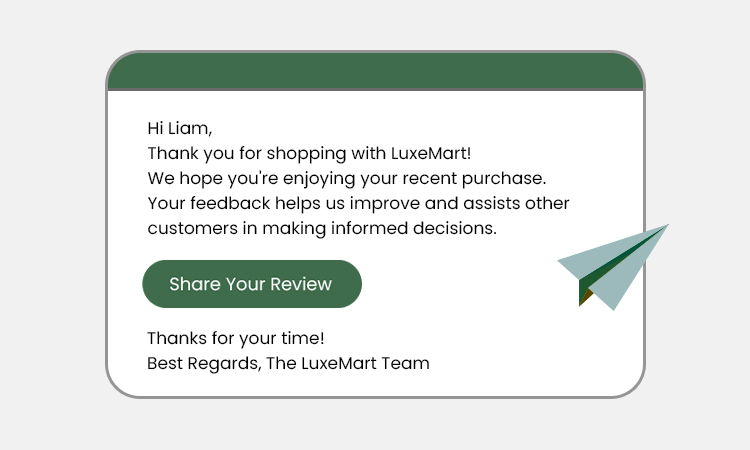
In the first step, you need to feed your syndication network by collecting genuine reviews from your buyers, including visual testimonials. Follow this technique to gather authentic reviews from your customers without overwhelming them with too many review requests:
- Send Post-purchase Emails
You can ask your team to send automated review request emails to every customer once the purchase is complete. However, it’s not a great idea to ask for reviews the same day when a customer has purchased something from your brand. You can send the review request at least 5-7 days after the purchase. Emailing the review page link can help your customers share feedback directly from their inbox.
- Send SMS Review Requests
According to a 2026 study by the Sender (an email marketing tool), SMS open rates are commonly cited at around 98%, which makes text messaging one of the highest-visibility marketing channels. You can also consider sending your review requests through SMS rather than sending traditional email requests. Brands can even integrate their SMS review request system with various helpful tools to accelerate the process.
- Share Website Feedback Forms
Don’t forget to add a review submission form to your direct-to-consumer site. Through this form, your site visitors who are also your customers easily rate and review your products (that they have purchased) while browsing.
Step 2: Obtain Customer Consent before Using their Reviews

Now that you have collected reviews from your customers, it’s time to leverage them to promote your expertise and brand credibility.
But wait?
Have you taken proper consent from your customers before using their reviews? If not, let us tell you that you cannot miss this step! Obtaining proper consent from your customers is crucial because they legally own the text and photos they submit, and third-party sites require their permission to display them. Here’s how you can do it:
- Ensure Compliance with Privacy Regulations
Always ensure that the method you’re employing to share customer reviews is completely compliant with the third-party platform’s privacy regulations. After collecting the reviews, when you are updating your review collection forms, you must get explicit consent from the respective customers to distribute their shared reviews to external and third-party platforms.
- Maintain Transparency in Review Usage
As a brand owner, you should always maintain transparency in showcasing how you have planned to use customer reviews. For this, you can display clear language or a checkbox where you will state that you will showcase the customer’s feedback, including their photos and video testimonials, on retail partner sites.
Step 3: Choose a Review Syndication Software

Took the consent?
Now, in this step, you need to choose a software to simplify the entire process of syndicating customer reviews. Brands must always look for software that can help them meet their unique syndication requirements.
- 4 Key Features to Look for while Choosing a Review Syndication Software
To effectively distribute user-generated content, every brand needs specialized software. Always choose software that acts as a central hub that can help you authenticate and share customer reviews with its established network.
The following are certain important features that you must consider while choosing syndication software:
| Features to Prioritise | Why is it important? |
| 1. Precise Product Matching | The software you will choose must accurately match the customer reviews to the product using the shared data identifiers like GTIN, UPC, or SKU. With this feature, you will never end up matching a review with the wrong product page. |
| 2. Sentiment Analysis | The software you will choose must be capable of accurately analysing customer sentiment by reviewing their feedback and complaints. They must identify the top-performing as well as the average products by analysing the customer reviews. |
| 3. Google Shopping and Search Integration | You should choose a verified Google partner that can automatically push the star ratings to Google Shopping, AI discovery surfaces, and Product Listing Ads. |
| 4. Source Attribution and Filtering | The software must trace exactly where a specific review has been generated by selectively filtering for minimum ratings or specific keywords. |
Step 4: Select Distribution Channels
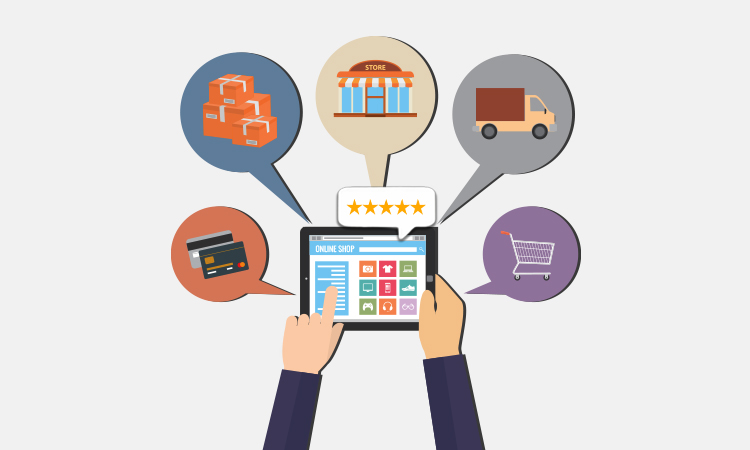
Now you need to audit your product catalogue across all the digital channels and map your UPC/GTIN codes. It will allow your syndication platform to know exactly where to republish or distribute the user-generated content.
Selecting a core review distribution channel is crucial. If you choose the wrong channel that cannot meet your requirements, it can ruin your entire review syndication efforts. Here are the 3 most popular review distribution channels:
- Direct-to-Customer Storefront – Do you own a direct-to-customer storefront? If yes, you can push your customer reviews to such a website. Choosing a direct-to-customer site as your syndication channel helps you automatically sync your collected reviews to make the matching products popular across various sub-sites and a localised global store.
- Online Marketplaces – You can also republish your authentic customer reviews directly to various popular e-commerce platforms like Amazon.
- Retailer Sites – Brand can also prioritize syndicating your product reviews to the top major national retail giants. Sharing customer reviews on retail sites can help you establish social proof and overcome the struggle of launching new products on third-party websites.
Step 5: Monitor Syndicated Customer Reviews

Now it’s time to monitor the customer reviews you have syndicated by following a robust strategy plan. Strategic customer review management requires brands to thoroughly monitor their syndicated reviews to ensure the success of their efforts and beyond.
- When to monitor? You may be wondering when you should start monitoring your syndicated reviews. Once your reviews are live across the retail and commerce platforms, you can start monitoring their performance – how they are being perceived by your potential customers.
- How does syndicated review monitoring help? When you properly monitor your syndicated customer reviews, it helps you to validate your return on investment and maintain content quality.
Here’s a quick guide on how you can monitor your syndicated reviews:
- Track Conversions: You can utilize your syndication software’s built-in analytics to track how many syndicated reviews on specific retail listings have converted potential customers into loyal paying clients.
- Link Reviews to Source: We always suggest that brands must properly link syndicated reviews back to the source.
- Flag Incentivized Reviews: Is there any promotional or incentivized review that you have syndicated mistakenly? You can use natural language processing and AI modelling systems to report those promotional or incentivized reviews, as the feedback may majorly violate retailer syndication guidelines.
Step 6: Analyze Your Review Syndication Performance

In the last step, you can analyze the performance of your overall customer feedback syndication efforts. It’s a crucial step to understand how your syndicated reviews have impacted your sales, customer trust, and brand visibility across your retail footprint.
To ensure your syndication efforts are profitable, here is a step-by-step breakdown of the core Key Performance Indicators (KPIs) you need to track:
- Major KPIs to track –
These are some key performance indicators (KPIs) that brands must track to identify their areas for improvement and places where their brand is excelling:
- Review Velocity & Volume – The percentage rate at which you have received new reviews over a specific time period and the total number of reviews you have distributed.
- Coverage Rate – The percentage of your products with at least one live review displayed on a retailer’s product page.
- Conversion Rates – The percentage of visitors (who have purchased after interacting with your online ratings and reviews) on a syndicated retailer site.
- Sentiment & Authenticity – The positive, negative, and neutral tone of your syndicated reviews that are paired with proof that the specific review has come from verified shoppers.
- Average Review Rating – The overall numerical score on a scale of 5 stars that your specific product has earned across all the downstream channels and AI search surfaces
- Organic Traffic Increases – The growth in unpaid and organically achieved traffic to your product detail pages and direct-to-consumer site
- Retail Search Visibility – Your brand’s ability to be easily found by potential shoppers through on-site search engines on e-commerce platforms and major search engines
- Customer Engagement Metrics – The percentage of secondary interactions, such as review helpfulness votes, click-through rates from links, and image/video view rates
4 Common Challenges in Review Syndication and Tips to Overcome Them
Review syndication allows you to promote your expertise’s credibility and reliability across multiple retailer sites. Though it provides a list of benefits to your business, you may face challenges while syndicating your customer reviews.
Managing these customers’ reviews proactively and strategically requires you to overcome key challenges mentioned below. Let’s have a look:
- Duplicate Content Management
Many times, you may find that your customers have shared identical product reviews using the same words and phrases. Brands often struggle a lot with managing these duplicate reviews. They often share these identical reviews across multiple domains or retailer sites, which theoretically clutters SEO signals. It may also lead to indexing confusion for search engines.
- Tips to Overcome
You can use proper source attribution and structured data tags. So that the search algorithms get to know where the original content lives. You must let the syndication platforms handle review formatting. It will signal the search engines to recognize the syndicated reviews across different URLs as non-malicious customer feedback.
- Platform Compliance Issues
Many retail platforms have strict content policies. So when you modify or filter out negative reviews, or even attempt to syndicate incentivize/fake reviews, it majorly violates the rules of the respective platforms.
- Tips to Overcome
You should never edit, censor, or try to manipulate customer reviews. It will ensure the authenticity of your review, for which you need to rely on major established syndication solutions by industry networks.
- Negative Reviews Across Multiple Channels
Do you know that negative customer reviews can rapidly increase across digital platforms when you syndicate your reviews? Yes, this happens. Duplicate copies of the same review across multiple retail platforms can majorly distort review analytics and overcount sentiment if you have not accurately monitored customer sentiment.
- Tips to Overcome
You need to address the negative feedback by responding to them professionally and transparently, no matter where you have received the reviews. Additionally, you can leverage analytics to aggregate and deduplicate the review trends. So that you can address actual manufacturing or messaging flaws.
- Technical Integration Difficulties
Customer feedback syndication requires brands to move large volumes of user-generated content, like customer feedback, across different legacy systems and third-party networks. It can lead to your review feed errors, distorted CRM integration challenges, and even API limitations for your brand.
- Tips to Overcome
Brands across industries must prioritize internal data hygiene to prevent feed errors. You can also perform integration best practices by standardizing the data formats and monitoring API requests.
5 Best Tools and Software for Review Syndication
Does the process of syndicating customer reviews seem a little complex to you?
If yes, we have come up with a solution. Here, we will discuss the top 5 most helpful tools for strategically syndicating customer reviews. Employing these tools can help you ensure the success of your syndication efforts. Explore the list and choose the tool most suitable to your syndication needs:
| Tools Name | Everything You Need to Know |
| 1. Bazaarvoice | ● What it is: One of the largest syndication networks in the world ● Ideal for: Large enterprise corporations and big-box retailers who prioritize omni-channel reach ● Features to use: Allows CPG and retail brands to push product reviews directly to major retailers like Walmart or Target |
| 2. Yotpo | ● What it is: An e-commerce retention platform favored by direct-to-consumer brands ● Ideal for: Mid-market to enterprise DTC brands operating on Shopify Plus ● Features to use: i) Bundles product reviews with visual user-generated content, SMS marketing, and loyalty programs ii) Offers features like advanced user-generated content syndication and deep marketing workflow integration. |
| 3. REVIEWS.io | ● What it is: A top-rated review platform that excels at multi-channel customer feedback collection ● Ideal for: E-commerce merchants who’re looking to boost Google Search seller ratings and rich snippets ● Features to use: i) Offers streamlined and multi-channel collection backed by structured analytics dashboards ii) Stands out for its easy integration with social media platforms and its direct impact on improving Google Search visibility |
| 4. Yext | ● What it is: A review platform renowned for its location data ● Ideal for: i) Brands prioritizing local SEO and enhancing their online project ii) Best for managing location-specific business listings ● Features to use: i) Helps in eliminating duplicate listings and sends reviews to Google Maps and business directories like Yelp, Apple Maps. ii) Offers robust rich media and customer feedback syndication across over 2000 digital services and search engines |
| 5. Okendo | ● What it is: A powerful customer marketing platform that allows brands to capture highly granular and attribute-based reviews ● Ideal for: Fast-growing e-commerce stores that are looking for flexible and highly visual review displays ● Features to use: i) Excels at collecting zero-party data and converting shopper feedback into dynamic and customizable on-site displays ii) Offers attribute-level ratings for deeper customer insights |
Conclusion
Collecting and managing customer reviews are not enough to grow your business in today’s digital-first competitive scenario. The term, as well as the process – customer review syndication – may seem complex to you. But modern businesses must prioritise syndicating their customer reviews to utilise the full potential of them and promote their offerings by distributing the reviews to the right channels.
Our comprehensive guide to customer feedback syndication will help you learn about the process in detail and how you can strategically perform the practice by following some easy steps.
Consulting with an online reputation management agency that provides tailored review management solutions can be a great idea to seek expert assistance.
FAQs
The following are 5 frequently asked questions and answers related to the syndication process of customer reviews:
Ans. Yes, customer review syndication is good for ranking in search engine results pages for relevant user queries. The process provides multiple advanced benefits for a brand. When you generate fresh and keyword-rich customer reviews, it helps your brand to rank higher. It also enhances your brand’s search visibility across AI-generated search summaries and rich snippets. It will also improve conversion rates when you promote authentic and consistent feedback across your retail network.
Ans. The process can help businesses across industries. However, it can specifically benefit brands that are launching new products and services, omnichannel retailers and suppliers, and businesses that are expanding internationally.
Ans. While a review platform allows brands to collect feedback from their customers, a syndication network establishes a web of connections that allows brands to share and display the collected customer reviews on massive retail sites like Target, Walmart, and Best Buy.
Ans. Reviews must be syndicated always, as the brand needs to make the process completely automated. You shouldn’t prioritize syndicating the reviews in a manual and periodic task. Because today’s shoppers and modern search engine algorithms mainly rely on customer reviews’ recency, velocity, and abundance of feedback. And syndication networks continuously operate reviews to push the recent customer reviews to the digital shelf.
Ans. Yes, businesses can typically syndicate negative reviews. They are also often encouraged to syndicate all the customer reviews, including the negative and low-star ratings.

