





Imagine waking up to a threat: someone has claimed to have your personal images, business data, and access to your brand network. And they demand a ransom from your brand to keep the data hidden. Scary, right? In today’s hyper-connected digital world, it’s common for brands across industries to be at high risk of online extortion or digital threats, which can severely damage a business’s or an individual’s online reputation.
Do you know that 50% of UK businesses experienced some form of cyber attack in 2023? And the number is rapidly increasing. While most people are more likely to panic when they become digital threat victims, building a robust strategy to safeguard your digital presence and brand reputation is the best defence you can have.
Your digital presence and online reputation reflect how the world will see you or your brand. To ensure that these two appear positive, we have developed a comprehensive guide to effectively dealing with cyber extortion. Let’s get started!
What Is Online Extortion?
It refers to a type of cybercrime in which blackmailers use digital means to unlawfully access sensitive data of individuals and businesses to threaten that they will expose their private information on the internet. They blackmail the data owners to pay a ransom, grant a favour, or hand over critical assets.
- What Is The Impact? From large enterprises and small businesses to everyday internet users and prominent personalities, all are highly vulnerable to cyber extortion.
- For businesses: A successful cyber extortion attack on a business can severely damage its online reputation and build a negative online perception around it. It can result in financial losses and even massive operational downtime.
- For individuals: It can take a toll on the person’s psychological health and lead to massive damage to their digital reputation.
7 Common Forms of Online Extortion
Digital threats, or cyber extortions, can take 7 common forms. An individual or a business doesn’t need to be targeted by only one type of cyber attack.
In this section, we have mentioned 7 key forms of digital extortion. Identifying these can help you to avoid the same or prevent severe impacts of these if you get attacked by online extortion:
- Ransomware Attacks
This refers to when cyber attackers hack an individual’s or a business’s network. They use malicious software to encrypt the victim’s data and demand payment from them by threatening them with a ransom amount. If the monetary payment is not made, the victim may lose their files forever. the sensitive information online. These ransomware attackers mostly demand cryptocurrencies in exchange for helping the victim to restore their data access.
- Data Breach Extortion
Extortionists steal a large quantity of confidential and sensitive data that completely belongs to a corporation or organisation. They mostly threaten to leak the information publicly unless the corporation or organisation agrees to pay the ransom.
- Social Media Blackmail
These cybercriminals often hack your social media accounts to access private messages. They threaten to post embarrassing pictures or content of the victim to the victim’s social connections unless the ransom is paid to them.
- Deepfake Extortion
Extortionists generate AI-based media and synthetic content, such as fabricated photos and videos of the victim. They threaten to make the synthetic content viral on the internet and demand payment for its suppression.
- Sextortion
Threat actors often trick the victim so that he/she provides them with explicit images/videos. They also hack the victim’s system to obtain those materials. The extortionists demand money from the victim or further explicit favors by threatening to release the materials to their family and friends.
- Business Email Compromise
When a cyber attacker gains access to a corporation’s or organisation’s email account, they initially try to identify confidential information. If they get access to the sensitive email data, they often impersonate the business by using the hacked business email credentials, engage in invoice and payroll fraud, or even transfer unauthorised funds to their accounts/.
- Reputation-based Threats
Business owners of large corporations often get threats from extortionists that they will publish lies and sabotage their business’s online search results. The primary intention of these digital threats is to destroy a company’s reputation in the market or ruin its public image to cause financial harm.
9 Common Signs Your Brand is at Risk of Online Extortion
Now the question comes – how will you be able to identify that you’ve become the target of online extortion?
Yes, there are several ways you can identify that your brand is at risk of cyber extortion. Here we will discuss 9 common signs that will tell you that your brand is at high risk. Identifying these signs can help you take precautionary measures and prevent severe reputation damage:
| Signs of Cyber Extortions | How Does It Occur? |
| 1. Unexpected threatening emails | ● When you can get a record of unsolicited emails as a result of the previous data leak incident ● If the extortionist threatens to expose sensitive company or client data if you don’t pay them the ransom |
| 2. Demands for cryptocurrency payments | ● When you receive blackmail scam messages, the hacker demands untraceable digital currency, such as Bitcoin. |
| 3. Claims of hacked devices/accounts | ●When an attacker emails you to inform you that they’ve gained control of your network, corporate accounts, and local webcams ● When the email includes a recently leaked or old password to prove that the attacker has access |
| 4. Threats to reveal private information | ● When the attacker steals your valuable intellectual property, customer records, and private employee data, to threaten to release them to the public or your market competitors |
| 5. Suspicious messages on social platforms | ● When you detect an increase in the frequency of receiving fraudulent messages, social engineering attempts, and fake profiles |
| 6. Unauthorized access attempts | ● If your IT and security teams find out unusual login attempts, abnormal network access patterns, and privilege escalations |
| 7. Ransom notes | ● When you come across pop-up windows and encrypted files with strange extensions or text documents dropped onto server desktops that demand payment from your end for a decryption key or the safe return of stolen data |
| 8. Employee impersonation attempts | ● When an attacker steals your branding, employee credentials, and executive names to conduct business email compromise |
| 9. Customer data threats | ● When an external forum or the dark web claims to sell your organization’s customer directories and an influx of customer complaints regarding fraudulent activities |
What To Do If Your Brand Becomes an Online Extortion Victim: A Complete Step-by-Step Guide
Now that you have a clear idea of the common signs of online extortion, it’s time to know what you can do if you or your brand becomes a victim of it.
We know that facing cyber extortion can lead to various severe impacts on individuals as well as businesses. People often panic during such situations and lose their cool. But they shouldn’t; it’s important to act professionally and promptly if you become a cyber extortion victim.
Some people also decide to pay the ransom to the extortionist immediately after they get the threat call or message. This decision mostly comes from panic and a desperate urge to prevent damage to their reputation. Thus, you need a strong strategy plan to react and act during such a situation. Let’s have a look at the comprehensive step-by-step guide to dealing strategically with cyber extortion:
Step 1: Identify Online Extortion Risks
Imagine that you just found out that someone has hacked your digital system and gained access to your sensitive private information and images. The extortionist has threatened you to expose your sensitive data online and ruin your reputation. The blackmailer has also demanded a lump-sum amount of ransom from you.
What will be your first interactions?
A majority of people will panic and be confused about how they will handle such a situation. But this is not how one should react. Before the extortionist attacks your online presence further or strikes, you must identify the content, data, and other visual content that can be at risk for cyber extortion. Here’s how you can detect the risks:
- Evaluate Public Visibility
You need to map your digital footprint to understand how visible your leaked content is. For this, you need to review your owned platforms, including your official websites and social media profiles, as well as the unowned spaces (review sites, online forums, and marketplaces) where your brand or you, as an individual or professional, are discussed.
- A Pro Tip for You: If someone illegally accessed your private data, it often means you already have some information exposed online that the extortionist can easily access. For such instances, you must follow a strategic approach to remove the online information from all the digital platforms if any sensitive content is available online.
Step 2: Collect Valuable Evidence to Submit Later
Now you need to gather proper evidence related to the online extortion and the data that was accessed by the extortionist.
You should never delete the threatening message that you have received from the blackmailer, or, of course, the communication threads. We know that most people will have the impulse to remove the content and the communication in fear. However, you must preserve the digital data (specifically the one extremely crucial to your reputation) to support further investigation into the extortion and legal action against it.
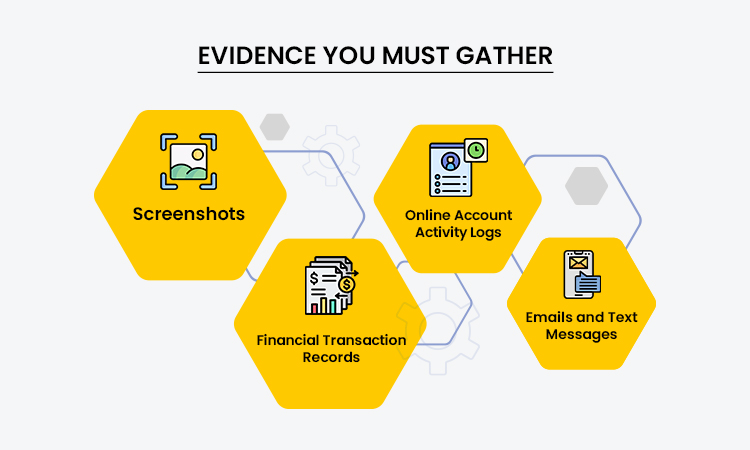
- 4 Types of Evidence You Must Gather
The following are 4 major types of evidence you cannot miss collecting:
- Screenshots – You should take screenshots of everything with the date, username, and time clearly visible. Don’t forget to keep screenshots of the extortionist’s digital and social media profiles; demanded ransom; claimed deadlines; URLs; emails; text messages; payment wallets or shared banking details; and beyond.
- Financial Transaction Records – Mostly, an extortion attempt involves a ransom demand. You must keep all the documents related to the demand, bank account details shared, and any financial transactions that happened.
- Online Account Activity Logs – We suggest that you extract all the relevant technical data, such as the online username of the extortionist, their social media profile details, sender routing details, or email headers. These details can help the investigators seamlessly find the true source of the attack.
- Emails and Text Messages – You should never delete the conversation you have with the extortionist, no matter whether it’s through an email or text messaging. If you think that you will only keep the most threatening message, you’re highly mistaken. You must document the entire unedited thread of the conversation to provide context when necessary.
Step 3: Secure Your Online Accounts
In the third step, the extortion victims need to protect every online account they have. For this, they need to follow certain best practices to secure their online and social media accounts to prevent further online extortion risks.
- 4 Helpful Tips to Protect Your Brand’s Online Accounts
Follow our easy tips and tricks to safeguard your online accounts:
- Change Passwords
Once you know that you are a victim of cyber extortion, you must immediately update the passwords for all your digital and social media accounts. According to a study commissioned by Forbes Advisor, nearly 46% of people had their online passwords stolen. Now you can imagine how crucial it is to ensure the security of online passwords. Always ensure that your account passwords are highly complex and unique and include a mix of letters, special characters, and numbers.
- Enable Two-Factor Authentication
Adding two-factor authentication to all your company platforms and devices can help you include an extra layer of defense against the logins forced by the extortionists. You must consider enabling this specific authentication for all your online profiles.
- Review Account Permissions
Review your online accounts’ permissions – you can perform an audit to identify who has admin access to your personal or business’s digital assets. If your digital accounts can be accessed by any inactive users, revoke their privileges. You can also limit their access to only a need-to-know basis and ensure that your online profiles are no longer linked to any unauthorised third-party apps.
- Regularly Update Software
You should always ensure that the operating systems, apps, and antivirus tools are thoroughly updated. Using old versions of software can even increase the risk of your online profile data being exposed across the virtual space. When you update the software regularly, it helps you effectively close the digital loopholes and security flaws that extortionists exploit to infiltrate your used devices, install ransomware, and steal sensitive data to blackmail you.
Step 4: Report the Incident to the Respective Authorities

Now you need to report the extortion incident to the respective authorities. Without proper reporting, you cannot initiate the required legal and administrative actions against online extortion.
Now the question comes: Where to report the incident?
Here we have mentioned 4 key authorities that can help you effectively deal with cyber extortion:
- Local Law Enforcement
We suggest that you file a written complaint or a first information report (FIR) at your local cybercrime investigation cell. You need to share the details of the damage to your personal or brand reputation, along with all the evidence and relevant data.
- Cybercrime Authorities
Individuals and brands can also promptly report the incident to the national cybercrime reporting body. They will handle a case of online extortion most effectively and help find out the extortionist, preventing further escalation. If you are located in India, you can register the complaint on the National Cybercrime Reporting Portal or can call the National Cybercrime Helpline number 1930.
- Social Media Platforms
If you have details of the extortionist’s original or impersonating social media profiles, you can report the profiles through the respective social media platform’s official reporting and support channels.
- Online Platform Hosting Providers
If the online extortion involves a specific site with a tricky or impersonated domain and unauthorized server, you must identify the host. Then you can submit the abuse or extortion report to the online platform’s hosting providers. In the report, you must detail the violations to the service provider.
Step 5: Consult Cybersecurity and Reputation Experts

We have already mentioned that you need to consult with a cybersecurity professional. When you rely on a professional team, it reduces your stress of being attacked by any extortionist in the future. Even if damage happens, the recovery will be faster and easier when an expert handles such cases of digital threats.
In a cybersecurity department, you need to consult with the following expert professionals:
- Major Professionals to Consult With –
- Incident Response Professionals – They are specialists in digital forensics who can analyse how the cyber extortionist has breached your network and assess the scope of the damage. These experts will help you secure your personal or your brand’s internal systems against further intrusion.
- Online Reputation Management Specialists – These specialists can help mitigate the reputation damage by suppressing negative search results. You can hire a professional online negative search results suppression service from an online reputation management agency. Their expert team can help you remove harmful or non-consensual content and share positive content to restore your online reputation.
- Legal Advisors – You must consult with legal attorneys with expertise in internal law and cybercrime who can guide you on compliance, privacy laws, and enforcing the laws to protect your online reputation from extortion.
Step 6: Limit Public Exposure of Your Brand

Once you get to know that you have become a victim of online extortion, you should immediately limit the public exposure of your brand and its available online content. It will limit the extortionist’s future access to your content and help you prevent further reputational damage.
- Review Online Accounts’ Privacy Settings
You must restrict all your corporate and personal social media profiles as well as your official website. You can review the privacy settings for your online accounts and update them accordingly. It will ensure that unauthorized users cannot access your data.
- Remove Unnecessary Personal Information
Now you need to perform a thorough audit of your online and social media profiles. This practice will help you identify the unnecessary personal information present in your online profiles. You must remove the personally identifiable information that cyber criminals can use to target, dox, or impersonate key professionals, employees, and executives.
- Restrict Sensitive Content Sharing
Brands can perform an audit on what their team publicly posts. They shouldn’t upload or share any internal data, details, or intellectual property regarding the online extortion attempts. Because these details can be misinterpreted or exploited by the blackmailer. Thus, you must consider restricting sensitive content sharing.
Step 7: Seek Legal Assistance if Necessary

You must seek professional legal assistance from a skilled expert. Engaging with a professional can help you effectively and safely navigate the situation while protecting your content rights.
- Instances When You Must Consider Seeking Legal Assistance
You must be wondering when you should consider seeking legal assistance. Yes, not all online extortion instances require legal attention—some can be solved with just reporting the incident to the local cybersecurity department.
Here are three major types of instances when you must consider seeking assistance from legal professionals:
- Defamation Threat—If the extortionist threatens to publish false claims to damage your personal or brand reputation, you can seek professional help from a legal expert who will secure court injunctions to force social media platforms and search engines to de-index or push down the defamatory content.
- Data Leaks—Hackers often threaten to release client or corporate data. Legal professionals can help individuals and businesses by guiding them through mandatory data breach notification laws. They can also advise you on obtaining ‘Identification Orders’ against anonymous extortionists.
- Intellectual Property Violation – If extortionists attempt to threaten you or your brand by using stolen trademarks or copyrighted materials, you can seek help from legal experts. From securing content takedown notices and filing formal complaints with the respective platform’s Grievance Officer to acquiring injunctions to block unauthorized access, a legal professional can cover all your legal needs and beyond.
Step 8: Develop a Crisis Communication Plan

We suggest that you develop a plan before a reputation crisis, such as a cyber extortion, even if it occurs, so that you can take necessary precautions and prevent severe damage. But even if you become a victim of a cyber threat, you can develop a plan and effectively handle an extortion.
Always remember, it’s never too late to fix things!
Through a robust online extortion crisis management plan, you can effectively minimize panic and brand damage.
- Build an Extortion Response Team
Firstly, you need to build a strong extortion response team as part of your online reputation crisis management strategy. The team must include the following professionals:
- IT security Professionals – These experts will assess the data breach that involves the compromised systems. They will help you to secure your network to prevent the extortionist from escalating the situation.
- Legal Experts—Your crisis management team must include legal professionals. They will help you review all public statements to ensure your online communications don’t jeopardize future criminal proceedings or admit liability.
- PR Specialists – Prioritize involving a PR team to craft appropriate messaging for your customers, the media personnel, and stakeholders. Having an in-house PR team can help you maintain your public trust, transparency, and control over the narrative.
- Executive Leadership – When you appoint executives to your crisis management team, the experts will handle the execution of your crisis management strategy. From approving resource allocation to making the ultimate decisions, executives can help you strategically act during a crisis.
- Create Backup and Recovery Plans
Now it’s time to create a backup and recovery plan to prevent severe damage to your online reputation. So that if a crisis occurs without any previous signs and causes damage to your personal or brand reputation. A backup plan will help you to mitigate the impact of online extortion.
- Disaster Recovery Procedures – You need to ensure that you have backed up critical systems, operational files, and intellectual properties on secure and isolated servers. If the extortionist has targeted you with ransomware, you don’t need to negotiate with the attackers when you already have an immutable backup.
- Business Continuity Planning – You must document all the actionable operational strategies that you have designed to keep your business running seamlessly even when your primary systems are compromised or unavailable. You can assign responsibilities to the respective team members so your brand can continue functioning while your IT team handles the digital threat.
Step 9: Publish Positive Content to Share Online

When you publish positive content online, it helps you build strong brand authority, foster client trust, and drive meaningful audience engagement. Thus, every professional and brand must have a solid content strategy to offer social proof, share their brand’s expertise, and showcase their company milestones.
- 4 Major Types of Content to Publish
Here are four major types of content that you should publish to position yourself or your brand as a knowledgeable resource in niche markets as well across the digital world:
- Thought Leadership Articles
You must share original ideas, deep insights, and personal perspectives to position your personal and brand identity as authoritative sources in the industry. You can develop in-depth blog posts, executive webinars, original research reports, and LinkedIn articles to share your opinions as an industry leader.
This content will help you offer a unique viewpoint and challenge industry assumptions. It will showcase that you prioritise your audience’s education over just selling your products and services to them.
- Customer Success Stories
Customer testimonials and client success stories can serve as social proof. This content plays the role of third-party validations, as people are more likely to engage with or purchase from a brand when they see that real customers have positive experiences with it as well.
We suggest that you share case studies, video testimonials, and success stories to showcase the real-world impact of your products and services. Through this, you can highlight a specific customer’s journey, a unique problem your offerings have solved, and the measurable results they have achieved.
- Press Releases
These are official statements that you can use to announce your business milestones. You can ensure that your brand’s messages are accurately conveyed to your target audience through media coverage. Brands can publish press releases to launch new products/services, share updates for company events, and make other important announcements.
- Community Engagement Initiatives
It demonstrates that your brand is approachable, empathetic, and thoroughly values active dialogue with its target audience. You can consider organizing social media discussions, polls, and Q&A sessions on major community-building platforms like Facebook Groups, Discord servers, and LinkedIn groups.
Step 10: Monitor Your Brand’s Online Presence

Last but not least, you need to monitor your brand’s online presence to find out about online extortion in the future. Regular monitoring can help you mitigate digital extortion and reputation damage.
Additionally, it helps you identify threats, leaked details, and negative narratives early. So that you can act quickly before the reputational damage escalates and causes a severe impact.
- Set Up Google Alerts
To monitor your presence across the digital world, you need to set up Google alerts. It will send automatic email notifications whenever your name, your brand name, or any executive’s name is mentioned across the online platforms.
- How to do it? You need to visit the official site of Google Alerts and enter the specific terms into the search box. Now you need to click on ‘Create Alert’ and customize your options to easily track the web and news mentions.
- Monitor Social Media Mentions
You can also track social media platforms to identify conversations, brand mentions, customer sentiment, and trending hashtags in real time. You can prioritize hiring professional social media reputation management services to effectively track your brand’s social media presence.
- Examine Online Search Results
You can search for your brand name to find out how the online search results are appearing. It can help you reveal negative narratives, malicious domains, and leaked internal information that may become digital threats to your brand.
6 Helpful Tools to Consider to Prevent Online Extortion
Handling digital threats is a difficult job, as it requires you to follow a strategic approach. Now we will talk about some helpful tools that brands can employ to prevent online extortion. You can explore the list and choose the tool based on your requirements:
| Tool Name | Features to Use |
| 1. Password Manager | ● Helps in creating and securely stores long, complex, and unique passwords for all your online accounts ● Drastically reduces the chances of hackers trying to breach your accounts and access sensitive information or photos |
| 2. Antivirus and Anti-Malware Software | ● Actively scans, blocks, and removes malicious software and spyware that cybercriminals may use to compromise your digital device and hack sensitive files |
| 3. VPN Services | ● Helps in encrypting your internet connection and masks your IP address ● Prevents your data from being intercepted when conducting sensitive activities on vulnerable public Wi-fi networks |
| 4. Google Alerts | ● Allows you to set up automated email notifications that trigger whenever your name, email, or specific personal details appear on the public internet ● Helps you to detect doxxing or impersonation early |
| 5. StopNCII.org | ● Best free tool for individuals over 18 designed to prevent non-consensual intimate image abuse ● Generates a local digital fingerprint of your images on your device and sends it to the participating platforms like Facebook, TikTok, and Instagram to allow the devices to detect and remove the content |
| 6. National Cyber Crime Reporting Portal | ● Allows victims and citizens to report cybercrimes and track the status of their online complaints ● Has a specialised focus on preventing financial losses from cyber fraud and addressing the online child sexual abuse material or explicit content |
5 Common Mistakes You Should Avoid While Dealing with Online Extortions
Now we will talk about the common mistakes brands often make while dealing with cyber extortion. The following are 5 common mistakes brands must avoid to protect their reputation from a digital threat or cyber extortion:
Mistake 1: Paying the Extortionist Immediately
Many people panic and decide to pay the ransom to the extortionist immediately. This is a huge mistake brand owners commonly make. If you fulfil the hacker’s demand by sending money or providing additional photos, the extortionist is more likely to increase the demand and won’t stop at just a single payment.
Mistake 2: Ignoring Suspicious Messages
Are you suddenly getting suspicious messages online? If you are ignoring those messages, you are making a big mistake! Receiving suspicious messages can be a result of opening attachments from anonymous senders or engaging with malicious accounts. Never ignore those messages as this can be a sign of your brand being the target of a online extortion.
Mistake 3: Deleting the Evidence
Out of panic, people often choose to delete threatening messages, chat histories with the extortionist, or the blackmailer’s online profile details. This practice can destroy valuable evidence. Deleting this evidence may ruin your opportunity to take legal actions against the extortionist.
Mistake 4: Using Default Passwords
Are you someone who used default passwords for their online profiles? If yes, this may put your brand at risk of cyber extortion. A weak, default, or reused password to protect your online profiles is not at all a great idea.
Mistake 5: Skipping Software Updates
If you ignore updating your operating system and software, it may make your devices vulnerable. Software updates are crucial as they include critical security patches that are designed to fix known vulnerabilities extortionists use to access your private information and images.
Conclusion
In today’s competitive digital world, it’s quite common for individuals and brands to become the target of online extortion. Panicking and immediately paying the ransom may encourage the hackers to demand more money or escalate the situation.
Our comprehensive guide to dealing with cyber threats can help you navigate such a complex situation and effectively safeguard your online reputation. Want to seek professional guidance? Consider hiring an online reputation management agency to seek their expert advice.
FAQs
The following are frequently asked questions and answers related to cyber extortion:
Ans. No, you should not pay a cyber extortionist. We don’t recommend fulfilling the cybercriminal’s demand by paying them the ransom. Paying the extortionist doesn’t guarantee that they will delete the compromising content. When you pay the extortionist, they view it as proof that you’re an easy target and may demand more money from you.
Ans. Businesses should not pay the ransom to the extortionist immediately after receiving a threat. This may encourage the extortionist to further demand more money. The businesses should immediately preserve all the evidence by taking screenshots and saving all the communication with the extortionist. Then they should report the incident to the local authorities, cybersecurity, or local platforms.
Ans. Yes, absolutely! Cyber insurance can cover extortion, including incidents of malware attacks, digital threats, and ransom demands to expose sensitive data.
Ans. No, you shouldn’t. Threatening messages or photos serve as critical evidence of online extortion for further police investigation. You must keep all the original raw emails, shared photos, email IDs, extortionist’s profiles, payment requests, chats, and attached files, along with screenshots if needed. If you delete the information, the deleted files will lose metadata that makes it nearly impossible to track the extortionist.
Ans. You must immediately stop all your communication with the extortionist. You can report the extortion by contacting the National Cyber Crime Helpline (1930) or file a formal complaint online at the National Cyber Crime reporting Portal. You can also report the extortion through the respective platforms. You need to navigate the built-in ‘Report’ button located near the threatening message or profile. Additionally, you can leverage the Cyber Crime Abuse Reporting Form or file an appeal to the Grievance Appellate Committee.

