





For the past years, businesses have depended on simple numbers to understand the complete story of a customer’s emotional purchase journey. But today’s modern customers mainly expect empathy and personalization from a brand’s end at every touchpoint. Thus, understanding the customer sentiment behind thousands of daily interactions is quite impossible solely with a human team. But AI-powered customer sentiment analysis comes to your rescue!
In recent years, this specific advancement has completely transformed how businesses used to identify what their customers are thinking about their brand. Thanks to the advancements in AI-powered customer experience and sentiment evaluation, brands no longer need to completely rely on guesswork or retrospective data when it comes to understanding customer sentiment.
Analyzing your customer sentiment by leveraging AI is not as easy as it seems. This is your complete guide to AI-driven sentiment analysis, explaining how AI helps brands assess customer sentiment, its benefits, and the process. Let’s get started!
What Is AI-driven Customer Sentiment Analysis?
Customer Sentiment Analysis refers to an automated data processing technique that employs Artificial Intelligence and Natural Language Processing (NLP) to identify, extract, monitor, and measure the opinions, emotions, and attitudes behind customer feedback. Modern brands must leverage AI to analyze their customer sentiment, making the process more seamless and prompt.
If you own a brand, you can use AI-driven sentiment analysis to transform the subjective words and audio of customer reviews into actionable and objective metrics. In today’s highly competitive digital era, businesses across industries must understand the actual sentiment behind customer interactions instead of solely relying on traditional numerical scores.
6 Key Benefits of AI-Powered Customer Sentiment Analysis for Brands
AI-powered sentiment analysis comes with more benefits than the traditional method. AI-driven sentiment analysis allows your business to make the entire process of identifying, classifying, extracting, monitoring, and measuring customer emotions from unstructured data at scale.
From transforming raw interactions into actionable insights, AI-powered customer sentiment analysis helps companies to elevate the overall experience for their customers and establish stronger and more profitable customer relationships.
In this section, we have discussed the 6 major benefits brands can achieve through effective AI-driven analysis of customer sentiment:
Benefit 1: Provides Real-Time Customer Insights
If you conduct detailed traditional market research, the process can be slow. But when you employ AI-driven techniques, it helps you to evaluate thousands of relevant keywords, customer reviews, and social media mentions in real-time.
You no longer need to wait to get the customer insights – you can identify emerging trends in customer sentiment and respond to those negative feedback before they escalate into a major PR nightmare.
Benefit 2: Ensures Customer Retention
Imagine that one of your customers is at high risk of moving to your market competitor due to a recent poor purchase experience. If you fail to identify the dissatisfaction at the right time, your brand may lose a loyal customer.
AI sentiment analysis allows you to identify such dissatisfied or frustrated customers. So that your customer support team can immediately have personal discussions with the customers and take necessary actions to offer suitable resolutions. This often leads to turning a negative customer experience into a positive one.
Benefit 3: Improves Customer Satisfaction
If you are handling a bulk amount of customer feedback, AI-driven customer sentiment analysis helps you to identify nuanced emotions of your customers, including confusion, anger, delight, frustration, happiness, and annoyance across every customer interaction, no matter whether they are positive or negative.
AI-powered sentiment analysis helps your business optimise its customer support strategies, reduce its wait times for its customers, and personalise its responses to exactly what the customers need.
Benefit 4: Guides Product and Service Improvement
Effective customer review management requires you to provide a 5-star experience for your customers and generate positive feedback from them after successful interactions. When you analyze your customer sentiment with the help of AI, it helps you to understand what your customers need, what they’re loving about your offerings, and which strategy is not working in your favor. Based on your understanding, you can improve your product and service offerings to meet your customers’ unique requirements.
AI sentiment analysis allows customers to isolate specific pain points in product and service design, usability, and pricing. You can make necessary changes in your offerings and even improve the features to directly address the customer needs.
Benefit 5: Promotes Data-Driven Decision Making
With AI-powered sentiment analysis, it’s no longer guesswork. The process has moved digital marketing and reputation marketing completely away from guesswork toward an adaptive and data-backed strategic plan.
When your team gets valuable insights, they can seamlessly align their brand positioning, messaging, and reputation management campaigns using objective and quantitative data on customer sentiment.
Benefit 6: Increases Brand Loyalty
AI-powered customer sentiment analysis helps you get valuable feedback and understand how your audience feels. Based on those sentiments, you can quickly listen to your customers, resolve their issues, and tailor future interactions. This makes your customers feel valued and heard.
It fosters your customers’ trust and turns your casual buyers into long-term brand advocates, ensuring exceptional brand loyalty.
6 Major Sources Brands Can Consider to Find Customer Sentiment Data
When you analyze customer emotion, it helps you to shape your brand perception through your customers’ eyes. Based on the data insights, you must improve your customer experience and ensure generating more positive reviews.
Here is a list of 6 primary sources from which brands can extract customer sentiment regarding their brand and its offerings:
- Social Media Comments and Mentions
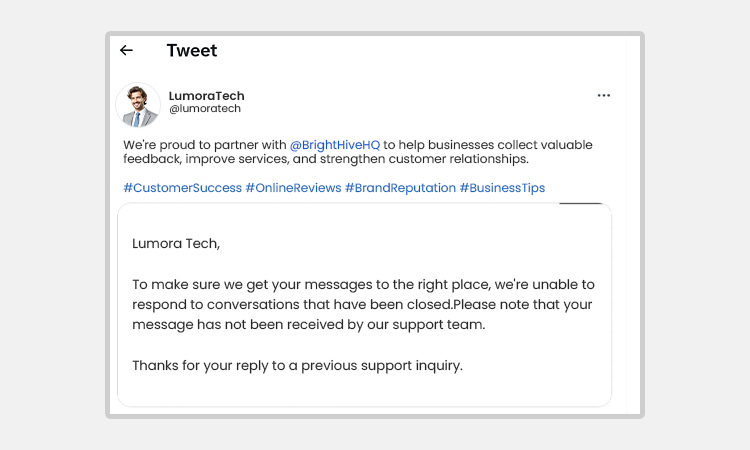
Through the customer comments and brand mentions, your brand has received across its social media business pages, you can get to see a real-time and unfiltered look at public opinion regarding your business and any specific offerings.
You can get to know about the viral moments and organic brand perception by analyzing these social interactions. Effective social media reputation management strategies require you to thoroughly assess these social media comments, reviews, and brand mentions to understand what your social media followers are thinking about your brand.
- Online Reviews and Ratings
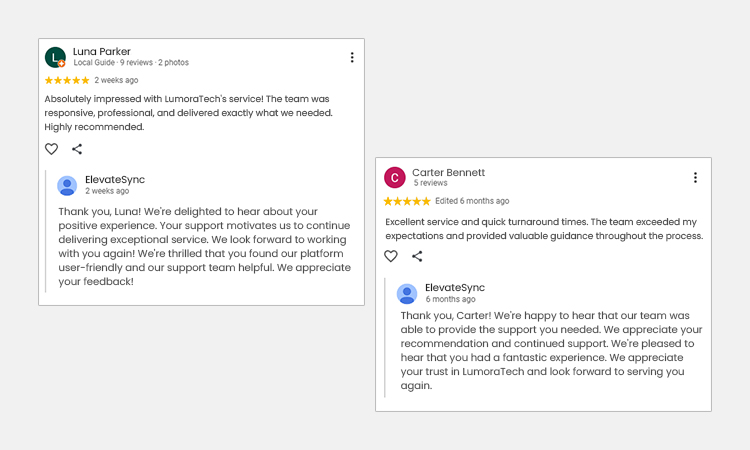
Customer reviews received on major directories like Google Business Profile, industry-specific review sites, and social media platforms can help brands capture the post-purchase feedback on their products and services. According to a 2021 study by the PowerReviews by Syndigo, 9 in every 10 consumers tend to consider online reviews when making a purchase decision.
Most of your potential customers consult platforms like Amazon, Yelp, Google Reviews, and more before buying any product or hiring any service. These reviews help you identify specific product defects or highlight features that highly resonate with the potential buyers.
- Customer Support Conversations

Through the customer support conversations, you can gain meaningful insights from detailed transcripts and direct statements of user frustration or satisfaction. When you analyze these customer support conversations through AI-powered customer sentiment analysis, it allows your team to identify and automatically flag negative sentiment and prioritize tickets for faster resolution, even for major customer concerns.
- Emails and Feedback Forms
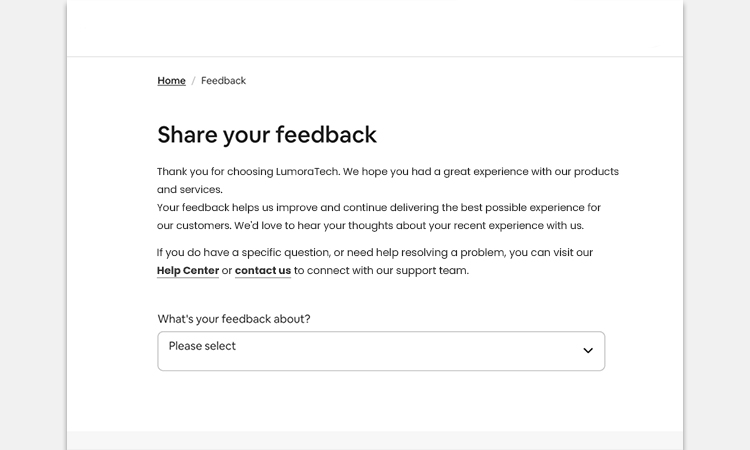
These two are major sources from which you can collect structured and direct customer feedback. It includes Net Promoter Score and Customer Satisfaction surveys where users elaborate on their experiences. The customer feedback received through emails and feedback forms helps you identify specific drivers of customer loyalty and identify exact areas of friction.
- Chatbot Interactions

This is another source from which brands can capture immediate, conversational, and in-the-moment customer sentiment during automated digital interaction with their customers. As nowadays, 58% of consumers use AI chatbots to research products. Customer sentiment analysis is based on chatbot interactions that can alert your brand when the AI tools fail to resolve a consumer query. It enables a smooth and rapid escalation to your team’s human support agents.
- Community Forums and Discussion Boards
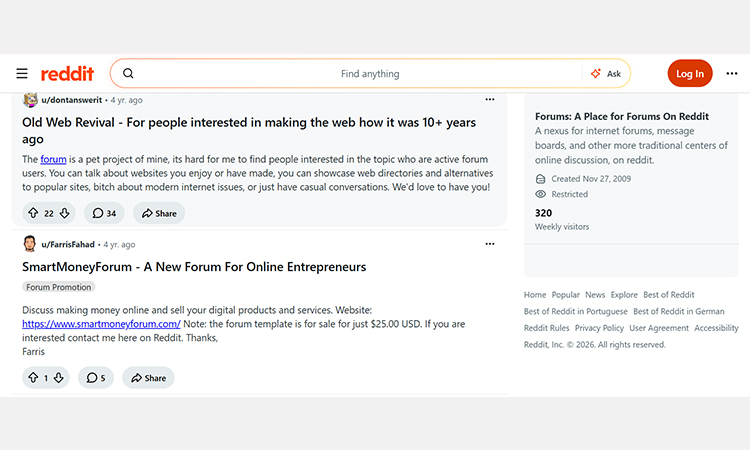
Platforms like Reddit and specialized online industry forums are excellent sources when it comes to extracting customer sentiment. You will find out the lengthy, in-depth discussions, organic advice, and unfiltered user perspectives across these community forums and discussion panels. These platforms highlight the ‘why’ behind consumer habits and provide benchmarks on competitor strengths and weaknesses.
How Does AI Help Analyze Customer Sentiment?
In this section, we will talk about how artificial intelligence can help brands analyze or measure customer sentiment. From evaluating customer sentiment to mapping customer concerns to find root causes and providing actionable insights, AI-powered techniques cover a brand’s every customer sentiment analysis need and beyond.
Here’s how artificial intelligence can help you to analyze your customer sentiment:
Step 1: Data Collection
AI helps brands collect and compile customer data from a wide variety of sources. This customer data helps the brand build a comprehensive emotional profile for its target audience. Here’s how AI can help brands collect customer feedback.
- Gathers Customer Interactions from Multiple Channels
AI helps you collect customer interactions from multiple key platforms, such as:
- Industry-specific review sites
- Online forums
- Websites
- Survey responses
- Phone calls
- Emails
- Support tickets
- Social media posts and comments.
Artificial intelligence aggregates this information by continuously extracting the data from multiple digital channels to collect a variety of customer feedback to analyze.
- Manages Omnichannel Customer Feedback
By employing artificial intelligence, brand owners can centralize a large volume of customer data into a unified platform. In broader terms, artificial intelligence eliminates the customer experience blind spots and tracks how a customer’s sentiment fluctuates depending on where they are interacting- chat, text, or phone. By employing AI, brands can effectively manage customer feedback from omnichannel sources.
Step 2: Text and Speech Processing
Artificial intelligence tries to understand and digest raw inputs from humans to figure out both what a customer has said and how the customer has said it. AI helps brands understand human language at scale to identify the emotion behind their text or speech.
Below, we have discussed how AI processes human text and speech:
- Converts Raw Data into Structured Information
AI tools and techniques perform natural language processing to understand unstructured feedback (specifically text reviews). Firstly, they understand the subject of the review, categorize it into specific topics, and assign specific labels (whether it is positive, negative, or neutral) alongside user sentiment score.
- Converts from Voice to Text
Artificial intelligence employs Automatic speech Recognition to understand spoken customer interactions. This specific technology, merged with customer sentiment analysis strategies, can transcribe voice-to-text in real time. It turns audio data into written transcripts that AI-powered sentiment analysis techniques can process and analyze just like written customer feedback.
Step 3: Sentiment Detection
Now, artificial intelligence evaluates the underlying subjective elements within the customer feedback or comments to accurately determine their polarity. They try to understand the sentiment behind your customer reviews. Accurately detecting your customer sentiment also helps you understand how people are perceiving your business.
- Identifies Emotional Tone
Artificial Intelligence sees a customer review beyond just simple keywords. They try to identify the meanings, emotions, and concepts of customer feedback to identify excitement, disappointment, hesitation, and frustration. Brands can seek professional review management services from reliable agencies to seek their expert advice on identifying the emotional tone behind customer reviews and comments.
- Understands Context and User Intent
While basic AI tools cannot identify deep human emotions, advanced generative AI tools and large language models help brands identify human nuances, sarcasm, and idioms. AI tools capture complex sentence structures and determine exactly what your customers want to achieve through the query, review, or comment (for example, asking for a refund, complaining about something, or just sharing their purchase experience).
Step 4: Sentiment Categorization
Now that you know about the customer sentiment, it’s time to categorize the sentiment into four distinct categories: positive, negative, neutral, and mixed. Once the artificial intelligence tool has processed the text and extracted the emotional cues, it classifies the sentiment into distinct categories.
- Positive Sentiment – This refers to the customer sentiment that involves enthusiasm, appreciation, and satisfaction.
- Negative Sentiment – This specific sentiment involves complaints, anger, or disappointment from your customers.
- Neutral Sentiment – This specific sentiment recognizes objective and matter-of-fact statements that don’t reflect a specific emotion or opinion, rather conveying something neutral
- Mixed Sentiment – It identifies sentiment that involves both positive and negative feelings of a customer in the same interaction. It requires a fine-grained analysis to understand and identify the statement.
Step 5: Actionable Insights Generation
Artificial Intelligence processes customer reviews with consistent logic at scale to deliver precise and data-driven strategies. Customer sentiment identification and categorization are just two initial processes that AI tools undergo. As a final process, AI tools help brands generate actionable insights from the collected customer sentiment.
AI tools often monitor the shifting of customer preferences and attitudes in real time. They serve as an early warning system that helps brands identify emerging market trends, viral sentiment drops, public opinion changes, and more.
- How Does It Generate Actionable Insights? AI tools evaluate historical and current interactions to detect hidden patterns in how users navigate your product and products, services, and other offerings.
By leveraging artificial intelligence, brands can easily identify friction points and predict when a customer might churn and detect the specific features that are causing frustration or delight.
Another great aspect of the AI-driven customer sentiment analysis is that it translates customer emotion and text into specific operational changes. For example, if a customer’s emotion reflects that one of your service team lacks a certain soft skill, AI-driven insights recommend targeted upskilling or suggest product improvements to resolve the issue.
Step 6: Key Sentiment Metrics Monitoring
Modern AI tools significantly eliminate guesswork by helping brands measure key performance indicators and automatically evaluate conversational tone and intent. The following are certain key performance indicators (KPIs) that you must track to monitor your AI-powered customer sentiment analysis efforts:
- Customer Satisfaction Score – Measures how satisfied a customer is regarding their experience with a product, service, or interaction.
- Customer Effort Score – Measures how much effort a customer had to exert to resolve an issue, complete a purchase, or learn a feature of a product.
- Customer Sentiment Score – Measure emotional valence across all touchpoints, including slang, sarcasm, context across tickets, emotion, social media perception, calls, and emails.
- Net Promoter Score – Evaluates overall customer loyalty and the likelihood of brand recommendations.
Top 6 AI Customer Sentiment Analysis Tools Brands Must Consider Employing
Now that you know how leveraging AI can help you in effectively and strategically analyzing customer sentiment, it’s time to reveal the secrets of some AI sentiment analysis tools that brands can employ to seamlessly understand what their customers are thinking about their business and offerings.
Below, we have talked about the top 6 most popular AI-driven customer sentiment analysis tools. These tools can help you translate unstructured customer feedback and social data into actionable emotional insights. You can explore the list and choose the most suitable tool for your sentiment analysis needs:
| Tools Name | Features to Use |
| 1. Brandwatch | ● Ideal for enterprise social listening and consumer intelligence analysis. ● Can analyze more than 100 million daily sources like news sites, digital forums, and other social platforms. ● Provides competitive share-of-voice benchmarking and Iris AI-powered trend summaries. |
| 2. Sprinklr | ● Excellent for omnichannel customer experience analysis across more than 30 digital channels. ● Its AI features excel in NLP to pick up subtle emotional cues like frustration, sarcasm, and complex intentions in real time. |
| 3. Qualitrics | ● A premier solution for customer experience management. ● Specifically designed to capture the ‘why’’ behind customer and employee surveys. ● Its Text iQ feature quantifies customers’ sentiment on a -5 to 5 scale and automates the open-ended analysis. |
| 4. Medallia | ● Best for measuring holistic customer journeys. ● Helps in linking conversational emotion, efforts, and intent data across contact center calls, surveys, and digital signals to ensure deep and long-term CX improvement |
| 5. Talkwalker | ● A leading choice for visual sentiment and multilingual brands. ● Provides AI sentiment in 187 languages while using visual intelligence to analyze brand logos and emotional cues within podcasts, images, and videos. |
| 6. MonkeyLearn | ● Ideal customer support teams who are looking to build tailored machine learning text classifiers without writing code. ● Allows businesses to directly route subjective feedback into customized dashboards through API or dashboard configurations. |
4 Most Common Challenges in Customer Sentiment Analysis
Till now, we have discussed the list of benefits a brand can leverage through effective AI-powered sentiment analysis. But apart from these benefits, brands often struggle with certain challenges while analysing customer sentiment.
The following are four common challenges in customer sentiment analysis. Identifying these challenges can help you avoid them and overcome these distinct technical hurdles to ensure the delivery of accurate results:
- Understanding Sarcasm and Review Context
Human language mainly relies on irony, sarcasm, and implied meaning. Your customers can share sarcastic reviews, which can easily fool standard algorithms. For example, a customer can write ‘Great job on sending the broken product!’ As it involves highly positive words to convey a negative customer experience, the algorithms often get confused and consider it a positive review.
- Dealing with Data Privacy and Compliance
When brands analyze direct customer conversations, it brings serious data vulnerabilities and strict legal liabilities as well. Your customer reviews and chat transcripts often contain personally identifiable information of the customers, including their names, phone numbers, and addresses. Processing a large amount of data without any safeguards can violate strict compliance frameworks like the GDPR and the CCPA.
- Managing Large Customer Data Volumes
As a business owner, you may be flooded with constant streams of text across scattered online platforms, including social media channels, third-party review sites, support emails, and chat logs. Handling a large volume of customer data can lead to major data privacy and compliance issues. Business owners can often deal with these data privacy issues while handling customer data and customer sentiment analysis.
- Handling Multilingual Customer Data
Your customers come from different demographics. This means that you need to deal with multilingual customer data. Such multilingual customer data often interprets diverse expressions that don’t clearly translate word-for-word. Such reviews often involve regional slang, local customer expectations, and idioms that business owners often face difficulties in dealing with. Such multilingual data can heavily distort the customer sentiment score or make it inaccurate across regions.
Conclusion
Every brand must prioritize analyzing customer experience to understand what their customers are thinking about their brand. But the process is quite time-consuming and often involves too many steps.
Merging AI technologies with sentiment analysis can help brands significantly transform customer experience by providing real-time and actionable sentiment insights that allow them to deliver proactive services rather than reactive ones. If you’re skeptical about implementing AI in your customer sentiment analysis strategies, we hope that our blog will help you learn about the benefits and how AI can boost your sentiment analysis efforts.
Still have doubts? Consider partnering with a reliable online reputation management agency to seek their expert assistance.
FAQs
Below we have enlisted 5 frequently asked questions and answers related to AI-powered analysis of customer sentiment:
Ans. AI-powered sentiment analysis provides a list of benefits and immense value to various industries that heavily rely on consumer feedback. It can specifically benefit retail and e-commerce brands, organizations dealing with customer support services, the travel and hospitality sector, financial service providers, and healthcare companies.
Ans. Yes, AI-driven customer sentiment analysis is highly accurate, specifically for scanning large amounts of customer data and establishing broad trends. However, it is not 100% infallible, as machines often struggle with complex human nuances, like irony, deep context, and sarcasm.
Ans. Small businesses can leverage AI for their specific sentiment analysis requirements. This AI-powered process can help you automatically process customer feedback, social media brand mentions, and support tickets in real time. They can uncover underlying customers’ emotions, such as satisfaction and frustration. Additionally, small brands can promptly resolve customer complaints, personalize marketing campaigns, and improve products or services without manually reading every single review or comment.
Ans. No, AI cannot completely replace human customer support analysts. Artificial Intelligence can efficiently automate repetitive and high-volume tasks like product order tracking and password resets. On the other hand, AI significantly lacks critical thinking, empathy, and judgement that are required for complex, emotional, and policy-exception scenarios.
Ans. You should choose an AI-powered sentiment analysis tool that can help you accurately categorize customer data beyond simple positive or negative labels. Tools that offer features like granular emotion detection, real-time insights, and omnichannel coverage can be ideal to meet your sentiment analysis needs.

