





Imagine you’ve written a new song and are ready to release the entire album. But do you know that thousands of new music albums are released every day around the world? You have to market your USPs to rise above the noise and make a lasting impact as a musician. In today’s digital era of the overly crowded music industry, having a good voice is not enough for music artists. That’s where PR for music artists comes into play.
Yes, artists do need strategic exposure and consistent positive media coverage to build a strong public image. Public relations is the secret weapon that most musicians still don’t know how to use. PR is something through which you can generate genuine interest in your music.
No matter whether you’ve just started your career in the industry or are an established musician, an effective PR plan can help you build or maintain a strong brand image and reach a wider audience.
Wondering how to navigate this complex digital world of PR for musicians? Don’t worry when we’ll come to your rescue! Here we’ve provided you with a complete PR guide for music artists, along with its benefits and other significant must-know factors. Explore the guide and take your career in music to a new height.
What Is PR for Music Artists?
Public relations for music artists involves the best practices of managing and shaping how a music artist is perceived by the public, the music industry, and the media. The strategies go beyond just posting engaging content on social media – it’s more about crafting a compelling narrative and securing media attention for your music expertise.
Effective PR ensures you, as a personal brand, resonate with your target audience. So, is it about the promotions as well?
Yes, it is. PR professionals promote musicians, bands, and their talent to the public through positive media coverage and storytelling. The following are some non-negotiable elements of public relations for music artists.
- Press releases
- Media pitches
- Interviews
- Podcast placements
- Album or song launch campaigns
- Social media, influencer, and media outreach
- Crisis management and online reputation repair
- Event coordination
- Red carpet appearances
- Features in media publications, radio stations, magazines, and other online platforms
- Playlist placements
- Social media engagement
These are just a few! Apart from these, there are many elements that an ideal PR plan covers and navigates.
The process may seem complex until you seek professional and expert guidance from a renowned PR service provider.
Why PR Is Essential for Music Artists?
If we can summarize the importance in one sentence, we can say that public relations has become a non-negotiable strategy for musicians in recent times due to its strategic approach. By implementing effective strategies, music artists can manage their public identity and make their talent reach a wider audience across various platforms.
Below are some key points why music artists must consider PR to grow their careers.
- Builds a Strong Public Image
No matter whether you’re a celebrity musician or have just started your career in the music industry, you must have a positive and strong public image. How the general public perceives you and your music expertise plays a huge role in your success.
PR shapes how you’ll be perceived by the public – it ensures that to showcase your talent in the best possible light across the virtual world, and your persona perfectly aligns with your music and values.
- Increases Brand Visibility Online
PR best practices ensure music artists own a consistent media presence through targeted campaigns. You can see a drastic and dramatic shift in your digital footprint by implementing strategies for PR for music artists.
But why is it important? A good digital activity can help people easily find you online and follow your social media profiles. They can seamlessly stream your music and get access to the news about you as well.
- Effectively Promotes New Albums and Concerts
Do you know that PR is all about creating the buzz – the HYPE!
Before you even release a music album or announce a world tour or concert, PR ensures the public and the media are well aware of what you’re up to. It creates the hype and secures the right attention for your interviews, new albums, concerts, and tours, which is crucial to drive concert ticket and album sales.
- Reputation Management
As we all know that a good public image is crucially related to a solid online reputation. PR professionals actively monitor public perception about musicians and their music expertise. They even professionally handle reputational crises and negative press. Musicians can prioritize hiring personalized reputation protection services for better crisis communication and management.
From managing their online reviews to building and maintaining a positive public image, PR serves your every requirement and beyond. It protects your career in music and long-term viability.
- Improves Personal Branding and Credibility
You’re a music artist, but are you a brand? Building a personal brand as a music artist is crucial in the crowded music industry, no matter how well you sing. PR ensures positive media placements in reputable press outlets that lend legitimacy to your career as an artist.
It will position you as an established professional and valuable music resource in the music industry. All these automatically add value to your brand’s credibility.
- Develops a Loyal Fan Base
PR professionals ensure that compelling narratives are shared and the music artist is humanized through various media channels. Through all these, effective PR fosters deeper connections with its new fans.
It helps even beginners build a loyal fan base from the very first time. Fans who like your song move beyond casual listening to a dedicated loyalty.
- Helps in Securing Positive Media Coverage
And the most important benefit PR offers is the positive media coverage it generates. This is something – a direct result of good PR work. Effective PR strategies help music artists get featured in authoritative blogs, magazines, reputable newspapers, and TV/radio shows.
Positive media coverage also helps musicians reach new and existing audiences most effectively. When your music expertise gets featured in some top publications, it naturally positions you as a credible resource.
A Complete Guide to PR for Music Artists: 10 Major Steps to Follow
Now we will discuss the complete PR process to build a strong public image and secure positive coverage in some top media publications. Here are 10 important steps every music artist must follow to achieve their desired public image and online reputation.
Let’s get started!
Step 1: Establish a Strong Artist Persona for Music PR
Before your music, your talent, and your skills, what comes first is – Your Personality as an Artist. Building a strong artist persona is important for every music artist to connect with the right audience more closely.
- Define Your Personality, Style, and Values
As a music artist, your persona should be a reflection of what you write, compose, and sing. It should be your authentic self that makes you relatable and memorable to your fans and the media as well.
- Personality Archetype: Music artists should choose an archetype that can easily reflect who they are as a person. It will set your tone in media interviews, conferences, social media posts, and press releases.
- Core Values and Mission: What does your music stand for – is it creative freedom, complete entertainment, or just social advocacy? Your core values will help you humanize your brand and attract a set of interested audience and journalists.
- Visual Style: Now it’s all about your fashion. You need to develop a distinctive look encompassing a clothing style for yourself. Apart from your fashion, you can consider an aesthetic website design (if you have your own official site) and personalized social media feeds.
- Develop a Cohesive Brand Identity in the Music Identity
Now you need to develop a consistent brand identity. It’s a great element of your music career that should be developed in these ways –
- An Artist Bio: Create a professional bio to boost your PR efforts. The bio should specifically talk about your personality, values, and musical styles in a compelling way. It must serve as an official introduction of you as a musician to the media and the industry professionals.
- Messaging Pillars: Choose or write 3-4 key messages through which you want to be associated with the media. In all interviews and press materials, these messages should be incorporated.
- Visual Assets: You can hire a professional photographer to shoot photos and videos for your press kit. It should clearly communicate your visual style and persona to the audience.
- Maintain Brand Authenticity
It’s the foundation of an artist and the cornerstone of building a strong and positive public image.
Tips to Stay Authentic as a Music Artist
- Maintain your brand’s authenticity even during public interactions.
- Stay true to yourself and maintain consistency between your public persona and private interactions.
- Evolve as you grow as an artist in the media industry.
- Use your values and professional personality as a filter during all your social media and fan interactions.
Step 2: Develop an Engaging Artist Story to Grow Your Music Career
Without a story, even your efforts for PR for music artists would be completely irrelevant. Here are some helpful ways a musician can develop an artist’s story.
- Craft Your Origin Story as a Music Artist
Where were you born? Where have you studied? Whom do you stay with?
Your origin story as a musician is beyond all these. It’s about that specific moment when you became an artist.
What to include in the story?
You can consider incorporating elements just like the following.
- A specific concert you’ve attended during your teenage years
- A gift of an instrument you got from your grandfather
- A life event that made you realize that music is your destiny
- List of music artists who have shaped your perspective in music or influenced you to go ahead in your career
- The first time you wrote a song or performed in a live event
Always remember – people love to know about your story beyond your professional life. This is the way to humanize your talent and connect with your audience on an emotional level.
- Highlight Your USPs – Struggles, Achievements, and Overall Journey
A good story is incomplete without some major elements like your career struggles, achievements, and your overall journey in the music industry.
The Struggles –
- Overcoming your stage fear or awkwardness
- Balancing your passion for music with a corporate 9 5 job
- Facing repetitive rejections during the initial years of your career
- Finding your voice in a crowded genre
- Not having a good financial condition to launch your own music albums
The Achievements –
- Notable press features
- Sold-out shows
- Specific streaming milestones
- Awards
- Successful collaborations with top brands
- Appreciation in popular podcasts and interviews
The Overall Journey –
As a musician, your journey is a thread that connects your origin, struggles, and achievements altogether. It’s a big ‘WHY’ behind your passion for music, your profession, and success in the industry.
- Use Storytelling in Interviews, Bios, and Press Kits
We all heard that consistency is the key.
Whatever your story is, it must be adaptable for your target audience, the media, your fans, and social media followers. Not just the story, but also how you share the story is also crucial.
Let’s have a clear idea of where you can use storytelling.
- Interviews – When communicating with the interviewer, use anecdotes to illustrate your points. You can rehearse the key stories or common questions to answer them more confidently when asked.
- Bios – We suggest you create a short, a medium, and a long version of a bio to use them for different purposes. The bio should sound like a narrative summary, not just a list of your achievements.
- Press Kits – Even in the press kit, you need to prioritize storytelling. You can prominently feature your narrative in the ‘About’ section of the kit and add high-quality photos. All the elements that you will add to your press kit must reflect your story’s theme. Apart from these, you can embed links to your digital press features or news clippings, serving as proof of your achievements.
Step 3: Create a Robust Electronic Press Kit with Key Assets
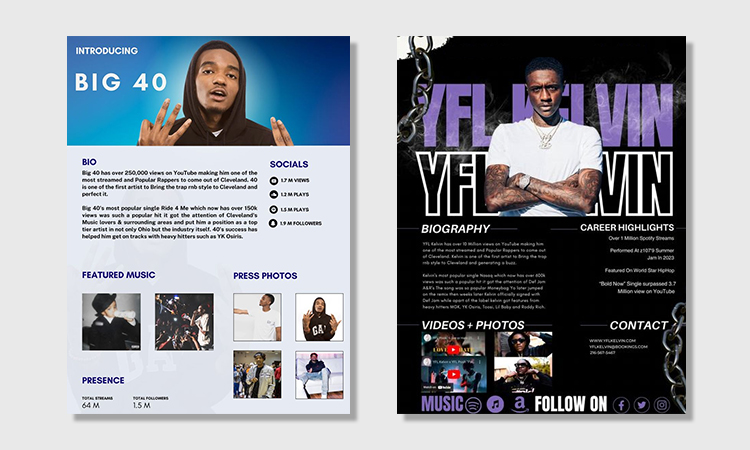
Do you have a media kit or an electronic press kit? If yes, then is this visually captivating?
An electronic press kit for a music artist must be visually attractive, carefully curated, and strategically present all the essential assets.
What is an electronic press kit? It’s a digital package of a musician’s or a band’s promotional materials, similar to a traditional media kit. But this one is shared electronically. It serves as the music artist’s online resume or portfolio, containing a bio, high-resolution photos, social media links, music links, videos, and contact details. Through this kit, musicians can secure positive press coverage, beneficial partnerships, and gigs.
Aim: The primary aim of a robust media kit is to provide journalists, venue bookers, and other agents with every possible detail they need to feature your story.
6 Major Elements An Ideal Electronic Press Kit Should Include
The following elements are what an ideal electronic press kit for a music artist must have.
| Elements | |
| Bio | • Should be concise and compelling • Should tell your story and highlight your achievements • Can be used for quick snippets and media features based on the length |
| Music Links to Online Videos | • Must provide direct access to your best work • Should be curated to showcase your music and performance ability • A clean, embedded player or links to your high-quality and most popular tracks on major streaming platforms like Spotify, Apple Music, and YouTube Music |
| Photos | • High-resolution and professional photos for media publications to use for their articles and flyers • Allows headshots, full-body shots, and live performance • Images can be either color or black-and-white |
| Logos | • Professional logo of your record label, band, or company • Should be consistent across all online platforms • Allows various formats like PNG, JPEG, and supports all color variations |
| Press Releases | • Must showcase your past achievements, top media features, best interviews, and houseful concerts • Can announce new projects, concerts, tours, and brand collaborations |
| Social Statistics | • Provide current metrics to demonstrate the reach and engagement of your music • Reflect your engagement rates and audience demographics • Must list a professional contact email, phone number, and social media handles |
How to Make the Press Kit More Visually Appealing and Updated?
Here are some tips to make your press kit more visually captivating and updated.
- Have an official website? Host the media kit on a dedicated page of your website.
- Ensure that elements like colors, fonts, and overall design match your established brand identity as a musician.
- The layout should be clean and intuitive with enough white space. It shouldn’t appear cluttered or overwhelmed with too much information.
- Add clear headings and bullet points to make the details easily understandable.
- Images that you’ll add must be of high quality. Avoid incorporating blurry or amateur content into your press kit.
- You should also include a clear and direct CTA for downloading the PDF of your press kit (e.g., Download Full Press Kit) or booking your appointment (e.g., contact for Booking an Appointment).
Step 4: Create Press Releases and Make Announcements
It’s time to create a tailored press release to make major announcements about your music career. Press release creation and distribution are a huge part of PR for music artists.
But it’s not a cakewalk. You need to follow a perfect format to write a press release. To make your work a little easier, here we have provided you with the right format.
An Ideal Format of Effective Press Releases for PR for Musicians
- Compelling Headline: Attractive and compelling summary of the main announcement
- Strong Lead Paragraph: The initial paragraph that covers the most important information, the Ws – who, what, why, when, and where
- Supporting Details: The body content that provides additional details, such as the announcement’s importance and further specifics regarding the event, release, or other happenings
- Authentic Quotes: Direct quotes or statements of you or your media spokesperson, or representative, to add value to the story and humanize it
- Boilerplate: Brief ‘About Us’ section at the end of the press release that simplifies your bio, USPs, and key achievements
- Media Contact Information: Clear contact details for media professionals so that they can easily get in touch for interviews or more information
- Technical Sign-offs: Standard notation, usually the ### centered at the bottom, indicating the ending of the press release
5 Instances When a Musician Should Write Press Releases for Media Coverage
A music artist can write press releases for these instances –
- New Song or Album Launch
When you’re about to launch a music album or a single song, you must share a press release to get the news out to all media outlets. You can even share the press releases with the music blogs and music streaming services. These press releases allow you to provide essential details about your inspirations for writing that song, lyrical themes, and other interesting stories.
- National or International Tours
Many music artists with their band organize national and international tours to perform live in different cities and countries. Press releases are the best medium to announce such tours, especially to generate excitement among people.
Music artists can write press releases to inform potential attendees and the media outlets about the dates, cities, and venues of their live concerts during the tour. When you announce such tours through press releases, it helps you secure coverage in local media publications.
- Concert Announcements
A press release is the most common form of announcing a concert. Through the press release, music artists can provide all the necessary details about their concerts, public events, and other large-scale shows.
- Awards or Certifications
Have you received an award? You can write a press release to make the announcements and share the news with the media. Any of your awards or certifications that deserve media attention can be announced through a press release. It can help you officially announce your accomplishments and boost your professional credibility.
- Major Collaborations
When you collaborate with notable musicians or top brands for an advertisement, it needs to get media attention. A press release is the best way to officially announce the collaboration and secure press coverage for it. It’s a win-win situation for both the partners – you and with whom you’ve collaborated.
What is the timing for Press Release Distribution?
This is the most common query when it comes to distributing a press release. Yes, timing plays a major role here – whether there will be a positive or negative response from the media.
Do you know that 61% of journalists prefer to receive pitches in the morning, while 30% prefer the afternoon, and 9% like to receive them in the evening?
If we talk about the best day, we can say it’s Tuesday to Thursday in the morning from 7 AM to 9 AM. But the ‘Golden Time’ is between 10 AM-2 PM.
Note: Music artists must distribute press releases depending on the target audience’s local time zone. You should always choose ‘off hours’ like 11.23 AM instead of 11.00 AM to avoid inbox congestion.
Step 5: Pitch to Media Outlets and Relevant Professionals

Media pitching is a significant part of PR for music artists.
Now that you’ve a clear idea of how you can write an ideal press release, it’s time to pitch to the media professionals to secure positive coverage.
- Tips to Identify the right Journalists
The following are some easy tips to identify the right media professionals. If you choose journalists who don’t come from your niche, they may not feature your story the way it should be. And the response will not be what you’ve desired.
For example, a sports journalist is not a great choice for covering your concert story.
- Research about Your Recent Work: You can conduct a detailed research on the news stories the journalists are covering lately. Make a list and choose the ones whose work aligns with your story.
- Identify their Target Audience: Imagine you’ve chosen a journalist, now you’ve to identify the type of audience who reads and watches his/her content. It will help you identify whether your news story is a good fit for their readers or not.
- Check their Beat: Try to get connected with journalists who cover news regarding the music industry, relevant topics, or related beats. It will help you get the perfect feature for your story.
- Note the Style: In which style do the journalists work in? Is he/she looking for breaking news, in-depth features, or expert commentary? Based on this, you can choose which story you want them to cover.
- Build and Maintain Long-term Connections with Media Outlets
We always suggest establishing a good connection with the media professionals before your pitch to them. This increases your chances of getting positive coverage for your story. But now the question comes – how can you form a good bond with media professionals?
- Be a Valuable Resource for them: Journalists are always in search of good, interesting stories. If you provide them with good news stories about your industry, valuable insights, expertise, and relevant data, they will consider you a good news resource for them. Thus, you need to connect with them to offer them data, helping them with future stories, not just when you have a request for coverage.
- Engage with Their Content: Journalists often have various social media handles where they keep sharing news stories, articles, and other content. You can share, comment on, or repost that content to showcase your support for them. You can also showcase that you’re a genuine follower of their work for a long time.
- Offer Prompt Responses: The journalists can contact you for new stories at significant intervals. When they contact you, try to offer prompt responses, be quick, and helpful to position yourself as a reliable news source in the music industry.
- Be a Consistent Contact for Them: Are you among those who only get in touch with media outlets when they want to pitch them for coverage? Be a consistent source for them – try to regularly share relevant and interesting content with them.
- Write Personalized Pitches with Strong Hooks
Don’t go for generic templates when you pitch the media. Personalize your pitch based on who you’re pitching to and what can impress the journalist.
- Follow Story-first Approach: Think about the story first, and your brand later. Make your story sound interesting to the journalist so that they think their audience can be impressed with the story.
- Don’t Advertise Anything: Try not to pitch like blatant advertisements for your music label or band.
- Personalize Your Email: Tailor the email by addressing the recipient by name and referencing a specific article they have written to show you’ve researched well about their work well.
- Write a Compelling Subject Line: Create a strong subject line for the email. Keep the subject line compelling, informative, and quick. So that your pitch email stands out in the journalist’s inbox.
- Choose a Brief Pitch: Keep the pitch concise and don’t overwhelm the recipient with too many coverage requests. Get straight to the point and clearly explain your news story’s angle and relevance.
- Professionally Follow Up with Media Outlets
Always be respectful of the journalists’ time. You may need to wait a reasonable amount of time before following up. They may not promptly respond to your pitch. Keep the follow-up email short and polite to remind them about your original pitch. Don’t forget to add a clear call to action to guide the journalist on how they can connect with you over a phone call.
Haven’t heard back even after a follow-up? It’s best to move on and try pitching to other media professionals.
Step 6: Leverage Social Media for PR
Social media plays a huge role in boosting the public relations of a music artist or a band. Without effective social media reputation management strategies, PR professionals cannot master PR for musicians.
According to a 2018 The Tennessean, 57% of social media users follow at least one artist or band. Now you can understand why music artists must have a strong presence on social media.
- Use Instagram, YouTube, X, Facebook, and TikTok
Let’s know how you can use these social media platforms to boost your PR efforts.
- Instagram: You can focus on making short and engaging videos for platforms like Instagram. The platform allows you to create short-form videos like Reels and stories to engage with more followers and give them quick updates about your concerts, events, and tours.
- TikTok: You can create engaging user-generated content and post short clippings of your concert or event videos for TikTok.
- YouTube: Music artists can also create content like interviews, tutorials on playing an instrument or singing a particular song, and event recaps, to build authority in the market and connect with the audience more deeply.
- X (Twitter): This specific platform can be used for offering real-time updates, joining trending conversations, and interacting with the audience. Music artists can make major announcements through Twitter, like event or concert announcements.
- Facebook: This is a platform with a wider audience reach across the globe. You can build community on Facebook through groups and share long-form content. Music artists can create Facebook groups where people with similar music interests or a link to his/her music can join and engage with the artist personally.
- Engage Storytelling and Share Behind-the-Scenes Content
Storytelling plays a huge role when you’re posting engaging social media content. People love to know your real self, other than your professional expertise and talent.
Sharing behind-the-scenes content like your daily routine when you’re at home or when you’re travelling to attend to concert can create huge engagement for you. Talking about the challenges you’ve faced and the successes you’ve achieved so far can help you humanize your music label or brand.
- Maintain Consistency in Sharing Social Media Posts
Posting on Monday and then after one week can make you look inconsistent and inactive on social media. On the other hand, regular posting of social media content can offer you numerous opportunities to connect with your followers on a personal level.
To maintain consistency, you can create a content calendar to plan your posts. Don’t post similar types of content regularly, as it can prevent followers from staying engaged for a long time.
Follow this rule to avoid overwhelming your social media followers, yet maintain consistency –
- 70% ofg value-adding content
- 20% of shared content
- 10% of promotional content
Step 7: Secure Meaningful Collaborations and Networking Opportunities

As a music artist, you can collaborate with prominent music video producers, bands, music labels, and other prominent industry-specific personalities for cross-promotional purposes. It’s about promoting their content while they promote yours.
When it comes to PR for music artists, beneficial collaborations and professional networking are what can position a music artist in an authoritative position in the crowded industry.
A win-win situation for both of you, right?
Here’s how you can secure these collaboration opportunities.
- Partner with Top Brands, Social Media Influencers, and Other Artists
This is called influencer marketing, where music artists can partner with top social media influencers and other brands to reach their target audience. It’s the best way to make your music expertise reach to a new, wider audience authentically by gaining their trust and confidence.
When a big brand or a popular influencer promotes your song or music album on their social media handles, their audience sees you as an authoritative music resource. Partnering with top brands can help you get great sponsorships and meaningful content opportunities.
- Organize Industry Events, Fan Meetups, and Participate in Other Online Communities
Music artists can organize industry events and fan meetups to personally connect with their fans and followers. These events allow music artists to engage with their fans and followers, fostering a sense of loyalty among them. It keeps the music artist top of their mind, as they can get to know their favorite musician personally.
They can participate in panel discussions or workshops to connect with the media outlets. Apart from this, musicians can generate authentic word-of-mouth PR through fan meetup events. Furthermore, online community events can help music artists engage in relevant online forums and become a crucial part of social media groups.
- Prioritize Joint Campaigns, Guest Features, and Shoutouts
Music artists even secure guest post opportunities or organize joint campaigns. Collaborating with top-rated music brands or producers can ensure you get maximum exposure and promote your work with maximum effort.
Have you ever appeared on another artist’s track, podcast, or YouTube channel as a guest? If yes, then this can help you reach the artist’s target audience.
What is a shoutout? It’s a form of mentioning someone’s name on social media during a live performance or a video. When popular social media influencers or other music artists offer you shoutouts on social media, it makes your music expertise reach a new and broader audience.
Step 8: Strategically Plan Your Music Releases
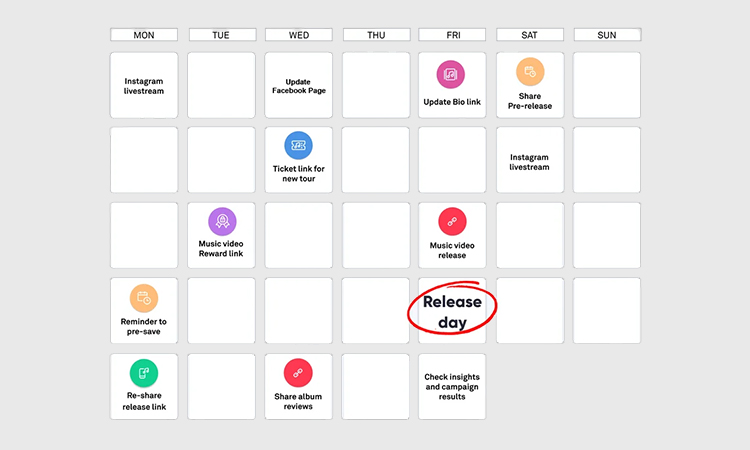
We have already talked about the importance of timing, no matter whether it is for your press release distribution or music releases.
The approach should be completely strategic when you plan your music releases. You need to identify the specific timing when your music can get the maximum response. Here’s a quick guide on how you can plan your music release.
- Create Release Calendars in Advance – Try to create a music release calendar for consistent sharing of social media posts and email newsletters regarding the music release. You can seamlessly inform your target audience about the music release dates and ensure a good response. It will help you visualize your campaign timeline and identify what results your PR efforts can deliver.
- Promote Teasers and Create Hype before the Song Release – Never forget to invest in good promotional strategies for your teasers. It’s the best way to create hype in advance! Music artists can share short video clips, behind-the-scenes footage, and short snippets of their tracks on social media platforms.
- Create Audio-Visual Campaigns – Visual assets like lyrical videos, static images, graphics, and official music videos can perfectly complement your music. You can create those visual assets and share them with your fans across various online platforms.
- Collaborate with Top Music Apps like Spotify and Apple Music – Once you become an established name in the music industry, you may get collaboration proposals from top digital streaming platforms. On the other hand, you can pitch your music to top music apps like Spotify and Apple Music to improve the song’s visibility and reach.
Step 9: Manage Your Reputational Crisis and Control Online Narrative

Music artists can often face reputation crises depending on various situations, including –
- Their behavior misconduct
- Controversial opinions or statements on public forums
- Accusations or misrepresentations of cultures
- Creative misrepresentation and plagiarism
- Legal or contractual disputes
- Ethical violations
Implementing effective PR crisis management techniques can help music artists identify these crises and take necessary precautions before they impact their public image. The following are some impactful ways through which musicians can control the online narrative about themselves and manage their reputational crises.
- Handle Controversies and Negative Press
After a crisis happens, the initial 24 hours are crucial. During these hours, how you’re taking necessary steps to resolve the issue, how you’re communicating with the public and the media, and how you’re behaving are crucial to determining the future of the issue.
- Act quickly! Acknowledge the situation promptly to prevent further escalation and take a moment to understand things before you issue a formal statement.
- Take responsibility! If you’re at fault, you must acknowledge your mistake and issue a sincere public apology without being defensive and making excuses.
- Centralize communication! Appoint a spokesperson who is properly trained to communicate with the media and the public on your behalf during a crisis.
- Maintain Communication Transparency
As we already said that how you communicate during a crisis is crucial to how people will perceive your image.
- Communicate with the public, media, partners, producers, and your team members clearly and keep them informed about the major steps you’ll take to resolve the situation.
- Provide proper facts and evidence (verifiable information to support your claim) to prove your innocence.
- Share major updates not only on one specific channel but across various digital platforms, especially where your target audience is active.
- Implement Prevention to Build a Good Digital Image in Advance
Strategies of PR for music artists require professionals to take preventive steps well in advance. So that when a crisis occurs, you already have a good public image and trust.
- Establish a positive foundation: Do you have a strong, pre-existing reputation online? If yes, then it can help you during a reputation crisis. As you already have achieved the public trust, your audience, fans, and followers will play the role of your brand ambassadors who will defend you on your behalf.
- Plan carefully: Plan how you’ll communicate during a crisis. Try to create a detailed plan before a crisis occurs to take necessary actions immediately and prevent major impacts. Identify the potential risks, assign responsibilities to your team members who’ll handle the situation externally, and draft a holding statement.
- Offer proper training to your team: Music artists can conduct media training for potential spokespersons and other team members. Additionally, they can run mock crisis simulations with their communication team.
- Turn Your Learning into New Opportunities
Once the crisis is resolved, now it’s evaluate what and why it happened. You need to identify the strategies you could implement to prevent the crisis. This detailed evaluation will help you identify what went wrong and learn from your mistakes. When you turn your learnings into new opportunities to grow your public image, nothing can stop you from achieving your desired PR success.
Step 10: Employ Helpful Tools to Boost Your Music Artist PR Efforts
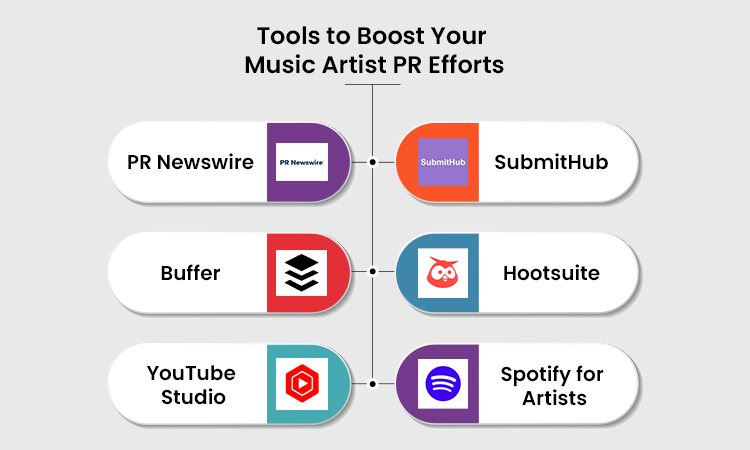
Now we will talk about some advanced tools that music artists must employ for their music publicity campaigns. Here are the 6 most helpful tools for PR for musicians.
| Tools | Features to Use |
| PR Newswire | • Ideal for wide media distribution • Best for the distribution of formal press releases • Ensures your news story reaches the right journalists and media outlets |
| SubmitHub | • Helps in directly connecting with music bloggers, social media influencers, and playlist curators • Facilitates organic reviews and playlist placements |
| Buffer | • Simplifies scheduling of your social media posts across multiple platforms • Helps in maintaining a consistent and professional digital presence • Doesn’t require you to constantly do manual posting |
| Hootsuite | • Robust features to manage multiple social media channels • Schedules your social media content • Monitors your performance and engagement on social media |
| YouTube Studio | • Helps in managing a music artist’s official YouTube channel • Analyzes their audience engagement metrics • Optimizes video content and helps in directly interacting with their fans |
| Spotify for Artists | • Claims and verifies a musician’s artist profile to access vital streaming analytics • Helps in pitching new music to the platform’s editorial team for playlist consideration • Helps in updating a music artist’s bio and images |
5 Common PR Mistakes Musicians Must Avoid
Are you one of those music artists who overpromote their talent without prioritizing storytelling? Or do you lack the knowledge of perfect timings to release a song or album?
These are some common PR mistakes most music artists make. But they are not aware of the massive impact all these can have on their reputation or public image. Below, we’ve mentioned the four most common PR mistakes that every musician must avoid.
- Inconsistent Branding
If your LinkedIn profile says something different about your personality compared to what your Instagram profile conveys, the public and the media may perceive you as unreliable. That’s why a cohesive brand identity is important across all platforms – your social media handles, press photos, and more.
A consistent branding is crucial to better recognition and trust. On the other hand, inconsistent branding can confuse your fans about your real persona, and it may create a barrier in the path to building a loyal following.
- Over-promoting without Storytelling
If you simply push links to your music videos or tour dates without offering a compelling narrative, it can deter your audience. You must always remember – people love to be connected with stories, your journey, struggles, inspirations, and values. If you just promote your music without weaving a story around it, it may not turn the passive listeners into loyal fans.
- Poor Music Release Timings
Yes, you heard that right! Your albums or songs must be released only when they can receive a massive audience response. Releasing music without a strategic plan can majorly impact its response and success.
If you drop a track just when the entire market is saturated, like during a holiday season or on the wrong day of the week, your song, which is made with so much hardwork and effort, may be more likely to get lost in the noise. A well-timed release can maximize the visibility and media attention of the song or the album.
- Lack of Professionalism in Communication
This is one specific mistake that musicians often make in various ways. They often send generic and mass-emailed pitches to media outlets, don’t prioritize including key details in their press kits, and don’t even properly follow up with the professionals about the coverage.
Every music artist must follow professionalism to personalize every message they send, respect the significance of deadlines, and use high-quality assets like professional headshots and mastered audio.
- Ignoring Media Relationships
Even in today’s digital-first age, many music artists consider PR as a transactional process, just like ‘if they send the music to the media, the reporters will definitely write reviews on it’. But let us tell you – this is not mandatory.
You need to build strong and meaningful connections with top and relevant media professionals even before you pitch to them for coverage. Try to send a ‘thank you’ note after a journalists cover your music story and engage with their content more effectively. This will help you improve their likelihood of securing positive press coverage and media support.
Conclusion
It’s quite weird that music artists other than celebrity musicians still don’t prioritize PR as a significant marketing and online reputation management strategy. In today’s ever-evolving competitive scenario, an effective PR plan has become an essential strategy for every artist, including musicians.
A successful PR campaign is crucial to a music artist’s career growth and digital reputation. Whether you’re an independent artist or a major part of a popular music band, investing in PR can be a game-changing decision for you.
Our ultimate guide to PR for music artists will definitely help you build and protect a solid public image as a musician. If you need professional assistance, it’s best to partner with a reliable online reputation management agency that provides tailored PR solutions for music artists.

