





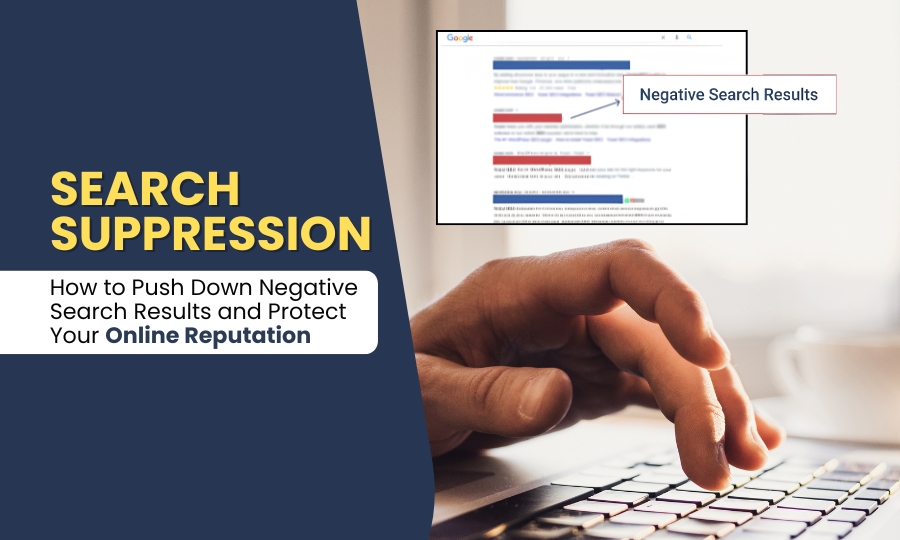
Imagine that your company is going to sign a contract with a high-profile client. Everything is working fine until the client types your company name into Google. The negative link that you ignored a few days ago grabs the client’s attention and leaves a poor impression of your business. Yes, even a single negative link can destroy your years of hard work to build a positive online reputation. The only solution to protect your digital image is to prioritise search suppression.
Do you know that a business can lose as many as 22% of customers when users (who are considering buying its products) find just one negative article about the brand?
In today’s digital era, what your target audience finds on the first page of their online search results when they type your brand name determines whether they will trust your credibility or not. When you cannot convince a search engine to delete a link from its search results just because it’s negatively impacting your brand reputation, you have the option to suppress it.
Let’s explore how you can strategically suppress negative search results and take control of your digital narrative.
What Is Online Search Suppression?
It refers to a strategic procedure of creating, optimising, and distributing high-quality and positive content to suppress or push down unwanted or negative content links off the first page of online search results.
- When to consider suppression?
When you cannot convince search engines like Google to completely remove a link from their results just because it is hurting your online reputation, search result suppression can be the most effective alternative. Apart from that, you can also consider suppressing the links to unfavorable yet accurate information about your business when you cannot legally or ethically delete them from the web.
- How Does It Work within Search Engine Algorithms?
Search engines like Google and Bing will not consider your appeal to remove negative content from their search results if the content is useful, relevant, accurate, and belongs to a reliable source.
Suppression uses fundamental search engine optimization principles to make positive content rank higher (specifically on the first page) in the search results and push down the negative ones. In simple terms, suppression makes positive links outcompete the negative ones in the online search results. Let’s know how suppression works within the search engine algorithm:
- Firstly, suppression signals the search engine algorithm that the positive content you have shared online is highly relevant to your name or your brand.
- Secondly, search engines will naturally rank your content higher when you create multiple authoritative and optimised pages. This displaces the negative links from the search results and pushes them to the subsequent pages.
- Thirdly, search engine algorithms highlight content that drives organic traffic and audience engagement. If your content gets user engagement, it will naturally rank higher and push down the negative content.
- Fourthly, suppression also ensures that the positive content you have created must be displayed in the AI-generated and smart device answers.
Why Search Suppression Matters to Protect Your Online Reputation?
Search suppression is an essential part of an effective brand reputation management strategy plan. From helping brands to reflect a balanced and authentic story across the virtual world to allowing them to take charge of their online narrative, suppression impacts a brand’s digital image in many positive ways.
Renowned online reputation management agencies provide tailored search result suppression services for their clients across industries. Brands can hire these professionals’ services to maximise the benefits of suppression.
Let’s have a look at the 5 key reasons why suppression matters for safeguarding your online brand reputation:
- Controls First Impressions
No matter whether they are your potential employers or your prospective clients, they are going to Google you or your brand name before making a final decision.
A 2025 Ahrefs study has revealed that 45.7% of Google searches are branded ones, which means nearly half of all users are actively looking for specific companies they already know. Suppression ensures all the negative links of past complaints or misleading news stories are pushed down to the low-ranking pages of search results. It also ensures that the first page only shows the positive content regarding your brand, leaving a great first impression.
- Rebuilds Customer Trust
What the first page of online search results shows about you or your brand sets the ultimate narrative about it. It significantly controls the online perception of you or your brand. Your target audience heavily relies on what they come across on the first page of their online search results after searching your brand name.
While high-ranking negative content can erode your customer trust, suppressing these unwanted links helps you regain that trust. It helps you restore your credibility and establish digital trust.
- Protects Sales and Revenue
If your brand has unfavourable visibility on the first page of search results, it can cause you to lose a significant number of potential customers. Search result suppression allows you to effectively manage what appears in SERPs and AI overviews when someone searches for your name or your brand.
Through the successful negative search suppression, you can keep your conversion rates intact and protect your brands’ sales and overall revenue.
- Provides a Legal and Ethical Alternative
Completely removing a negative link doesn’t offer a guaranteed outcome. Search engines prefer to keep accurate information online, making total removal nearly impossible unless the content is illegal or defamatory. But suppressing search results is a durable, practical, and ethical practice to move the unwanted links to the second or third page of search results.
Suppression is a great alternative to complete content removal, which is not always possible as it involves practices like hiding or erasing facts.
- Maximises Online Visibility
Suppression techniques require you to create engaging and high-quality content. Such content ranks higher in search results and positively boosts your brand’s online visibility. Publishing fresh articles and managing positive social media profiles ensures that your brand appears in the best possible light across the online platforms.
You can drive organic visibility for your brand by promoting positive content and showcasing your brand authority to attract new clients.
A Step-by-Step Guide to Suppress Online Negative Search Results: 7 Steps to Follow
Now we will discuss the entire process of suppressing negative online search results that may cause severe damage to your personal and brand reputation. A successful search result suppression requires you to perform certain best practices, from conducting a complete search reputation audit and creating positive content to monitoring the success of your efforts.
When removing negative search results is not an option for you, you can follow this comprehensive step-by-step guide to suppress or push down the negative links:
Step 1: Conduct a Search Reputation Audit

Firstly, you need to conduct a thorough audit of your or your brand’s online search reputation. A complete audit can help you identify damaging content that exists online and may cause reputational damage to your digital presence.
A thorough audit can also help you develop a personalised search suppression strategy plan to ensure achieving your desired result.
- Search Your Name or Brand Name
Use incognito mode on your browser to search for your or your brand name. It will help you get unbiased results (not based on your previous search history) when you search for your name.
You can search for your specific brand name, names of the executives working in your organization, and other keywords like:
- (your brand name) reviews
- (your brand name) complaints
- (your brand name) news articles
- (your brand name) scam
- Analyse the First Two Pages of Google
According to a Manchester Digital study, 75% of people never scroll past the first page of Google search results. Thus, you must analyze what the first two pages are showing when someone searches for your name or your brand name.
Always review the first two pages of your search results to identify the negative links ranking higher in those two pages. Analyzing these two pages can help you see what your potential customers come across in the first two pages when they search for your name online.
Don’t forget to check whether your official properties, such as your social media profiles and website, prominently appear in search engines.
- Monitor Visual and News Content
Apart from the text-only content, you must monitor the visual content about your brand, appearing in the first two pages of the search results. Identify whether any sensitive photos or private videos are appearing in the search results.
You can also monitor the news content – whether positive or negative news articles are appearing in the online results. You can check the Google Images and Google News tabs to track any untagged visual content, media features, and unverified AI platform citations.
Step 2: Identify Negative Search Results

Now that you have completed a thorough audit of your search results, it’s time to identify the negative search results appearing on the first two pages when you search for your name or your brand name.
- 6 Major Types of Negative Search Results
There are a variety of negative search results your target audience may come across when they search for you online. When you can easily identify these search results, it will be more seamless for you to implement personalised strategies to suppress them.
Here, we have talked about the 6 major types of negative search results that are most common:
| Types of Negative Online Search Results | What Can It Be? |
| 1. Negative News Articles | Negative media coverage, unfavourable news stories, and old scandals that may still rank higher on the first page even after they are outdated content or the case is resolved |
| 2. Bad Reviews and Ratings | Unfair online ratings or low-star ratings on popular platforms like Google Business Profile, Trustpilot, Facebook, and industry-specific review sites |
| 3. Forum Discussions and Complaints | Complaints or generic discussion threads on major community platforms, such as Reddit and Quora, where users can share their negative personal experience with products, services, or brands |
| 4. Social Media Criticism | Unfavourable posts, tweets, or offhand comments on popular social media platforms like Facebook, Instagram, X (Twitter), LinkedIn, and more |
| 5. Outdated or Inaccurate Information | Old directory listings, duplicate pages, and inaccurate business details that can confuse your potential customers |
| 6. Competitor-generated Content | Blogs, website content, biased comparison articles, and fake negative testimonials created by competitors who are actively trying to rank their content with your implemented keywords, achieve your content ranking, and drive your generated traffic |
Step 3: Evaluate Reputational Threat Levels of the Search Results
Now it’s time to assess the reputational threat level of negative results by categorising them by likelihood and impact. This practice will help you to effectively deal with a specific search result based on its reputational threat level and understand how much impact that specific negative search result may have on your reputation.
- 3 Major Levels of Reputational Threats
Below, we have categorised reputational threats of online search results into three major levels. Let’s have a look:
- Trust and Conversion (Low/Medium Risk)
When searching for your name or your brand name, if one of your potential customers found negative search results, such as unfavourable reviews, isolated complaints, and mild controversies.
- The Reputational Risk: It can impact your customer conversion rates, service pricing, and customer trust metrics. Your prospects may hesitate to choose your brand over your competitors.
- Narrative Contamination and Crisis (Medium/High Risk)
When your prospects or stakeholders come across prominent negative articles, unmanaged third-party content, such as online forum threads, as this content is ranking at the top of search engine pages
- The Reputational Risk: This can deter a brand’s opportunity to grow its business or attract new customers. It can slow down your business growth and increase the financial cost of customer acquisition.
- Valuation & Financial Catastrophe (Severe Risk)
If there is widespread exposure of severe digital missteps, major online scandals, and data breaches, which are also ranking higher on the first page of SERPs and have already attracted media attention.
- The Reputational Risk: This can completely wipe out a massive amount of market capitalisation by causing immediate leadership turnover and damaging your employee morale.
Step 4: Measure Your Online Search Visibility
Now that you have already evaluated the cyber threat level of the negative search results, you need to measure your personal or brand’s digital footprint. Additionally, you need to measure your brand discoverability online.
Using web analytics and SEO platforms, you can track your personal and brand search visibility across the internet.
- Keyword Rankings – You need to track the positions of your website pages in SERPs when someone searches for specific, relevant industry terms.
- Share of Voice (SoV) – You need to evaluate your digital presence as compared to your market competitors. It will help you to understand your market reach and audience engagement for your online search presence.
- Traffic and Impressions – We suggest that you track the click-through rate and organic impressions that your website receives for specific relevant search queries.
Step 5: Create a Search Suppression Plan

For example, if you have performed an audit and identified that an old negative news article has suddenly gone viral on the internet and is impacting your brand reputation, you can implement tailored strategies to remove negative news articles from the web.
If this doesn’t work, you may seek professional news article removal services to handle the situation more strategically.
But what if nothing works because the negative news article includes accurate and relevant information?
For such cases, search suppression comes to your rescue! Now we will talk about how you can create a robust plan to effectively suppress negative search results:
- Prioritize Harmful Content
Is there any harmful content or information about your personal or brand identity present across the internet? If yes, you must prioritise removing the harmful online information from the web.
The following are some criteria based on which you can prioritise and handle harmful online information or content.
- Legal De-indexing: You need to identify if the negative search results can be suppressed by legal remedies. People who are EU residents can leverage the Right to Be Forgotten to suppress specific negative links. For such links, you can also request DMCA-based de-indexing for copyright infringement.
- Policy Violations: You need to identify online search results that have breached content policies for Google Search, including content that involves harassment, threats of harm, and exposure of private information. You can directly report such content for permanent removal.
- Negative Reviews and Rip-off Reports: We suggest that you need to group legitimate complaints, forum threads, and critical reviews that have not violated the platform’s terms of service. You cannot easily delete such content from the source, you need to implement suppression strategies to push down the online links.
- Defamation and Misleading Claims: You can flag search result links that contain complete lies, unauthorized image usage, and fraud allegations. This type of content often requires legal assistance, and you can also send direct requests to the webmaster to remove such defamatory content with misleading claims.
- Set Search Suppression Goals and Timelines
Suppressing negative links cannot provide you with overnight results. You must develop a well-structured and 6-9 month roadmap that will allow you to build topical authority and strategically push unwanted links down from page one to page two or beyond.
Here is a complete timeline and goal for you to suppress negative content links:
- Month 1: In the first month, you need to launch and optimise foundational properties, such as your personal or corporate website and a highly optimised LinkedIn profile. It will help you occupy the top two positions of the first page of SERPs.
- Month 2: You can claim secondary authoritative profiles and pitch contributed articles or press releases to the high-ranking and renowned trade publications.
- Month 3: You should also ensure that all the high-ranking blogs and other authoritative articles posted on your websites are accurately indexed in Google Search Console. Here, you can share industry award nominations or create blog posts to dilute the negative SERPs.
- Month 4: In the fourth month, you need to assess the progress by ensuring that your primary and secondary profiles hold the top spots. It can cause the targeted negative blog posts or reviews to slide downward in the SERPs.
- Months 7-9: You must promote positive content to maintain your topical authority. Within 7-9 months, the negative search result will be pushed down to position 11 or lower, which means that it will no longer appear on the first page of search results.
Step 6: Create High-Quality Branded Content

Pushing down negative search results requires you to create high-authority content to rank them higher and help them outcompete the negative content links in search engine results pages.
Here are some types of branded content that you can create to rank your online presence higher in the search engine results:
- Build a Well-Optimised Website
Search engines like Google prefer official and well-designed websites with strong domains to rank them for relevant branded queries. If your website is well-optimised for mobile navigation and a better user experience, the content you have added to the website is more likely to rank higher and outcompete the negative links, ensuring a successful search suppression.
The following is certain content that you must consider adding to the website:
- Dedicated About page – Through this page, you can tell your brand story by highlighting your history, company mission, and core values to build instant trust.
- Leadership Profiles – You must add dedicated pages for showcasing leadership profiles, where you can promote the executives’ expertise. You must publish their bios and links to their achieved professional milestones to establish thought leadership.
- Product and Service Pages – In these pages, you can clearly outline what you offer to prevent confusion among your visitors. You can implement dedicated service pages where you must use descriptive URLs and optimized media.
- Dedicated Blog Section – Blogs are the ideal content type when it comes to showcasing your knowledge, expertise, and authority. We suggest that you maintain a steady stream of fresh and relevant content by regularly publishing educational blogs. It can also help you rank your site higher on SERPs as you need to implement relevant industry-specific keywords in the blogs.
- Optimise Social Media Profiles
Now it’s time to optimise your social media profiles or business pages to engage with your followers. Well-optimised social media profiles help a brand establish a strong footprint across major platforms and ensure that your official social media profiles rank higher when someone searches for your name or your brand.
- Create Profiles on Major Platforms –
- LinkedIn – To build strong professional networks with high-authority clients, top organisations, and other prominent personalities
- Facebook – To reach a wider audience and build a strong niche community
- Instagram – To engage with followers and the platform users by sharing engaging and eye-catching content
- X (Twitter) – To establish industry authority, share quick updates, and participate in trending and meaningful conversations
- YouTube – To share educational yet engaging video content to build long-term brand authority
- Consider Posting Regularly
Your primary aim should be to keep your social media profiles active and updated. For this, you need to consistently share relevant posts, images, and videos. When your profiles are active, it will signal to your search engines that your brand is legitimate and relevant, and can benefit potential customers.
- Leverage Third-Party Authority Sites
These sites can add major value to your brand’s online presence. These third-party sources carry massive trust with search engines. When your content or your website gets featured on these sites, it naturally pushes down negative search results on the SERP and helps your positive content rank higher.
The following are some popular third-party sites you must prioritise:
- Industry Directories – You must claim your profiles on these sites based on your specific niche to target a specific audience base.
- Professional listings – We suggest that you join the associations on key platforms that are relevant to your niche field. Having well-optimised profiles on these professional listings can help you showcase authority and establish a sense of trust among customers.
- Business Directories – Businesses must add foundational NAP (name, address, and phone number) details to these business directories, like Google Business Profile, to signal the local authority about its existence and make it easy for local prospects to find the physical store.
- Local Citations – There will be certain regional review and citation sites where you can get your brand mentioned to strengthen your local brand presence.
- Guest Posting Opportunities – This can offer you the opportunity to write and share valuable, educational blogs on authoritative niche websites and engage their audience. The importance of guest blogging lies in its capability to secure backlinks.
- Media Websites – When popular media sites cover your brand, it provides a third-party approval to your potential customers. You can engage in digital PR to get your brand featured in the news and the press publications.
Step 7: Measure Your Search Suppression Success
Now that you have a clear idea of how you can push down or suppress negative search results, it’s time to measure the success of your search suppression efforts. It includes tracking specific key performance indicators across search result pages and AI-generated answers.
You can seek professional reputation monitoring services to track your brand’s online search result suppression efforts.
- Key Metrics to Track –
The following are some major performance metrics you must track:
- Search Result Rankings – The exact position of your negative content (you’re trying to suppress) on the search result pages
- Branded Search Visibility – How often your positive web content, like your blogs, appears across the entire first page of SERPs compared to the negative links
- Organic Traffic – The volume of visitors landing on your positive and reputation-boosting web content from unpaid search
- Review Sentiment – The emotional tone, volume, and recency of customer reviews across major review platforms and online forums
- Search Engine Tracking – How frequently and positively your brand is cited in AI-generated responses
- Reputation Score Analysis – An aggregated metric that involves online brand mention frequencies, citation presence, and online sentiment
6 Common Search Suppression Mistakes You Must Avoid
Search result suppression is a great alternative when you cannot erase a negative link from the internet. From boosting your visibility online to transforming your negative narrative into a positive online perspective, suppression offers a list of benefits, but only if you avoid making certain mistakes.
Here we have mentioned the 6 most common mistakes that you must avoid to protect your search rankings as well as your online reputation:
Mistake 1: Creating Poor-Quality Content
If you publish poor-quality, generic, and plagiarised content that majorly fails to accurately answer user queries, it can hurt your search engine rankings. Google algorithms mainly rely on helpful content and spam updates that specifically target unhelpful content. So, it cannot push down the negative search results if they contain accurate, updated, and relevant content.
- How to Fix? You must prioritize creating detailed and original content based on well-researched information. This can match your content with your target audience’s search intent.
Mistake 2: Ignoring SEO Best Practices
Are you ignoring implementing SEO in your online brand presence? If yes, you are making a huge mistake! If you forget foundational technical and on-page elements, it can drastically limit your brand’s search visibility.
- How to Fix? You shouldn’t miss adding title tags, removing broken links, updating weak meta descriptions, and improving your page load time. This way, you can prevent your website visitors from bouncing quickly. Don’t forget to develop a mobile-responsive website and implement descriptive headings across your website content.
Mistake 3: Not Prioritising the Power of Social Media
Yes, social media can massively help you in changing a negative online narrative around your brand, as you can reach a wider audience by managing your brand’s social media presence. If you are overlooking the power of social media that you can leverage to reach a massive audience, it can prevent your website from attracting organic traffic.
- How to Fix? You can actively promote your website and its content on various social media platforms. You can specifically promote your blog posts or customer testimonials on your social media business page to attract more viewers and encourage social sharing.
Mistake 4: Expecting Immediate Results
Search suppression doesn’t guarantee delivering immediate results. If you are considering suppression as a one-time activity or expect overnight suppression of the negative link or even a massive increase in your content traffic, you’re making a big mistake!
- How to Fix? Understand that search result suppression requires you to put consistent and long-term efforts to guarantee a positive outcome. You can routinely check your brand’s online presence and track indexing issues to identify underlying concerns like old negative media coverage still existing online.
Mistake 5: Using Black-Hat Tactics
Many brand owners try to trick search engines by using unethical, and malicious techniques (popularly known as Black-Hat tactics). If you forcefully stuff keywords in your content to make it rank higher, add hidden text in your content, or buy spammy or low-quality backlinks to boost your brand visibility online.
- How to Fix? You must avoid getting penalized by creating original, high-quality content and naturally implementing relevant keywords in it. You should also prioritize earning qualified backlinks from authoritative sources.
Mistake 6: Manipulating Search Results
Are you trying to manipulate your search results? If yes, let us tell you that it’s an extremely unethical practice. Many brands often engage in malicious practices, such as publishing fake reviews or sharing duplicate content across multiple pages to manipulate online search results. Such practices can confuse search engines and cause algorithmic penalties.
- How to Fix? You can maintain transparency and authenticity by creating original content and implementing effective SEO techniques to make it naturally rank in search results and drive organic traffic.
Conclusion
Complete content removal from the internet is not always possible. So, what to do then? You cannot wait to get your online reputation ruined by just a single negative link, right? Here come the roles of search suppression.
By suppressing negative search results, you can not only transform your negative online brand perception but also boost your brand’s online visibility through positive content promotion. The process may seem tricky, but not with implementing effective strategies.
We hope that our step-by-step guide will help you strategically suppress negative search results that are damaging your online image. Still confused regarding where to start from? Prioritize hiring a renowned online reputation management agency to seek their professional guidance.
FAQs
Ans. No, it’s not guaranteed to completely delete a specific negative search result. Search engines like Google consider the content that appears in their search results as their archives. Unless the content is inaccurate, includes false claims, and irrelevant, search engines won’t delete it just because your brand reputation gets negatively impacted. However, you can request the site owner to remove the content from the source or prioritize strategic suppression to push down the unwanted link.
Ans. Search suppression generally takes 3-12 months. Because the process requires you to create and promote new, high-quality, and positive content to outcompete the negative links on the search results pages. So, you cannot expect to witness measurable results overnight.
Ans. Some content examples that are usually impossible to suppress are viral personal opinions, widely distributed digital media, and highly sought-after public records. The internet has a decentralized nature, and because of this, deleting, hiding, and completely erasing such information once it appears in the public domain becomes extremely difficult.
Ans. Yes, Google can remove personal information from its search results if the details violate the platform’s specific policies. You can remove your sensitive personal info, such as your contact details, home address, email address, and any confidential government identification numbers, from Google search results by appealing to the platform and providing the necessary documents to support your claims.
Ans. Yes, you can. Social media platforms can be a great tool to bury negative links and unwanted search results. You need to optimise and populate your social media profiles on high-authority platforms like Facebook, Instagram, and LinkedIn. Once you start posting positive and engaging content regularly on your social media profile, it will rank higher in search results and suppress the negative content down in SERPs.

