





In today’s social media-dominated world, every like, share, and comment serves as a sign of the public’s confidence in your business. Today’s consumers don’t prefer reading corporate press releases to decide whether they should trust you or not. From checking your social media mentions and your industry authority on professional platforms to tracking how you respond to customer complaints on online forums, modern consumers demand unprecedented transparency to trust a brand. Thus, strengthening your social media PR is a negotiable strategy for businesses to effectively manage their brand reputation across the digital world.
Public relations is no longer about who your business knows in the newsroom; it’s about what it showcases in the social media world. Whether you are managing a sudden public relations crisis, launching a premium product, or humanizing your corporate identity, social media can be your ultimate platform to maintain your brand relationships with the public.
In this blog, we will explore how you can proactively build and manage your online brand image through social media public relations strategies that convert.
What Is Social Media PR?
It refers to the practice of managing communication between a brand and the public to shape the public perception, establish trust, and maintain a positive brand image through social media platforms. In simple words, it’s a strategic practice of managing a business’s online reputation and building direct relationships with the public through social media platforms.
This is different from traditional PR – traditional public relations strictly relies on journalists. But social media public relations involves a two-way, real-time conversation to shape the public perception through social media platforms.
- 4 Core Functions of Social Media PR
These are four core functions of social media public relations, including:
- Brand Awareness and Image: It’s about using visual storytelling and community engagement to shape how the public perceives a business’s online identity.
- Crisis Management: This involves addressing customer feedback, responding to breaking news in real time, and navigating reputation challenges.
- Earned Media: It’s about generating organic social media mentions, shares, and endorsements rather than just relying on paid advertisements and paid media coverage.
- Influencer Marketing: It’s partnering with social media creators and industry personalities to build brand credibility and reach a broader targeted audience.
5 Key Differences between Traditional PR and Social Media PR
Confused between traditional PR and social media public relations?
In this section, we will talk about the 5 major differences between these two effective types of public relations strategies and methods:
| Factors | Traditional PR | Social Media PR |
| Communication Flow | It requires brands to share press releases with journalists who broadcast them to a mass audience. | It requires brands and the public to directly engage in real-time through comments, direct messages, and reshares on social media. |
| Control and Ownership of the Message | Brands will have less control over the final narrative as the message is shaped, edited, and published by third-party editors and journalists. | Brands own the platform as well as the message, with complete editorial control over what they post, how they respond, and when the content will go live. |
| Audience Targeting and Reach | Media broadcasts and print articles reach a broad and diverse demographic. | PR professionals personalise messages and distribute content to highly specific demographics based on their interests, geography, age, and online behaviour. |
| Timeliness and Lifespan of the Content | It requires brands to pitch stories, secure placements, and print magazines that often take weeks or months. The content cannot be altered once published. | Brands can share company news and launch campaigns in seconds, and the content is versatile. They can edit, update, and remove the social media posts even after publication. |
| Measurement and Analytics | It is difficult to track the immediate return on investment (ROI) or exact engagement. The success relies on general sentiment analysis, estimated reach, and ad equivalency. | PR professionals can track exact metrics like impressions, follower growth, and click-through rates in real-time. |
Why Does Social Media PR Matter for Your Business?
Social media public relations perfectly bridges the gap between your brand and the public. This specific social media strategy completely transforms the one-way corporate messaging of traditional PR into a two-way conversation.
Modern businesses can achieve their desired success because it directly helps them cultivate trust, manage public perception, and turn audience engagement into long-term loyalty.
- Enhances Customer Engagement
Social media acts as a direct line of communication between the public and the brand. Social media platforms like Facebook, Instagram, and Twitter (currently known as X) help brands build active and two-way conversations through social media comments, live streams, and direct messages. Through this, you can create a humanized and accessible brand personality that fosters an online community.
- Builds Brand Credibility
Your potential customers are more likely to trust real user experiences and authentic customer stories over traditional promotional content like advertisements. Social media public relations allow businesses to highlight client testimonials and promote them on their social media business pages. It helps them promote employee-driven content to ensure active involvement with their online community and strengthen their brand’s credibility.
- Establishes Public Perception
Social media public relations allow brands to curate and present their core values. It requires you to highlight the behind-the-scenes operations and sustainability efforts to reflect your own narrative. It ensures that a brand has proactive communication with the public so that it can shape exactly how the niche market perceives and interprets its brand identity.
- Increases Your Brand’s Media Visibility
Do you know that 5.79 billion users actively use social media across the globe? Social media PR helps you make your brand more visible to the major media professionals and publications.
Every like, comment, and share of your social media posts serves as a social signal that increases your brand’s online discoverability. These social engagements also naturally boost your brand’s search engine rankings and help it reach a broader audience.
- Supports Reputation Management Efforts
In today’s digital-first age, strategic reputation management requires real-time monitoring and swiftly dealing with reputation crises. Social media public relations techniques ensure boosting your reputation management efforts, as the social media platforms allow brands to instantly respond to public feedback shared on these platforms. It also helps monitor the market sentiment and address complaints before they turn into a PR crisis.
A Detailed Social Media PR Strategy Plan for Businesses: Top 9 Strategies to Follow
An actionable and localized PR strategy plan works wonders to establish or strengthen your brand’s public relations through its social media presence. It will help your business to prioritize mastering social listening and strengthen your PR strategy as well.
Renowned reputation management agencies often provide personalized PR services along with their social media management strategy plan.
In this comprehensive guide, we will talk about the top 9 strategies brands can implement in social media public relations to effectively boost and manage their online reputation and digital presence:
Strategy 1: Monitor the Brand Mentions and Conversations across Social Media Channels

Firstly, you need to monitor your brand mentions and the conversations it has across social media channels. It will help you understand what your social media audience is thinking about your brand and how they are perceiving you as a knowledgeable resource in the market.
- Track the Branded Keywords and Hashtags
To monitor your brand mentions, you need to track the branded keywords and hashtags on social media. You can consider creating a list of core brand names, product lines, variations, and branded hashtags. Prioritize tracking the keywords and running hashtag campaigns across all the social media platforms like Reddit, Instagram, X, and more. Don’t forget to track the keywords across AI search engines as well.
- Monitor Competitor Conversations
Now it’s time to set up a dedicated tracking system for your top competitors’ brand names, the executives who work in those organizations, and product-specific keywords. You need to pay close attention to what their customers are generally complaining about. You can identify these gaps and implement strategies to excel in those aspects.
- Set up Alerts for Sudden Spikes in Mentions
Brand owners can set up real-time, automated alerts via email or SMS that are triggered when online brand mention volume exceeds the average. It helps you address viral complaints or positive surges as soon as they start and prevent potential PR crises. So that you can develop a PR crisis management plan well in advance, before the situation escalates.
- Analyse Audience Sentiment Regularly
You need to move beyond the vanity metrics, such as likes and retweets, to understand how your social media audience feels about your brand. You can also employ AI to categorize social media mentions as positive, negative, or neutral. Effective sentiment analysis helps you ensure the success of a PR campaign or public response.
Strategy 2: Respond to Customer Complaints, Media Inquiries, and Viral Discussions
Now we will talk about how to proactively respond to your customer complaints and media inquiries you receive on social media. Professional public relations services help brands set clear guidelines for PR crisis management and brand representation.
Brands need to plan an actionable framework to execute their social media public relations goals. Here we will talk about how you can prioritize urgent concern resolution through an effective response to customer complaints, relevant discussions, and media inquiries:
- Create Response Guidelines on Priority
It’s one of the most crucial strategies to create response guidelines on a priority basis. You need to set rules for:
- What to say
- How to say it
- When to escalate a situation
This guideline helps establish a triage system for your team so that they can objectively and promptly address the social media comments. Let’s have a look at the issues you must consider as your priorities:
- Priority List for Brands
- Priority 1: Critical Product Failures, severe public relations crises, and safety issues
- Priority 2: Direct media inquiries and unresolved customer complaints
- Priority 3: General feedback, neutral mentions, and pricing inquiries
- Priority 4: Spam and resolved issues
- Address Urgent Customer Concerns
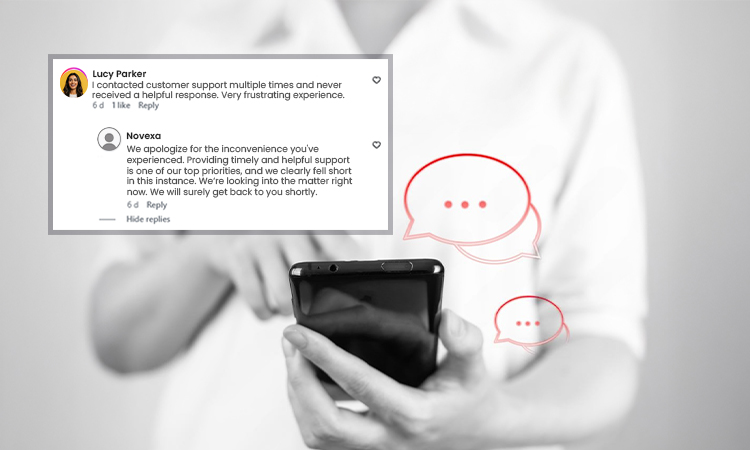
You must address the concerns based on their urgency. You need to strive for an acknowledgment time of under 60 minutes.
If you think that the resolution will take time, you must share your progress as well by sending this message –
“We’re looking into the matter right now.. We will surely get back to you shortly.”
Apart from this, we suggest that you ask the customer to move to a private channel if you think that things can escalate. You must request that customers communicate with you privately through direct messaging and support email. This practice will help you in handling sensitive personal information or detailed troubleshooting.
- Maintain a Professional and Empathetic Tone
When responding to a social media complaint and critical discussion, you must maintain a professional and empathetic tone. Brand owners must validate the user’s feelings and personalize their response by addressing their name. Copy-pasting every response to each of each customer can make them feel unheard and not valued enough. To address the specific issues, you must tailor the response to their specific issue. They must also balance automation with real human agents to resolve complex issues.
- Avoid Defensive/Emotional Responses
In the social media comment section, you should never debate or argue with a follower or customer. Attempting to prove a customer wrong on their own timeline is another practice you should avoid. Brand owners often respond emotionally if someone has shared a harsh criticism. They shouldn’t send an emotional response, no matter how offensive or harsh a social media comment is.
Strategy 3: Develop a Consistent Brand Voice for Your Business

A strategic approach to social media reputation management requires you to develop a consistent voice for your business. If your brand voice is fragmented across the social media platforms, it can confuse the audience and hurt customer trust, deterring them.
What is the goal? You must aim to make your brand message sound like a cohesive entity across all the social media platforms.
- Create Brand Voice Guidelines
To develop a consistent brand voice, you need to create a proper guideline. We suggest that you pick 3-4 core adjectives that can perfectly describe your brand’s personality as precise and authoritative. You can also showcase your brand voice as friendly and conversational based on your target audience.
Always list these three things:
- The words your brand favors
- The buzzwords you actively avoid
- The boundaries on using humor and slang
A Pro Tip for You: While your core voice stays the same across all the social media platforms, the tone of your brand voice must shift depending on the platform. The tone should be highly dependent based on the platform you are targeting. For example, your brand voice’s tone must be majorly polished and informative on LinkedIn, while it must be conversational and casual on Instagram.
- Train Your Social Media Managers
You must have an expert team of social media managers and PR personnel to convey a brand voice. Train the team through a brand voice alignment test, where they can practice drafting how to respond to a social media PR crisis based on their guidelines. Always try organizing monthly meetings with social media content creators and customer support agents to review successful and unsuccessful interactions.
- Ensure Post Consistency across Posts, Comments, and Direct Messages
Always ensure that you maintain the ultimate level of consistency across social media posts, comments, and direct messages. Within your social media team, you need to conduct a consistency test where the team will periodically review outbound posts, comments, DMs, and other content. You can use integrated dashboards to manage social media comments, messages, and scheduled posts in a single place.
Strategy 4: Leverage Influencer Marketing

The success of your social media public relations strategy plan hugely depends on your influencer partnership efforts. Brand owners must focus on partnering with social media influencers or content creators and create shareable and newsworthy content. Influencer marketing helps a brand amplify its voice and boost its organic engagement.
- Collaborate with Popular Social Media Influencers
Always remember that social media influencers are not traditional billboard ads. If you cannot leverage meaningful partnerships with social media influencers, you cannot transform these collaborations into strategic brand partnerships. According to a Marketing Dive study, 59% of marketers plan to partner with more social media influencers as compared to 2024. You should always partner with creators whose market niche perfectly aligns with your target audience base.
- Focus on the Authenticity Over Follower Count
Try to collaborate with social media influencers whose authenticity reflects much more than the follower count. Because a micro-influencer with just 1000 followers often attracts higher engagement rates and ROI compared to a popular social media creator with a 1 million audience base.
- Encourage Genuine Product Experiences
If you sell products, you must offer your products to the social media creator for testing and reviewing your product. The endorsements must be authentic, even if the social media creators share some minor critiques to resonate better with audiences. Inauthentic, scripted, and corporate messaging by social media influencers can appear fake and unreal.
- Monitor Campaign Performance
By employing certain tools and platforms, brands can closely track KPIs like click-through, conversion, and engagement rates rather than other vanity metrics like number of likes, shares, and comments on their social media posts.
Strategy 5: Develop Newsworthy and Shareable Content

Unless or until the content you share on social media platforms is newsworthy and shareable, you cannot grab the audience’s attention you desire. The content you share on social media platforms must provide standalone value and spark meaningful conversations.
Always remember that your social media content must be perfectly aligned with your PR efforts.
- Some Beneficial Content Ideas to Boost Your Social Media PR Efforts
The following are some beneficial content ideas that can help you boost your social media public relations efforts. Let’s have a look:
| Type of Social Media Content | What to Share? |
| Original Research | You need to compile the survey results or data within your industry to position your brand as a knowledgeable resource in the market. |
| Company Announcements | You must share significant milestones, including major organizational updates, product launches, and event announcements, to generate widespread media coverage. |
| Industry Insights | These are expert commentaries on relevant trending news, like shifting market dynamics, to keep your brand relevant in current social media conversations. |
| Client Success Stories | Brands need to showcase genuine case studies or share video testimonials to demonstrate their products’ impact on a customer’s life or business. |
| Thought Leadership Content | You can publish detailed articles and video essays that feature your executive and subject matter experts to discuss the future of your industry. |
| Behind-the-Scenes Update | Through these updates, brands can make their company culture appear exclusive. They can also provide details of their manufacturing, team events, and more by giving these updates. |
Strategy 6: Build Strong Relationships with Media Professionals

Establishing strong relationships with key media professionals is not a social media public relations strategy that you can implement when a PR crisis occurs. You need to have great relationships with major media professionals from the beginning, so that when a crisis occurs, you can leverage these media relationships to earn positive coverage.
Wondering why building strong relationships is crucial?
Because brands should always prioritize authentic networking over aggressive sales pitches. You can build valuable media relationships in these actionable steps:
Step 1: Follow Relevant Journalists on Social Media
It requires brands to transform their social media presence into a two-way PR channel. Firstly, you need to compile a target list of reporters, industry analysts, and editors who cover news related to your specific niche. You can track their ongoing coverages, types of stories that perfectly resonate with their audience, and their areas of interest. You can specifically track X and LinkedIn to track the sourcing requests, as journalists frequently use these platforms to ask for expert quotes and background details for their upcoming articles.
Step 2: Engage with their Content Thoughtfully
Don’t just track the simple ‘likes’ by adding genuine value to their social media conversations. You can share your real-time insights, provide a constructive perspective on their specific articles, and validate their reporting to establish a kind of brand familiarity. Additionally, you can reshare their published pieces to your own social media network to amplify your content reach.
Step 3: Share Industry Expertise Consistently
Brand owners must publish original, thought-leadership content to share valuable data, authoritative commentary, and trends related to their industry across social media platforms like LinkedIn. When you consistently discuss complex industry topics, your brand tends to naturally appear on the radar of journalists who’re actively looking for knowledgeable sources to cite in their articles.
Step 4: Prioritise Providing Valuable Insights rather than Promotional Content
Always skip the aggressive pitch by treating journalists as human connections, not just some way to free advertising. For this, you need to offer unprompted and relevant data or provide expert commentary on breaking news in your niche. However, you shouldn’t immediately ask for a brand name in return. Always try to provide ongoing and newsworthy stories rather than only promotional or advertising content.
Strategy 7: Proactively Social Media Crisis Management Plan

When you develop a social media PR crisis management plan, it acts as a defense system for your brand’s reputation across the online platforms. Here’s how you can proactively manage your social media public relations crisis:
- Build a Crisis Response Team
First things first – you need to build a crisis management team beforehand, even when a PR crisis has not hit your business. You shouldn’t assemble a team after a crisis occurs. You need to designate clear roles so that every member of that team knows their responsibilities during a public relations crisis.
Here are some key roles you must assign to handle a social media public relations crisis:
- Social media manager
- PR or Communication Lead
- Customer Support Lead
- Executive Sponsor
- Legal Representative
- Create Communication Templates to Respond during Crises
PR crisis management strategies require you to use pre-determined ‘holding statements’ to save your team’s valuable time to investigate the facts without appearing silent or inactive on social media platforms. Preparing these direct communication templates well in advance allows you to respond promptly during social media public relations crises.
- Set Up an Escalation Procedure
If things escalate, you will need an escalation strategy plan to implement immediately. A single angry comment can turn into a viral crisis and even escalate the situation further. From categorizing the PR risk and determining the type of the issue to pausing all the scheduled social media posts, paid advertising, and email newsletters, and centralizing the command center.
Strategy 8: Encourage and Amplify User-Generated Content

Encouraging your customers to share user-generated content is a crucial social media public relations strategy. Most importantly, it’s one of the most cost-efficient PR strategies. Below, we have talked about a detailed and actionable blueprint to encourage user-generated content to boost your social media public relations efforts:
- Create Branded Hashtags
Keep your branded hashtags simple and memorable, specifically short and easy to spell. The hashtag must be directly related to your brand name, campaign, and slogan. Promote this hashtag through your social media pages, physical product packaging, and email signatures. You must check the hashtag to regularly monitor the conversations and identify brand advocates.
- Feature Customer Stories on your Social Media Profile
Don’t forget to feature your customer stories on the social media business pages. Your customers will be more likely to trust the opinions of people who have previous experiences with the products and services you offer. You can showcase real customer stories through your social media profiles to make your audience the HERO of your journey as a brand.
- You need to collect authentic testimonials and short, one-question post-purchase surveys.
- Brands can feature customers who have organically mentioned your brand in their social media posts.
- You can reach out to your followers and the audience via direct messages to ask for consent before you post their photos or videos on your main feed.
- Run Social Media Contests
Brands can also run contests to improve their follower growth and social media profile engagement. Keep the following points in mind before you organize a contest:
- Keep the contest entry rules simple, such as ‘Follow our account’, ‘Tag a friend in the comment’, or ‘Post a photo with your favorite product’.
- Ensure the prize you have announced is highly relevant to your target audience. Don’t just offer random freebies for the participants.
- Keep the contest rules and regulations strictly adhered to the platform guidelines.
- Don’t be biased while choosing the winner; rather, you can use a reliable random generator tool to pick winners and announce them publicly.
Strategy 9: Measure Social Media PR Performance

Last but not least, you must measure the success of your social media PR efforts. Measuring the performance can help you identify the areas for improvement and also the factors that are working perfectly for your brand reputation.
- Key Metrics to Track
The following are some major key metrics you must consider tracking:
- Brand mentions – The frequency at which your brand name, services, products, and campaigns are mentioned across the social media platforms
- Share of Brand Voice – The digital brand visibility by comparing the volume of your brand mentions across social media
- Engagement Rate – How interactive your content is compared to your audience size or total impressions
- Sentiment Analysis – The categorization of audience and media mentions as positive, negative, and neutral audience sentiment
- Follower Growth – How quickly your audience size has increased over a specific period
- Media Mentions – The earned media coverage, including the unlinked mentions in press releases, blogs, and news articles
- Website Traffic – The amount of referral traffic and click-throughs driven from social channels directly to your website
7 Helpful Social Media PR Tools for Real-Time Reputation Management
Now that you have a clear idea of how you can follow a strategic approach to implement social media public relations strategies for your brand reputation, it’s time to help you make the entire process a little more seamless.
Merging social media and PR strategies to build your brand’s online reputation is a critical task. It requires you to employ helpful tools to simplify the process and achieve your desired online reputation. Here we have talked about the 7 most helpful tools to implement digital PR on social media:
| Tools Name | Features to Use |
| Brandwatch | Uses AI to scan billions of social media conversations, and also the ones across online forums and blogs Provides features, deep consumer intelligence, and sentiment analysis |
| Talkwalker | Offers features like real-time social listening and visual listening Monitors text, images, and video mentions across more than 150 languages Immediately alerts for PR crisis across social media and helps you to catch and reduce negative sentiment before it escalates |
| ReviewTrackers | Localizes PR and review management across social media Consolidates customer feedback from more than 100 review sites into one dashboard Allows you to instantly track, analyze, and respond to local reviews on social media platforms |
| Reputation | Ideal for enterprise-level and end-to-end social media public relations management Combines social media monitoring, surveys, and review tracking Calculates a unified ‘reputation score’ to help you measure how your brand performs in real-time and identify the areas that require PR intervention |
| Hootsuite | Ideal for all-in-one social media management Features customizable streams that let brands monitor multiple keywords, brand mentions, and competitor activity in real-time Makes it easy to quickly assign negative comments to the right PR or customer support team member |
| Sprout Social | Ideal for audience engagement and deep social analytics Provides an incredibly intuitive ‘Smart Inbox’ that consolidates messages from all networksProvides tagging and filtering tools to help track PR crises and gauge community response to your PR campaigns |
| Google Analytics | Tracks reputation-driven website traffic and conversionsTracks referral traffic from social platforms Helps you measure the tangible impact of your PR efforts Helps in translating social mentions to website visits and user behavior |
5 Common Social Media PR Challenges Businesses Can Face
Now we will talk about the 5 most common challenges businesses can often face while implementing social media PR strategies. Identifying these mistakes can help you avoid them and prevent major damage to your brand’s reputation online.
Let’s have a look at the list of 5 common social media public relations challenges:
Challenge 1: Dealing with Negative Comments and Reviews
If you ignore responding to negative social media comments and reviews just to avoid online arguments with your customers, you are making a big mistake. You shouldn’t ignore complaints or react defensively to negative comments. Always remember that even your negative reviews offer you the opportunity to regain your customer trust and rebuild your brand reputation.
The Fix: As a business owner, you must directly address the negative social media comments and reviews that require immediate attention. A strategic negative review management plan suggests that you acknowledge the issues faced by your customers or clients publicly yet professionally.
If things escalate, you can ask the customers to resolve the issue privately through direct messages, email communication, or phone calls. Never consider deleting constructive criticism, as it can erode your potential customers’ trust.
Challenge 2: Identifying False Narratives
Social media is a place where a false narrative takes just a few minutes to spread. Rumours or misconstrued customer stories can spread across social media platforms like wildfire. If ignored or believed as legitimate feedback, a false narrative can turn into a viral PR nightmare for a business.
The Fix: You need to actively monitor your online brand mentions using listening tools. You need to internally verify the facts before responding to a false narrative, so that you can show enough evidence to the potential customers. Before reacting, you must determine whether the narrative is a genuine customer grievance or an orchestrated attack.
Challenge 3: Responding to Online Misinformation Quickly
False claims about your product or service offerings, company values, and leadership can spread faster on social media than you can ever think. Until you are issuing corrections, things are more likely to be escalated to another level.
The Fix: You must establish a rapid-response protocol for the time when such online information will spread on social media related to your business. So that when such a situation occurs, you don’t need to wait to develop a crisis response plan.
Always have pre-approved holding statements and appoint a designated crisis management team who can publish accurate and evidence-based corrections during a PR crisis.
Challenge 4: Collaborating with Trusted Media Sources
When a major PR crisis hits your business, most business owners start their hunt for journalists, industry publications, and other media professionals to engage and pitch for positive coverage. This is completely the wrong practice. Collaborating with media experts after a PR crisis hits your business can be overwhelming.
The Fix: Effective PR crisis management strategies require you to build relationships with major journalists and media outlets before a crisis occurs. Don’t wait for a crisis to adversely hit your business reputation. If you already have great relationships and partnerships with the key media professionals, you can immediately provide them with transparent and accurate press releases and release official statements to control the negative narrative online.
Challenge 5: Functioning during Social Media Crises
The team often panics when a public relations crisis hits their organisation. It often leads to radio silence, contradictory messaging, and tone-deaf responses from different departments within an organisation.
The Fix: You can create a well-documented crisis communication plan to function during a social media public relations crisis. You can assign specific roles for your team to monitor, draft responses, and obtain executive approvals. During a crisis, you must pause all scheduled promotional content so that your business or organisation does not appear insensitive to the situation.
Conclusion
While social media platforms allow brands to reach and connect with a broader audience, merging social media management techniques with effective PR strategies can help you build strong relationships with the public. Though it seems simpler, in reality, the process is quite complex and requires a strategic approach to follow.
Proactive social media PR strategies can help you build and manage your brand reputation across the social media world. We hope that our comprehensive guide to social media public relations will help you thoroughly understand the benefits your brand can achieve and effectively implement the strategies to grow your brand reputation online.
Still have doubts about investing in social media public relations strategies? You can consult with an online reputation management agency to seek their expert advice on implementing social media public relations strategy.
FAQs
The following are some frequently asked questions and answers related to social media public relations strategies:
Ans. Yes, AI, or artificial intelligence, can completely transform a brand’s social media PR efforts. It scales your brand reach online, helps you in personalising brand messaging, and automates your complex workflows. We suggest that you effectively integrate AI to save your time and boost your audience engagement.
Ans. No, you don’t need to be active on every social media platform. You can explore the benefits of each social media platform and choose the platform that can help you meet your PR requirements. In fact, if you focus on every other social media platform, it can waste your time and harm your brand reputation. To develop a successful PR plan, you need to prioritise one to three core social media platforms where your specific target audience is mostly active and already highly engaged.
Ans. You can follow a hybrid approach and leverage personal content. You can leverage a personal account to build client trust, establish relationships with them, and form human connections. You can use your brand account as a centralised and credible hub for your company announcements, sharing your polished and interactive content, and answering direct inquiries.
Ans. You must act quickly and maintain the ultimate level of transparency during a social media public relations crisis. We suggest that you immediately pause all the scheduled social media posts and run paid ads. You must avoid sharing tone-deaf content. It’s crucial for you to acknowledge the issue publicly and take ownership of the inconvenience caused to the clients. Don’t blame your team or others; rather, you must apologise if the fault is at your end. Don’t forget to update your audience with the steps you are taking to resolve the issue.
Ans. Yes, you can distribute press releases through social media. It will allow your brand to directly bypass the traditional news gatekeepers and reach your target audience.

