






In today’s competitive digital age, the way people used to discover a brand has fundamentally changed. Whether they will choose your business over your market competitors mainly depends on the reputation you have across the digital landscape. So, managing your brand reputation online has evolved into a comprehensive and predictive ecosystem. If you fail to control your brand narrative, your market competitors and generative AI algorithms will do so on your behalf. Following the latest online reputation management trends can help you to enhance your online reputation, attract new stakeholders, and drive more conversions.
Your business reputation is your most valuable asset, and it’s extremely fragile. You need to keep up with the emerging trends and new technologies to effectively grow and manage your online reputation. Today’s digital scenario demands strategic reputation management that you can only achieve by following the latest trends.
Let’s explore the top 10 ORM trends you can’t avoid prioritizing in 2026 and how to ensure that your target audience comes across the best possible online image of you or your business.
Why You Can’t Avoid Following Reputation Management Trends?
When you are a professional working in a niche market or own a business, following the latest ORM trends is no longer optional. It is not at all a negotiable brand reputation strategy to grow your professional image or brand reputation. Specifically, to stay competitive in the market, you need to follow these trends while implementing your online brand reputation management strategies.
The following are certain major reasons why you shouldn’t avoid following the latest ORM trends:
- Builds Trust as a Competitive Advantage
According to an Euroconsumers study, 6 out of 10 consumers are more likely to check reviews before buying something online. A majority of people rely on online reviews as much as they do personal recommendations.
There are many recent ORM trends related to online reviews that directly impact how individuals and businesses build a strong brand image. Following these review trends helps you to build trust with your potential and existing customers and showcase that you’re transparent, reliable, and responsive.
- Positively Impacts Revenue and Growth
Even a single-star increase in your online rating can help you boost your revenue. Yes, it’s true! When you have separate business pages on multiple major review channels, it allows you to manage the reviews you receive on those platforms and ensure your overall reputational growth.
Following the latest ORM trends requires you to effectively generate higher ratings and positive reviews from your satisfied customers in a more systematic way. It also helps you respond to the reviews, no matter whether they are positive or negative, which directly helps you attract more potential customers. And this influences your business revenue growth.
- Influences the Customer Journey
Buyers who are actively searching for a product often conduct thorough research online to find the ideal product/service suitable to meet their needs. They will be more likely to evaluate or examine your business before they make a purchase decision.
When your business follows ORM trends, it helps you to influence your customer journey – from being a potential customer to becoming a paying client. Following these trends allows you to curate and monitor the customer journey. It also ensures that your potential customers come across only the positive and accurate information regarding your business at every touchpoint.
- Ensures Dominance in AI and Local Search
Following the latest online reputation management trends requires you to effectively use AI to dominate the local search. It allows you to merge the effectiveness of both artificial intelligence and local search engines. These practices help you drive glowing business reviews, directory listings, and positive online mentions to determine the relevance.
AI in reputation management helps you to optimize your online reputation, which directly makes your brand appear for relevant local search queries, followed by improving your local search rankings and driving more foot traffic to your physical store.
- Helps Mitigate Reputation Crisis
As businesses often face a reputation crisis, they must be prepared to prevent extreme damage beforehand. The latest reputation crisis management trends help you proactively monitor those difficult situations, address customer complaints, and identify areas for improvement.
When you follow the latest trends, you can seamlessly prevent even minor grievances from escalating into viral PR disasters or reputation concerns.
Top 10 Reputation Management Trends in 2026 You Can’t Avoid
Now that you know why you must follow the latest trends in online business reputation management, it’s time to talk about these trends. In today’s digital-first era, when consumers have less time to search for businesses online, they still want to choose the ideal one that can meet their unique objectives. You need to build such a robust reputation that can easily grab the attention of your target audience.
From the increasing popularity of visual client testimonials and strong presence in AI search results to real-time sentiment analysis, the list of latest ORM trends continues. Here we have provided you with a complete list of the top 10 ORM trends in 2026 that you must follow to take your personal and brand reputation to another level:
Trend 1: Rise of Video and Visual Reviews
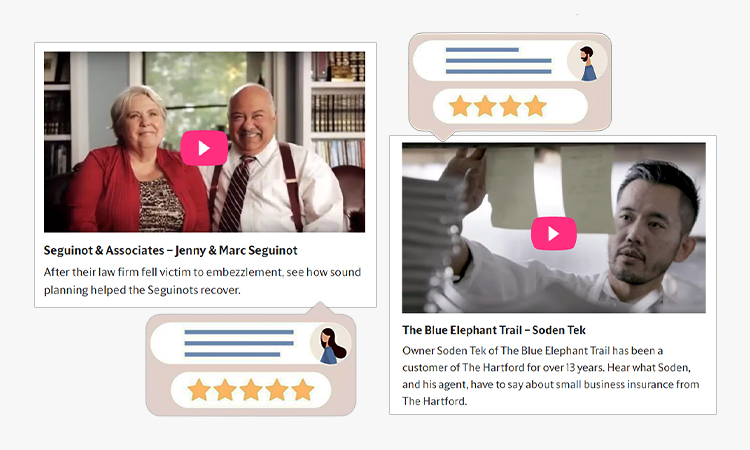
The time when your customers used to share text-only feedback has gone. Now the majority of your potential customers heavily rely on multimedia content when it comes to trusting your brand.
A 2025 Teleprompter study has revealed that 79% of viewers tend to purchase from a business after watching video testimonials or reviews, while 77% are more likely to be convinced to purchase.
- Authenticity Over Perfection: You shouldn’t prioritize producing corporate highlight reels, as most of your prospects prefer raw, ‘script-free’, and unfiltered testimonials which appear genuine.
- Prefer Short Video Reviews: Encouraging visual reviews from your satisfied clients is crucial. Ask for sharing bite-sized video clips, such as product walk-throughs, quick unboxing, and video praises that you can directly integrate into their review sections.
- Video Reviews Integration: You can even directly embed the video testimonials into your in-app purchasing flows.
Trend 2: Hyper-Personalized Customer Engagement

Another significant trend you must follow to grow your personal and business reputation is to hyper-personalize your customer engagement.
- Customer Experience as Reputation Driver – In today’s digital age, word-of-mouth has become digital, so the customer experience thoroughly dictates brand perception. The more satisfied a customer is, the greater the opportunities to build your personal or your company’s reputation. Do you know that more than 50% of customers are more likely to switch to a competitor even after one unsatisfactory customer experience?
- Data-Driven Personalization – Today’s modern shoppers mostly expect brands to remember their previous interactions, if any. They also expect brands to predict their requirements and suggest relevant items without them searching for them themselves. So, during a purchase, you need to gather enough customer insights so that you can use them while personalizing your customers’ future purchase experiences.
- Personalized Responses to Reviews – A generic ‘thank you’ may not work for today’s modern customers. Sending generic templates is an obsolete idea – your customers expect you to send highly personalized and context-aware responses, by mentioning the customers’ names, addressing specific concerns, and offering suitable solutions.
Trend 3: AI as Stakeholder and Zero-click Brand Visibility

In our list of top 10 reputation management trends, we have enlisted utilizing AI as a stakeholder, not just an operational tool, in the third position:
- AI as Stakeholders – This specific trend recognizes artificial intelligence beyond just an operational tool. It showcases AI as an active and independent entity that perfectly shapes brand perception by influencing corporate strategy and simplifying the communication between businesses and the public.
- The ‘Zero-Click’ Brand Visibility – Generative search engines like ChatGPT and Gemini summarize information available online related to a brand. More than 65% of people use AI regularly to search online; these generative search engines have become the primary source of first impressions for consumers. In a nutshell, artificial intelligence filters and frames your business’s online narrative – so you don’t need to click on anything to make your brand visible online in the best possible light.
- Predictive Reputation Management – AI algorithms analyze historical data, early-warning signals, and consumer behavior across the review sites your business has profiles on. These AI search engines examine your social media business pages as well as online forums to identify the emerging dissatisfaction. You need to address the operational bottlenecks before a simple customer concern leads to a major PR crisis or revenue loss.
- Real-Time Sentiment Analysis – Advanced Natural Language Processing (NLP) decoded even the slang, its contexts, and the emotional tone behind every brand mention you receive across the online platforms. Through this real-time customer sentiment analysis, your team can gain instant clarity on why a specific customer is happy and upset, and take necessary actions based on priority.
- Automated Response Systems – AI allows you to create tailored responses to customer reviews and social media inquiries. You no longer need to take a huge amount of time replying to every online review you receive. It can even ensure huge customer satisfaction and retention. And, your staff can entirely focus on complex and escalated escalations.
Trend 4: Increased Focus on Accountability and Transparency
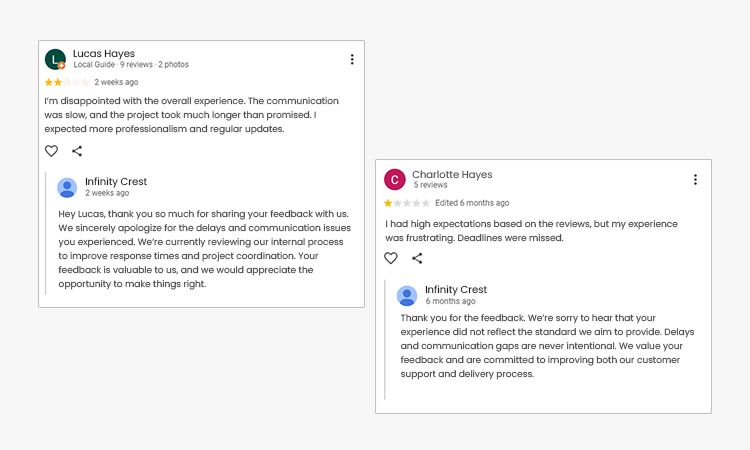
Now we will talk about the recent increased focus on accountability and transparency. In today’s digital-first era, most brands heavily rely on consumer trust, which can only be achieved by navigating ethics, communication, and public criticism.
Additionally, AI search ecosystems examine a brand’s trustworthiness before even a potential customer ever clicks a link. It’s quick and offers genuine results regarding a business’s reliability.
- Public Response to Negative Feedback – How you respond to negative reviews plays a major role in determining your brand’s trustworthiness. As in previous times, most people used to ignore responding to negative reviews to prevent arguments with the reviewers. But nowadays, how you reply to negative feedback has transformed – you need to keep it all professional, swift, and ethical.
- Ethical Business Practices – Today’s consumers are more likely to prefer the brands whose practices perfectly align with their mentioned brand values. It may sound surprising to you, but your potential customers can even track where your offered products are sourced and how you treat your employees at your workspace. Apart from this, you must also communicate how you use your customer data and other accurate insights.
- Open Communication from Brands – Communication from your brand’s end must be open and transparent, even during a reputation crisis. You need to maintain pre-planned communication protocols rather than releasing a PR statement in a rush. Train your executives and other management authorities to clearly communicate with the clients, customers, and other stakeholders.
Trend 5: Google Reviews and Local SEO Domination
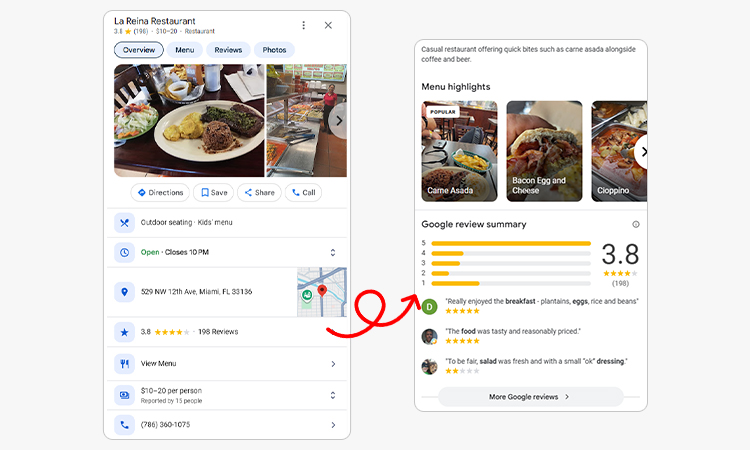
In previous times, many business owners did not prioritize effectively managing Google reviews and local SEO optimization.
According to a 2025 Wiserreview study, 97% of consumers tend to read online reviews before choosing a local business. As Google is the most popular search engine, a majority of people use it while searching for a business, you must prioritize managing the Google reviews.
- Importance of Google Business Profile (GBP) – Your GBP profile is the one-stop destination for all your local search presence. When you optimize your GBP profile, it reflects your online visibility in Google Maps and the ‘Local 3-Pack’ in their regular search results. You must fill out all the sections of your GBP profile with accurate NAP details, such as your business name, address, and phone number. Well-optimized GBP profile signals Google what your business does and guides your potential customers on how to use this information to call your business
- Review Quantity + Quality Balance – Do you know that reviews serve as direct ranking factors for businesses? If you only focus on generating a huge number of reviews from your customers, this may not work for you. You must maintain the quality as well as the quantity of your customer reviews. Try to encourage your satisfied customers to leave higher ratings and keyword-rich positive reviews.
- Location-Based Reputation Management Practices – To attract your local prospects, you need to localize your review generation strategies, such as sending follow-up emails and SMSs after a successful product delivery or service completion for a local customer. You can also develop location-specific landing pages and collect localized citations.
Trend 6: Employee Advocacy and Employer Branding

Not only can your satisfied customers, but also your employees can play the role of your brand advocates. Employees who are satisfied with your company culture and workspace environment are more likely to share positive reviews about your company, allowing you to leverage their glowing reviews to attract top candidates.
- Platforms like Employer Review Sites – Effective strategies to get more recruitment agency reviews require you to focus on platforms like Glassdoor and AmbitionBox, encouraging your employees to share their genuine reviews on these platforms. These positive reviews will help you to build a strong and active presence on these major company review sites.
- Employees as Brand Ambassadors – When your potential employees share positive reviews on these platforms, the feedback serves as social proof of your company’s credibility and reliability. Consumers and job seekers will be more likely to trust these genuine recommendations over your official corporate promotions. You can proactively leverage your employees as brand ambassadors of your company to promote your expertise, offerings, and UPSs.
- Building a Positive Workplace Culture – The first thing you need to ensure is to build a positive workplace environment, fostering a supportive and transparent work culture. This can help you generate more positive employee feedback and drive successful advocacy. Additionally, you need to prioritize employee well-being and open communication to make more employees satisfied with your workplace.
Trend 7: Decentralized and Third-Party Review Platforms

In the 7th position, we will talk about how decentralized and third-party review platforms have become one of the most popular reputation management trends. It’s mostly because candidates and buyers are now mainly relying on niche websites beyond broad platforms.
- Industry-Specific Review Sites – When your business is highly specialized in these industry-specific review sites and has higher ratings, it significantly verifies your domain expertise and helps you attract highly targeted talent.
- Growing Trust in Independent Platforms – In today’s competitive age, job seekers are more likely to check third-party review sites for authentic feedback than company-controlled ones. A great profile on these sites can help you build trust with your customers and stakeholders.
- Cross-Platform Reputation Management – Reviews and discussions are generally scattered across multiple digital platforms. You need to monitor your business presence across these websites to establish a continuous and multi-channel listening approach.
Trend 8: Crisis Management in the Age of Virality

Nowadays, a business is more likely to experience a reputational or PR crisis. It’s mostly because of the increasing competition in today’s digital world. How businesses used to deal with crises has now completely transformed as the scenario demands strategic planning and taking preventive measures even before the crisis occurs.
- Proactive Crisis Planning – You must move your approach from reactive fixes to proactive approaches. Even before a crisis occurs, organizations must stress-test their reputations by creating hypothetical scenarios for their team and mapping out clear and step-by-step communication playbooks. So that when the situation occurs, there will be no severe damage to their online reputation.
- Faster Spread of Negative News – User-sharing and social algorithms accelerate the speed at which your organization’s reputational controversies reach a global audience. If you react late to a crisis situation, it may escalate the situation and raise more reputational concerns.
- Real-Time Response Team – Companies are cross-functional ‘nerve-centers’ that include marketing, legal, PR, and community management personnel. You must appoint a response team empowered to monitor the public sentiment regarding the crisis and send authentic and human-centered responses at the exact time a crisis situation arises.
Trend 9: Integration of ORM with Marketing and PR
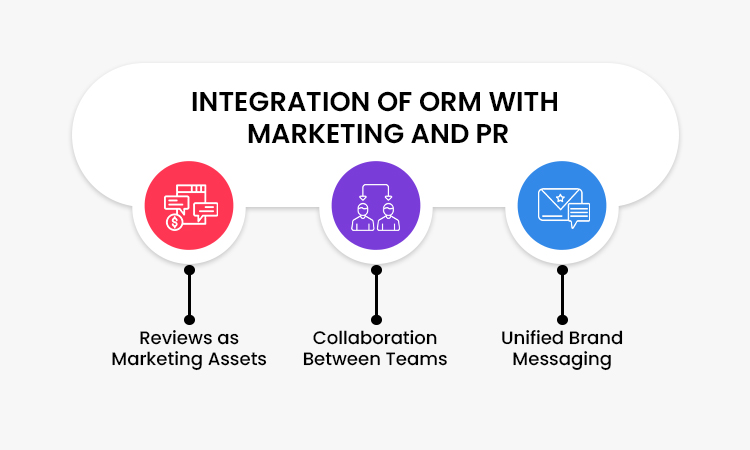
In today’s digital age, your online reputation management strategies may not provide huge benefits when implemented alone. Today’s competitive landscape demands that businesses integrate ORM with marketing and PR approaches.
- Reviews as Marketing Assets – Do you know that online ratings, testimonials, and user-generated feedback are no longer considered just as customer service metrics? Nowadays, businesses need to prioritize them as primary marketing assets that can directly influence their lead generation efforts and encourage purchase decisions.
- Collaboration Between Teams – In an organization, traditional public relations and digital marketing departments are now merging their workflows. If you seek professional services from an online reputation management agency, they will provide you with actionable data that your PR team can use to craft highly targeted press initiatives.
- Unified Brand Messaging – Brands are ensuring that the voice they use to address negative reviews appropriately aligns with the messaging that they have promoted in their PR campaigns and broad advertising.
Trend 10: Data Privacy and Trust Regulation

Last but not least, we will talk about the transformation in the data privacy and trust regulations of organizations in the list of online reputation management trends in 2026:
- Ethical Data Usage – Today’s modern companies are swiftly moving beyond legal minimums, specifically to establish an ethos of data minimization and purpose limitation. They mostly collect only the data necessary to provide a direct service to the user. Additionally, they also ensure the AI models and algorithms are unbiased and explainable to protect the user’s rights.
- Increasing Regulations – Today’s regulatory landscape is expanding rapidly. It requires constant monitoring and adaptable data governance. Today’s modern ORM scenario demands enforcement of laws like the EU’s GDPR, the California CCPA, and India’s DPDPA.
- Building Trust Through Compliance – You must treat data security as a compliance “box-ticking” exercise. Nowadays, the forward-thinking organizations specifically use this to differentiate themselves in the market. It demands intuitive and accessible dashboards for the users to easily edit or delete their personal data.
How Can Your Business Adapt to These Trends?
Following these trends can seem like a cakewalk, but it is not. You must follow a strategic approach to adapt to these trends.
But the benefits they provide are not something you can avoid. Here’s a quick strategy guide for you. Let’s have a look:
Strategy 1: Build an Effective Review Generation Strategy Plan
Effective review management for businesses requires you to generate positive reviews from your satisfied customers and promote those reviews to attract new clients. By following the trends, you can build a robust review generation strategy.
- Review Automation – You need to automate the review generation process by setting up an automated and post-purchase email or SMS system. Then you will no longer need to send separate review request emails to each customer and ask for their feedback after a transaction.
- Direct Link – You can provide direct links to your GBP, Yelp, and other industry-specific review pages to simplify the review submission process for your customers.
- Ethical Incentives – This is allowed in effective review generation. For example, you can offer entry into a giveaway or a small discount on a future purchase in exchange for a review or rating.
Strategy 2: Focus on Authentic Storytelling for Your Business
As a business owner, you must showcase what you offer, what is your journey, and how you serve your customers. Your audience is more interested in knowing about these things before they make a purchase decision.
- Behind-the-scenes Content: You can share the behind-the-scenes content or a day-in-the-life video of your team. Apart from these, you can share real customer success stories on platforms like TikTok and Instagram, especially those where visual content works better.
- Why Your Business is Unique: We suggest that you clearly communicate what your business provides beyond your customers’ expectations. Additionally, you should explain why the business exists beyond just making profits.
- User-generated Content: You can also ask your customers to share user-generated content like their real experiences of using your products or services. You need to reshare this content on your official channels, intending to build organic trust.
Strategy 3: Invest in AI as Stakeholders and Employ Automation Tools
In recent times, AI chatbots in online brand reputation management have played a huge role. Employing AI tools and automation techniques can help you simplify your reputation management process and guarantee results.
- AI Chatbots – You need to implement 24/7 AI-driven customer service bots on your website. These chatbots can help you handle basic inquiries, order tracking, and appointment bookings.
- AI for Marketing – Businesses can use AI writing to promote their offerings. On the other hand, design assistants can draft social media posts using AI and even tailor email marketing campaigns at scale.
- Streamlined Operations – You can use the workflow automation to automatically update your inventory. It can trigger marketing emails based on user behavior and qualify the sales leads.
Strategy 4: Train Your Teams for Proactive Customer Engagement
Who will handle your customer engagement? Your team, of course! Thus, it’s important to train them on how they can proactively handle customer interactions and keep them engaged thoroughly. Here’s how you can train your teams:
- Active Listening: You must educate your team on how to maintain empathy, employ de-escalation techniques, and how to identify upselling opportunities for their business. Make them understand how listening to the customer pain points can boost your reputation management initiatives by helping you to identify the areas of improvement.
- Empower Your Frontline: You must train your sales team on how they can handle customer service and provide the authority to resolve common customer complaints. So that they can resolve the customer concerns at the right time before the situation escalates.
- Proactive Communication: You must train your staff members regarding how they can effectively reach out to customers before a reputational issue arises. Transparent communication with your customers can prevent major reputational damage. For example, you can send proactive delay alerts for shipping a product or a personalized check-in post-purchase.
Strategy 5: Monitor and Measure Your Brand Reputation Metrics
Lastly, you must regularly monitor your existing brand reputation to measure the success of your reputation management efforts. Here’s the list of key performance metrics that you must track:
- 3 Key Brand Reputation Metrics You Must Track –
- Net Promoter Score
- Customers Satisfaction Score
- Online Sentiment across Social Media Platforms, Search Engine Results Pages, and Online Forums
Apart from this, you need to promptly address both the positive and negative reviews. You need to offer a thoughtful and professional response, even to the complaints. It will show your potential customers that you care about your service quality and customer satisfaction. You can even use the feedback and the tracked metrics to identify the arising customer concerns and prevent further reputation damage.
Conclusion
Reputation management is no longer a negotiable strategy for businesses to grow their online brand presence and boost their digital image. The competition is real; you need to adapt to the latest strategies and techniques to keep your business active and relevant. What can help your business grow continuously is effectively following the latest online reputation management trends.
If you’re confused about choosing the right trend that can help you meet your unique brand reputation management goals, we hope that our comprehensive list of the top 10 ORM trends can help you make an informed decision. However, seeking professional advice from a renowned reputation management agency can be a great idea, though!
FAQs
The following are some frequently asked questions and answers related to top ORM trends in 2026:
Ans. Small businesses can effectively manage their online reputation. They can effectively keep up with the latest ORM trends by monitoring the review sites, transparently responding to all the feedback, and even automating the review requests. Additionally, small business owners can utilize platforms like GBP and Yelp for their business to take control of their public listings and directly engage with their local audience.
Ans. Yes, you can use AI to respond to your customer reviews. You can use artificial intelligence as an assistive tool to automate the process of responding to reviews. AI tools can help you create personalized templates that you can automatically send to the positive, negative, and neutral reviews. However, you shouldn’t use an AI tool as a complete replacement for human oversight.
Ans. According to us, the two most important trends of reputation management in 2026 are ‘AI as a Stakeholder’. By following these trends, you can ensure that your consumers will no longer need to manually read dozens of reviews. Instead of this, AI answer engines like ChatGPT, Gemini, or Perplexity can aggregate your brand sentiment into instant and easy-to-understand summaries.
Ans. Crisis response time has changed from slow and 24-hour reactive processes to real-time and data-driven frameworks. By following these ORM trends, businesses can now detect signals up to 6 times earlier. Three major factors determine today’s crisis response time, including hyper-connected scrutiny, decentralized execution, and AI-enhanced detection.
Ans. Yes, video content significantly impacts online reputation. Because visual content can easily capture the audience’s attention. Videos help you communicate tone, authenticity, and personality. Videos are more likely to influence how people perceive your brand and company. Engaging video content can help you build trust, navigate your public narrative, and share search engine results.

