





In today’s competitive scenario, donors no longer need a cause to donate to nonprofit organizations; a majority of them are finding NGOs where their donation can leave a tangible impact. A ‘Simple Donate’ message is not enough to secure your donors’ support. Instead, nonprofit organizations must follow a strategic approach to market or promote their expertise and show how a little donation can change thousands of lives. Effective nonprofit marketing strategies help NGOs to build a sense of trust in their donors, build a positive online reputation, and boost their fundraising efforts.
Nonprofits need to develop a strong marketing strategy plan rooted in authenticity, otherwise they cannot encourage more donors to donate to their organizations. Attracting new donors and retaining your existing ones is the real growth strategy for your nonprofit organization. Digital marketing strategies and fundraising techniques can no longer be operated separately; NGOs need to merge these two strategies to create a consistent and reliable brand experience.
Sounds complex? With a proactive and strategic nonprofit marketing plan, it will not be! Here in this blog, we’ll explore how nonprofits can raise more funds through proactive online marketing strategies.
What are Nonprofit Marketing Strategies?
These are personalized strategies or techniques that nonprofit organizations can implement to promote their mission, attract more donors, and drive more donations. This is all about marketing nonprofit organizations’ social campaigns and encouraging more supporters to donate to that cause. These strategies include:
- Targeted email campaigns
- Social media marketing
- Content marketing
- Influencer marketing
- Emotional storytelling through online channels
- Community event hosting
When implemented in the right way, these strategies aim at building a community with donors and fostering long-term relationships with them. A nonprofit marketing plan is not like any other common strategy, as the aim is not just about selling products or services for profit; it’s about making your NGO’s mission to the right people, securing more funds, and achieving social impact within the budget constraints.
Why Nonprofit Marketing Strategies are Important for Fundraising?
For fundraising, nonprofit marketing ideas are a non-negotiable strategy plan that comes with an extensive list of benefits for fundraising. Let’s have a look at the list of key reasons why you must prioritize nonprofit marketing techniques for fundraising:
- Drives More Donations
The first and foremost benefit of nonprofit marketing methods is to encourage a noticeable amount of donations. It allows you to promote your NGO through multiple channels, including peer-to-peer fundraising, social media platforms, and email campaigns.
The strategy plan requires compelling and impact-focused stories; nonprofit marketing encourages potential donors to donate, which positively impacts your NGO’s fundraising revenue.
- Impacts Long-Term Sustainability
Nonprofit marketing doesn’t promise immediate fundraising; it’s a long-term process that requires you to have patience till the donors agree wholeheartedly to donate to a social cause. It’s all about fostering donor loyalty for your NGO and cultivating strong donor relationships through personalized messaging and consistent engagement.
Through the marketing strategies, organizations must create a sustainable stream of income and immediately reduce the risks of resources.
- Builds Trust and Credibility
In today’s competitive landscape, donors need to trust the nonprofit organization where they’re donating their money.
Additionally, they need to trust that their money has been used effectively for a significant social cause. Strategic online marketing strategies provide a mechanism to showcase transparency to the donors through consistent sharing of annual reports, testimonials, and financial audits. When a majority of your donors start to trust your nonprofit expertise, it naturally builds brand credibility for your organization.
- Boosts Online Visibility and Donor Retention Rates
Nonprofit marketing strategies allow you to boost your organization’s online presence as well as visibility across online platforms. It ensures that your cause for fundraising is visible to potential supporters in today’s crowded digital space.
It’s not just about attracting new donors; nonprofit fundraising strategies require you to prioritize marketing automation and consistent, high-value communication, which is crucial for retaining the existing donors by just keeping them engaged even after a successful campaign. This significantly raises the overall donor retention rate for nonprofits.
- Increases Word-of-mouth and Referrals
Last but not least, nonprofit marketing ideas successfully turn your existing donors, volunteers, and other beneficiaries into your brand advocates for specific campaigns.
Through effective digital marketing, when you share inspiring content and share it with your target audience, it encourages the supporters to spread your mission or campaign messaging within their own networks. Digital marketing for nonprofit organizations is a low-cost way to reach new and passionate audiences.
A Step-by-Step Guide on Non-Profit Marketing Strategies to Raise More Funds
Though it may sound new to you, nonprofit organizations also need to follow a strategic approach to raise their desired funds.
And what does it require? It requires your nonprofit organization to build a solid online reputation and digital presence that can capture your potential donors’ attention. Here is a complete step-by-step guide for your nonprofit organizations to promote their mission, establish a robust online reputation, and raise more funds from donors. Let’s have a look:
Step 1: Understand Your Donors
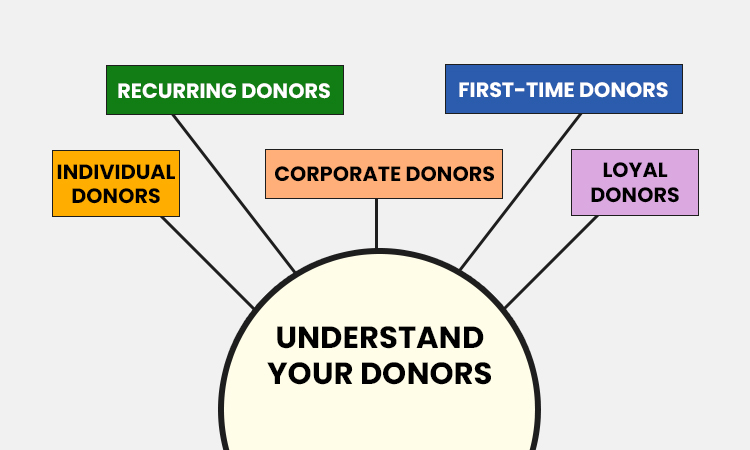
The first thing you need to do is to build a solid foundation of effective fundraising. To do this, it’s important to understand your donors first. With targeted, authentic, and personal marketing efforts, you can seamlessly understand your donors and identify the loyal ones.
What your donors are expecting mainly depends on the personalized communication you have with them and the clear impact it will have on them. Their expectations determine audience segmentation for engagement.
- Types of Donors Nonprofit Organizations May Have to Deal with
Here are 5 major types of donors your nonprofit organization may have to deal with:
- Individual Donors
These individuals are often those who give one-time, annual, and occasional gifts to nonprofits. These individual donors are often the majority of the charitable giving. They mostly donate because of their emotional connection to an NGO’s mission, passion for a specific cause, and trust in a specific nonprofit organization’s expertise.
Marketing Technique to Attract Them: We suggest that you use storytelling to share the personal and emotional impact of their gift to society or the people associated with an organization. You can also use social media and email to create a sense of community and urgency.
- Recurring Donors
These are the supporters who pledge to give a set amount regularly, on a monthly or quarterly basis. Among all the donors, they are the real ones – specifically, the most valuable bunch who can give the stable and predictable revenue number for your nonprofit organization. Recurring donors mostly have a deep belief in the mission and donate without any request or pledge.
Marketing Technique to Attract Them: Nonprofits must focus on stewardship over solicitation by sending personalized and exclusive updates. They must showcase how the donors’ consistent support drives the process. Don’t forget to offer the donors easy and automated upgrades.
- Corporate Donors
These are businesses that provide sponsorships, organize matching gift programs, and offer corporate grants for nonprofit organizations. They are more likely to donate for brand alignment, employee engagement, and to meet community social responsibility goals.
Marketing Technique to Attract Them: Nonprofits should always treat the corporate donors as their business partners. They must highlight how the partnership can enhance the corporate brand and showcase employee volunteer opportunities.
- First-time Donors
These are new donors who have just donated to a nonprofit organization for the first time. They are more likely to be curious and respond to a specific appeal or peer referral.
Marketing Technique to Attract Them: You need to focus on immediate and personalized follow-up to encourage donors to donate funds to your organization. The first-time donors need attention from your end. Prioritize sending a ‘thank you’ note to them within 48 hours of a successful donation. It’s the best way to make them feel valued. After their first donation, you shouldn’t immediately ask for another donation; rather, try to gain their trust and welcome them to your community.
- Loyal Donors
These are the loyal donors who have consistently donated to your nonprofit organization over several years. They are more likely to prioritize investment, trust, and validation of their past donations. They are the potential legal donors whom you must prioritize to boost your fundraising efforts.
Marketing Technique to Attract Them: Nonprofit organizations must offer recognition to their loyal donors. They must offer exclusive and high-touch experiences, such as personalized phone calls and invitation-only fundraising events, to make those donors truly seen and appreciated.
Step 2: Identify Donors’ Motivation

Now that you have understood your major donors, nonprofit marketing strategies require you to understand donor motivation. Identifying what can drive a potential donor to make a donation is often an overlooked step in nonprofit marketing.
You shouldn’t just ask for the money, but rather try to understand why every donor feels compelled to donate. You need to personalize your messaging based on those donors’ motivations, which is directly related to increasing donations and long-lasting relationships with the donors.
- Types of Reasons Why a Person Wants to Donate to Nonprofits
The following are three major types of reasons or motivations for which a person may want to donate to a nonprofit organization:
- Emotional Triggers
Most of the donors are driven by heart-led reactions rather than any logical analysis. These are some emotional triggers you donors can feel:
- A mission that highlights a single and relatable person in need
- The contribution of the donor that has made a real difference.
- An incident where a crisis may occur if proper action isn’t taken.
- A desire to improve their own self-regard and alleviate the discomfort of seeing each other suffer.
- Social Proof
Most people tend to follow the actions of others. So when your nonprofit organization has strong online review profiles, it serves as social proof. These reviews and donor testimonials validate the potential donors’ decision to donate to a specific NGO.
- When a potential donor’s neighbors, friends, and community leaders are donating to your nonprofit organization
- When you can showcase a huge fundraising number or the massive number of donors
- When you share stories of individuals whose lives were completely transformed by your nonprofit organization
- Community Belonging
You donors may not ask you to make them a part of your nonprofit community, but they often want to be a part of a bigger campaign or a bigger cause. Being a crucial part of a community makes one feel connected to a group associated with a greater social cause.
Donors often choose nonprofits that align with their identity – you must involve the donors as active partners in specific campaigns, rather than just building a transactional relationship with them.
Step 3: Create Donor Personas

In this step, we will talk about how nonprofit organizations create donor personas. Let’s have a look:
- Age
The first factor you need to consider is your donors’ age. When you understand the generation of their donors, it helps you predict their communication preferences and philanthropic motivations, based on which you can develop fundraising for your nonprofit marketing strategies plan.
You need to analyze your CRM data to identify age demographics. Donors who are 65 years or older can be identified through traditional channels such as direct mail communications, while you can identify donors between 25 and 40 years via mobile communication and social media campaigns.
- Interests
It requires you to identify what drives the donors to care about your specific cause – is it any values, passions, or stories that resonate with your personal life? Nonprofit organizations must use surveys or personal interviews to ask their supporters why they want to donate to have donated in your business.
- Giving Behavior
You must analyze how and when the donor donates to your nonprofit organization. It will help you understand if they want to be a part of a community or invest in a bigger social cause. This is important to identify the donation frequency, amount, and timing as well. You can segment your database into certain categories like recurring donors, one-time donors, first-time donors, and major gift donors.
- Preferred Communication Channels
Which communication channels are preferred by your donors – this is extremely important to know. Nonprofits need to identify the online and offline spaces where their potential donors consume information. Identifying these platforms ensures that your nonprofit marketing strategies will not be wasted by investing in the wrong platform.
You can review the marketing analytics, such as email open rates and social media engagement, in your business pages to understand where your donors connect more often. Apart from these channels, you can also examine the email newsletters, Facebook Ads, Instagram, and LinkedIn as well.
Step 4: Build a Strong and Authentic Brand Story

Now it’s time to build a strong and authentic brand story for your nonprofit organization. A unique brand story can help your nonprofit organization differentiate itself in the niche market. You must foster trust and drive donor loyalty for your specific campaigns.
A compelling brand story makes your organization recognizable and professional across all the key touchpoints. Let’s know how you can build a strong and authentic brand story:
- Define Your Mission Clearly
What are the unique missions for each campaign? You need to clearly define your mission statement, as it is the most crucial factor. Based on this mission statement, you will make every decision and proceed with every communication.
- Nonprofits need to define why their NGO exists, who they serve specifically, and how they make an impact.
- They need to aim for a single sentence for their mission statement within 20 words, as such a message can be shared easily.
- Based on your mission statement, you can guide your strategy and ensure all revenue-generating activities align with your specific purposes.
- Use Storytelling to Connect Emotionally with the Donors
Storytelling plays a huge role in helping you connect with your current and potential donors. Stories are more personal and emotional than facts and figures. Here’s how you can use storytelling to connect with the donors:
- Make your donor the hero of your story and position him/her as an individual who has helped you solve the problem.
- You must focus on one character by promoting an individual’s story. You must create a profound emotional connection with the donors – don’t just share vague statistics about too many characters.
- Nonprofit organizations need to structure their stories with a clear beginning, mentioning the organization’s intervention, and the positive outcome.
- Prioritize adding photos and videos to break down the complex information of your story – visual content is the best way to evoke your donors’ empathy.
- Don’t just mention facts, but rather, you should add donor data to support your emotional story and make it more trustworthy.
- Maintain Consistency across Online Channels
Consistency is the key – you must have heard that. It builds your brand recognition and professional credibility in the niche market. When your nonprofit organization’s brand messaging is thoroughly consistent across online channels, it generates a sense of trust among your donors.
- Develop a document that perfectly defines your NGO’s logo usage, color palette, tone of brand voice, and typography.
- Nonprofits must ensure all the visual elements, like logos, colors, themes, and even fonts, are consistent across all the platforms, including your website (if any), email newsletters, donation pages, and social media.
- Ensure your NGO’s tone of communication is the same, no matter whether it’s a social media post, an email newsletter, or an annual campaign report.
Step 5: Leverage Digital Marketing Channels
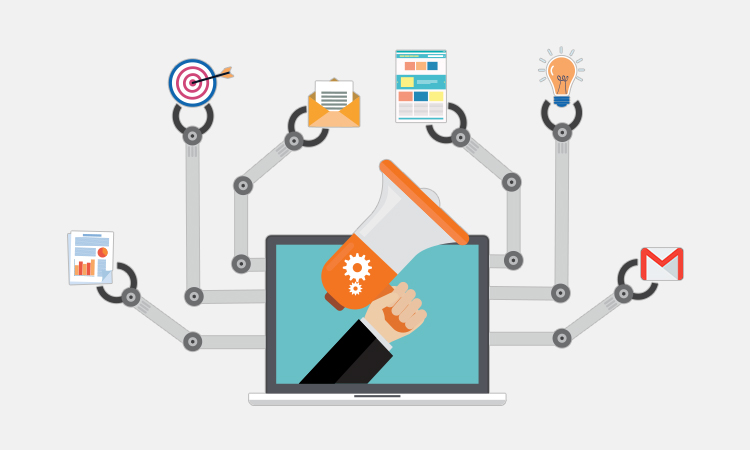
There are many digital marketing channels that nonprofits must leverage to reach their potential donors. These channels will also help you to effectively promote their missions, campaigns, and marketing messages. It’s one of the most crucial nonprofit marketing strategies that you can’t avoid implementing.
From your website and social media platforms to your email newsletters, you must leverage all these effective channels to reach your target audience. Check out the 4 key digital marketing channels for nonprofits:
- Website Optimization
Your website is a central hub for fundraising, as it’s the first space that your potential donor will have access to. Your website has the capability to convert your visitors into donors. You must prioritize optimizing your website so that your visitors can see what your nonprofit organization offers and add value to a social cause.
- Clear CTAs – You must add ‘Donate Now’ buttons on your website, presented in a bright and contrasting font. You must add the buttons to the header of every page. Always use action-oriented language that tells visitors exactly what to do on your website to find your nonprofit organization’s expertise.
- Mobile-friendly Designs – You must assume mobile-first behavior for your website. You need to ensure that your donation forms are short, fast, and easy to fill out on smartphones. According to a 2026 BusinessDasher study, 72% of people prefer mobile-friendly websites.
- Fast Page Loading Speed – You need to optimize your website images and compress files so your website pages load instantly. If your website loads slowly, it may frustrate users and lower your site’s search engine rankings.
- Email Marketing Campaigns
This is one of the most preferred media of communication for a lot of people across various age groups.
You can leverage email marketing to build personal connections with donors. Email marketing outperforms social media in driving donations for your nonprofit organization.
- Newsletters: You need to use a ‘3-1 rule’ to provide three educational or story-driven updates for every fundraising appeal to prevent donor fatigue.
- Fundraising Appeals: Nonprofits must craft compelling and urgent stories to demonstrate the tangible impact of a donation. We suggest that you use one clear CTA per email.
- Personalized Donor Communication: Nonprofits must segment their email list by donor behavior based on their engagement and retention rates.
- Social Media Marketing
According to the 2019 Global NGO Technology Report, 90% of nonprofits use social media platforms to engage with their supporters and donors.
Social media platforms can be essential tools for building community, reaching passionate donors, and increasing your nonprofit’s brand visibility. An effective social media reputation management strategy plan requires you to explore all the platforms and choose the most suitable one to meet unique fundraising needs:
- Instagram – Nonprofit Marketing Strategies requires you to use high-quality visual content, such as photos and Reels, to share stories, visual testimonials, and behind-the-scenes footage to show your mission in action.
- LinkedIn – This one can be one of the most popular social media platforms that nonprofits can use to build strong professional networks. You can position your organization as a thought leader in the marketplace by sharing your annual campaign reports, stories, and impact studies that appeal to your professional network and corporate donors.
- Facebook – You can utilize Facebook’s fundraising tools, like the donate button and form groups, to foster a community of your supporters who are eager to donate to your nonprofit organization.
- Content Marketing
Nonprofit organizations must create valuable and consistent content to attract, engage, and retain their donors. Content is king – you must have heard about this. Content can be your most effective marketing tool to showcase your nonprofit organization as a knowledgeable source and attract new donors.
- Blogs
NGOs must write stories about beneficiaries, their staff, and volunteers to promote ‘why’ you have started your journey as an NGO and what your mission is. Apart from blogs you publish on your website, you can implement proactive strategies for guest blogging to attract other NGOs or authoritative sources audiences.
- Reports
Nonprofit marketing strategies require you to publish annual or quarterly reports to showcase your campaign data, maintain transparency, and promote your achievements.
- Infographics
You can turn your complex data, such as financial information, into engaging infographics that will be visually appealing to potential donors. This is how you can show your donors where they will spend.
- Reels
Social media platforms like Instagram and Facebook allow you to use their short-form video creation and sharing features through Reels. You can create those reels to grab your audience’s attention and share emotional stories through engaging videos.
Step 6: Leverage Social Proof to Build Credibility
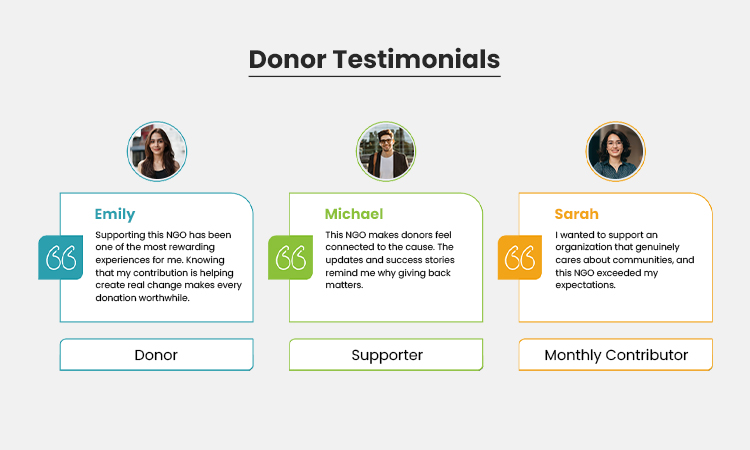
Providing social proof to your potential donors can be one of the most effective nonprofit fundraising strategies. Through this practice, your potential donors can mirror the actions of others to reflect correct behavior. When they see that your existing or previous donors have made informed decisions by donating to your NGO campaigns, they will be more likely to donate as well.
- Stories from Satisfied Donors
Do you simply ask for money from donors? It’s not a great idea, though! We suggest that you share narratives from your satisfied donors about why they have decided to donate or choose your NGO over others. You can create spotlight profiles of your donors through videos or blog posts where they explain their personal connection to the donation cause.
- Donor Testimonials
When your donors share their donation experience in your NGO through testimonials, it offers an impactful validation that your NGO is trustworthy and effective – willing people can donate if they share a connection with a campaign cause.
You can ask your donors to share video testimonials or attach their original photos along with the testimonials to increase the level of authenticity. Strategically place these testimonials on your website, landing pages, email newsletters, and even on social media campaign posts.
Step 7: Prioritize Influencer Marketing

Social media influencers can be your NGO’s face in today’s digital-first scenario. They are followed by millions of people of different ages, especially the youth. Through influencer marketing, you can even encourage the youth to donate to great social causes.
A 2025 Fundraise Up study has revealed that 50% of nonprofits collaborate with social media influencers. So, it’s now your time to collaborate with these trusted voices and extend your reach.
- You must identify social media influencers, including the local leaders, community experts, and social media creators, whose audience perfectly aligns with your target demographics.
- Nonprofits treat influencers as partners by giving them enough creative freedom to share their journey in their own brand voice.
- You can request the influencers to organize live Q&As, events, and social gatherings to give a simple paid shoutout to your campaigns.
- Many influencers agree on starting their own fundraising pages on your NGO’s behalf. This best practice can multiply your reach and donations.
Step 8: Build Communities with Donors
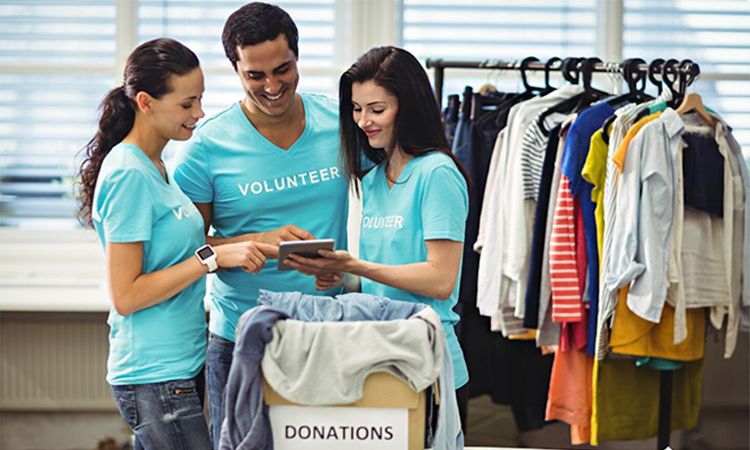
Now you need to build a community with your donors – this is crucial to transform the one-time contributors into long-term partners. It significantly increases your donor retention rates.
- Organize Events, Webinars, and Volunteer Programs
You can host in-person and virtual events to connect with the supporters of your campaign mission. We advise that you arrange donor appreciation nights, educational webinars, and behind-the-scenes site tours.
You can directly involve the donors in your mission with initiatives like ‘Volunteer Champions’ to build personal investment in your organization’s success. Apart from this, webinars can be a great way to share your impact stories exclusively for the monthly sustainers.
- Provide Recognition through Donor Shoutouts and Loyalty Programs
Here are some effective methods to offer recognition through donor shoutouts and loyalty programs:
- You can send unexpected gifts for your donors after a successful donation, such as small gifts, personalized ‘thank you’ notes. This showcases that you truly value their contribution.
- Promote the recurring donors on social media platforms, email newsletters, and even ‘pinned stories’ on Instagram and LinkedIn.
- For loyalty programs, you can create ‘monthly sustainer’ clubs with tiered advantages, such as exclusive impact report access, early access to events, and branded merchandise.
- Though it’s not mandatory, wishing your donors on their anniversaries or birthdays by gifting them personalized cards can help you build a strong emotional connection with them.
Step 9: Optimize Online Presence for Search and Visibility
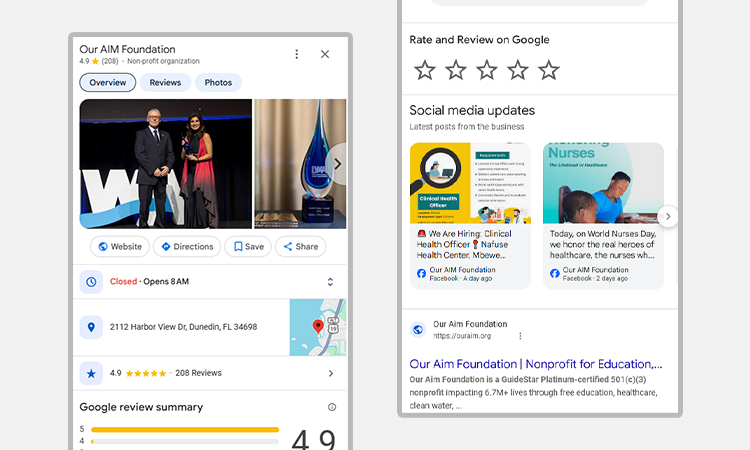
Optimizing your NGO’s online presence for ranking higher in search engine results is another one of the effective nonprofit marketing strategy. A strategic approach to SEO reputation management can help you make your nonprofit’s online presence stronger and more visible.
- Implement Relevant Keywords
Your potential supporters who are interested in donating to a nonprofit organization like yours often use relevant keywords to search for it online. You need to conduct detailed keyword research and implement them in your online content to make your NGO rank for those relevant search queries.
- Firstly, nonprofits must find terms with higher search volumes and low competition. We suggest that you use ‘long-tail keywords’ to target specific audiences.
- Identify the keywords that encourage your potential donors to take immediate action, such as ‘nonprofit near me’, ‘NGOs near me’, and ‘volunteer opportunities.’
- Always use natural language that ordinary people use to search for topics relevant to your nonprofits, its mission and campaigns.
- You can include target keywords in key areas of your website, such as headings, page titles, and meta descriptions, and of course, throughout the website content.
- Boost Local SEO with a Robust Google Business Profile
For boosting your nonprofit’s local presence, you need to follow certain strategies:
- If your nonprofit organization has a physical location, you must ensure it prominently appears in the ‘local pack’ – the top three results on a Google Map.
- Always optimize your Google Business Profile, with your organization’s name, address, and phone number (the NAP details). Ensure these details are consistent across your website, social media pages, Google Business Profile, and other online profiles as well.
- You must add a compelling description of your mission along with the relevant categories and your business hours.
- Don’t forget to include photos of your NGO, the volunteers, events, campaigns, and beneficiaries. You can employ Google Posts to share the latest news and details of upcoming events for fundraising.
- Ask your satisfied donors to share their donation experience with your NGO on your Google Business Profile.
- Answer Trending FAQs
You must address the trending FAQs related to your NGO, its mission, and campaigns, so that your organization appears in featured snippets and you can establish your NGO as a trustworthy export in the market.
- Firstly, find the trending questions that your potential donors mostly search for before making a donation decision.
- You can create a separate FAQ page or section on your website where you can use natural and conversational language to answer the common queries.
- Answer niche trending questions relevant to your NGO to attract the highly engaged users.
- You can target keywords like ‘nonprofits in (the city name) to make your NGO appear for these specific search queries.
- You need to implement the FAQ schema markup on your NGO website. It will help Google understand your online content and showcase it more prominently in online search results.
5 Helpful Tools for Non-profit Marketing Strategies
Till now, we were talking about the strategic approach every nonprofit organization should follow to promote or market their missions and campaigns with an aim to attract loyal donors and raise more funds.
But we understand that this is a long-term process, and you have to wait to see your desired fundraising outcomes. Do you know that you can simplify the nonprofit marketing process by employing some helpful tools? Yes, you have heard that right!
Below we have listed 5 best nonprofit marketing strategies tools that you can prioritize to seamlessly achieve your fundraising goals:
| Nonprofit Marketing Tools Name | Features to Use |
| 1. HubSpot CRM | ● A powerhouse for nonprofit donor management and marketing automation. ● A centralized platform to manage relationships. ● Allows teams to track the detailed records, including donation history, event participation, and contact information. ● Offers 40% discount on CRM, marketing hub, and CMS licenses. |
| 2. Mailchimp | ● Ideal for smaller non-profit teams. ● An intuitive drag-and-drop builder for email marketing campaigns. ● Best for creating email newsletters and donor nurturing campaigns. ● Provides 15% discounts for verified nonprofits. |
| 3. Hootsuite | ● Ideal for larger nonprofit teams that require scheduling posts, managing content, and analyzing performance across social networks from a single dashboard. ● Offer discounts of up to 60% on standard and advanced plans for nonprofits |
| 4. Sprout Social | ● An ideal high-end social media management tool. ● Provides advanced analytics and engagement tools to use. ● Ideal for nonprofit organizations with complex social strategies |
| 5. DonorBox | ● Designed to be user-friendly and allow nonprofits to create fast, effective, and secure donation forms. ● Seamlessly integrates with platforms like Mailchimp for automated follow-up marketing after a successful donation |
FAQs
The following are some frequently asked questions and their answers related to nonprofit marketing ideas:
Ans. Nonprofit organizations can quickly build donor trust if they adopt radical transparency and demonstrate immediate impact through storytelling. Nonprofit startups must engage their supporters with consistent and effective personal communication. Always remember, trust is inevitable in showing that the organization is incompetent and honest in its mission and cause. It is not just seeking funds from their donors, but also aims to invest it in a great social cause.
Ans. The best nonprofit fundraising platform specifically depends on an organization’s specific fundraising requirements. However, a leading and versatile option can be Givebutter if you are looking for an all-in-one free fundraising platform ideal for implementing your nonprofit marketing strategies. You can also consider using Donorbox if you want to create a customizable donation form and Classy for successfully managing a robust and enterprise-level social campaign. All these tools can be integrated with peer-to-peer, events, and donor management.
Ans. You can measure your nonprofit marketing success by tracking certain key performance indicators (KPIs) to understand whether you have achieved your unique fundraising goals, such as volunteer acquisition, campaign engagement, and donation growth. To measure the overall success of your nonprofit marketing efforts, you need to track key metrics like donor acquisition cost, engagement rates, return on investment, conversion rates, and more.
Ans. You should communicate with the donors at least 1-2 times per month. It will help you maintain donor engagement by using a mix of impact success stories, updates, and asks. Nonprofit organizations can prioritize sending 2-3 email updates per month, combined with 2-4 annual direct mailings. You can try this process, and if this works best for you, you can continue prioritizing this one for effective fundraising. You can consider increasing the urgent tasks during the year-end.
Ans. Nonprofit organizations must move beyond simply consistently posting social media content. They must focus on high retention and authentic storytelling to prioritize emotional connection and shareability. Nonprofits must leverage platform-specific tools like Instagram Reels and Facebook Live to foster donor trust and encourage user-generated content like testimonials.
Conclusion
“Why does a non-profit organization need to promote its missions and campaigns?”- you’re highly mistaken if you think like this. We live in a highly competitive digital landscape where even nonprofits need to promote or market their campaigns and missions to attract new donors, retain the existing ones, and boost their fundraising.
This requires a strategic approach that we have talked about in this blog. This article will help you understand effective nonprofit marketing strategies in detail and determine how you can develop a robust plan to meet your unique fundraising goals.
If you want to see professional assistance and expert guidance, you can consult with a renowned online reputation management agency to hire an online marketing service for your nonprofit organization.

