






In today’s digital-first era, trust is crucial for every business, especially if it provides financial services. Financial consumers may not consider hiring services or purchasing products from a fintech company if they don’t have enough trust in their reliability. That’s why it has become extremely crucial for fintech companies to earn customer trust in today’s digital realm. Even a single negative review, a misinterpreted data security alert, can entirely erase your years of efforts to build a positive reputation in the competitive market. That’s where the role of effective reputation management for fintech companies comes into play.
Do you know that 90% of banking consumers trust online reviews to make their financial decisions? Yes, you heard that right!
That’s why managing your online reputation is no longer an optional marketing strategy for your fintech brand. It has become a necessity for you if you want to grow your fintech business in the long-run.
Are you confused about how to get started with implementing advanced reputation management strategies for your fintech company? Don’t worry, here we will explore how fintech leaders can build, protect, and maintain their online reputation to turn customer trust into a competitive advantage.
What Is Reputation Management for Fintech Companies?
It refers to the strategic process of building, managing, and monitoring online reputation. It helps a Fintech brand achieve a desirable digital image to foster trust, credibility, and loyalty of its customers. Fintech company owners must manage their online reviews, address security concerns, and utilize SEO tactics to suppress negative content.
Fintech companies can attract investors and clients in today’s sensitive fintech industry through effective reputation management strategies.
When your Fintech brand has a positive online reputation, it will be easy for you to attract new customers and retain the existing ones. Because more people will get attracted to your reputation and the reliability it showcases.
Fintech businesses must focus on building a robust online reputation to compete for user trust in an industry like Fintech, where a single negative feedback can immediately spread like wildfire and create extreme damage to your online reputation. It can even harm the credibility of your Fintech business.
Why Must Fintech Companies Prioritize Reputation Management?
Digital reputation management for the fintech industry comes with an extensive list of advantages. From helping you to generate trust through positive reviews and acquire new customers for your fintech company to building investors’ confidence and reducing competitive market pressure, effective fintech reputation management strategies benefit a business to an ultimate level.
Fintech business owners can prioritize hiring a reputation management agency to seek their expert guidance and professional assistance. Here are five key benefits. Fintech companies must prioritize reputation management. Let’s have a look:
- Generates Trust for Fintech Customers
Fintech is today’s modern and digital-only industry where trust is inevitable. Customers need to trust your fintech brand, which you can use to build a positive reputation. Through effective reputation management strategies, fintech firms must generate trust among their customers by showcasing their credibility and reliability.
Consumers are often cautious about reviewing data breaches and security. When your fintech company has a positive online reputation, it will showcase that the fintech brand is not engaged in something that can breach data privacy. So, more people will naturally generate trust in your fintech service offerings.
- Helps in Acquiring New Customers
As most consumers largely rely on online reviews before using a new business, it can make the new customer acquisition extremely seamless. Effective reputation management requires you to generate and manage your customer reviews, which can act as social proof for consumers.
People are more likely to trust the real experiences of customers rather than some promotional words. So, when some of your satisfied customers say positive things about your fintech products and services, it makes your offerings look more reliable to your consumers.
- Impacts Regulatory and Compliance Sensitivity
Proactive reputation management strategies, including a transparent and compliance-oriented reputation, can help you build trust with regulatory bodies. A strong compliance framework helps fintech companies prevent regulatory violations and subsequent public scandals that can severely hurt their fintech brand’s image.
However, you need to adhere to laws like GDPR and clearly communicate these efforts to advance.
- Builds Investors’ Confidence
The success of fintech companies often relies on the trust of customers. A tarnished trust in those companies can lead to a major decline in valuation. On the other hand, a strong reputation can act as a tangible asset that boosts the customers’ trust. Your investors will be more likely to collaborate with your Fintech business as its positive digital presence will demonstrate integrity and stability.
- Mitigates Competitive Market Pressure
In today’s digital-first world, fintech companies must stand out with their offerings. If your fintech business provides the same as what your competitors are providing, it may not attract potential customers to your Fintech business or help it stay ahead in the market competition. As today’s Fintech competition is fierce, a stellar reputation of your Fintech business can play the role of a key differentiator. It can only be achieved through effective reputation management for fintech companies.
When a Fintech company implements an effective reputation management strategy, it can provide a lasting competitive advantage. It also allows smaller and reputable Fintech companies to outperform the larger and less transparent competitors. Robust reputation management strategies can help your fintech brand retain its existing customers and reduce the competition in the market, where customer loyalty is not always common, especially in today’s age.
5 Key Elements of Fintech Reputation Management
Online reputation management is a non-negotiable strategy. You cannot argue with that, especially if you want to grow your company with a positive reputation and robust digital presence.
It requires the Fintech brand owners to balance customer trust, security, and digital presence. Specifically, Fintech reputation management focuses on monitoring online reviews and requires you to engage with customer feedback and maintain regulatory compliance. Here are the five major elements that you must prioritize for your reputation management strategy plan. Let’s have a look:
- Online Reviews

Effective reputation management strategies require fintech brand owners to actively generate, respond promptly to, and manage customer reviews across platforms like Google Business Profile and industry-specific review sites. It helps you build trust and maintain a steady stream of positive reviews that will significantly improve your business’s credibility.
- Media Coverage

When you cultivate a positive online perception through strategic digital PR, press releases, and thought leadership. All these come under the media coverage, which is extremely crucial to building the major public perception. Through the content, you can build a positive online image for your fintech company and earn positive coverage from the major media publications.
- Customer Sentiment

Fintech brands need to analyze customer feedback to improve their offerings and stay ahead of their market competitors. Apart from this, you need to promptly respond to customer feedback and constructively react to negative experiences to prevent major reputational damage.
- Social Media Perception

Social media platforms like Facebook, Instagram, and LinkedIn allow Fintech brand owners to engage with their followers on a personal level and manage their brand mentions. They can seamlessly navigate the social media perceptions and build a positive reputation across the social media landscape. They can also handle their Fintech company mentions (which are negative) across the social media platforms and prevent potential reputation risks, followed by escalations.
- Regulatory Reputation

You need to ensure stringent adherence to regulations and security standards to maintain the ultimate level of trustworthiness. It will help you showcase the credibility of your Fintech company. When your reputation management techniques are platform regulation-compliant, it will naturally build a positive reputation for your fintech company.
6 Common Reputation Management Challenges Faced by Fintech Companies
Just like the benefits, effective reputation management comes with a list of challenges as well. Sometimes, fintech brands are more likely to face reputation challenges while managing the online brand image.
The following are some common challenges in reputation management faced by Fintech companies. Let’s have a look:
- Negative Online Reviews
Today, digital platforms like Reddit have become extremely critical. Even a single online review or viral Reddit thread that questions whether your fintech company is a scam or not can outrank your company’s official website on search engine results.
Such negative online reviews can create intense volatility in your fintech brand perception, especially if left unaddressed. It can rapidly tarnish a Fintech company’s brand value. The speed at which negative and unverified information spreads demands constant monitoring and prompt professional intervention.
- Data Security Concerns
With the financial sector leading in breach cost, data breaches are a common phenomenon nowadays. It has remained the most significant threat to reputation. Even a single incident can lead to the permanent destruction of trust for the company. So in recent years, fintech have been battling with sophisticated AI-driven attacks like deepfakes and account takeovers.
Fintech companies need to balance high-speed user experiences with robust security measures that protect against AI-enhanced threats.
- Regulatory Issues and Legal Complaints
In today’s fintech regulatory landscape, it is increasingly fragmented, with ‘regulatory localization’ rising in nations, mostly because of their bespoke rules. It makes cross-border compliance a major headache. So, the legal complaints often stem from the inconsistencies regarding consumer protection and data handling.
Fintech companies manage compliance across multiple jurisdictions while navigating high-profile scrutiny of embedded finance and digital assets.
- Social Media Backlash
Fintech companies are more likely to be vulnerable to rapid, widespread social media backlash. When a service failure occurs, fintech companies may face social media backlash. In today’s age of synthetic media, AI-generated misinformation and fabricated private remarks present in the online reviews can be used to make reputational attacks on a fintech company. If you run a fintech company, you need to counter coordinated smear campaigns of ‘revenge-driven’ reputational attacks that use artificial intelligence to amplify fake content.
- Fake Reviews and Misinformation
Disgruntled individuals and competitors often use fake reviews to artificially reduce a fintech company’s rating and manipulate consumer trust. Reviewers often generate such feedback using AI, and make them difficult to distinguish from genuine feedback. However, advanced detection techniques can help you identify the fake reviews among the genuine ones.
- Customer Service Failures
As the fintech industry mainly relies on digital infrastructures, any technical downtime or slow service can result in severe reputation damage. In such situations, fintech companies often identify the customer support channels as a major and underrated battleground. Even any type of technical downtime or slow service can result in severe reputational damage. However, weak accounts recovery processes can often lead to significant trust issues.
Fintech companies can provide high-touch human support while scaling automation, especially during high-risk account privacy recovery procedures.
Top 5 Platforms that Influence Fintech Reputation
Do you know that platforms are focusing on which fintech companies can influence online reputation?
Yes, you heard that right! When you implement fintech reputation for a specific platform, it boosts your fintech reputation efforts. Let’s have a look at the top platforms you can focus on to enhance your fintech brand’s reputation:
- Review Platforms
The following are three top review platforms that fintech companies can focus on:
| Review Platforms | Features to Use |
| 1. Trustpilot | • A critical repository for public sentiment • Used by consumers to check for trustworthiness before signing up for new neobanks or other payment apps |
| 2. Google | • Acts as a front-facing credibility check • A platform where high ratings directly correlate to higher adoption rates |
| 3. Glassdoor | • Assess internal company health, employee sentiment, and employer branding • Helps in analyzing and measuring long-term sustainability |
- Social Media Platforms
Below are three social media platforms that can influence fintech reputation management:
| Social Media Platforms | Features to Use |
| 1. LinkedIn | • Premier hub for B2B fintech reputation, thought leadership, and professional networking • Helps in highlighting compliance standards and institutional partnerships |
| 2. Twitter | • Highly influential for real-time sentiment and crisis management • Ideal for B2C fintechs that leverage giveaways or messaging |
| 3. Instagram | • Ideal for Gen Z engagement • Helps in leveraging short-form video to make complex financial products |
- Financial News and Media Websites
Here we will talk about the financial and media websites that must implement effective reputation management strategies to grab the attention of their target audience:
| Financial News and Media Websites | Features to Use |
| 1. Premium Business Media | • Sets the standard for market perception • Helps in having a positive profile on major publications |
| 2. Specialized Analysis | • Helps in analyzing fintech infrastructure |
- App Stores
These two app stores are the major ones when it comes to effective reputation management for Fintech brands. Let’s have a look:
| App Store Name | Features to Use |
| 1. Google Play Store | • Offers the best app store ratings and ‘Top FinTech’ rankings for your company |
| 2. Apple App Store | • Offers high ratings for user experience • Highlights bugs or poor compliance and immediately impacts trust |
- Online Forums and Communities
These two online forums and communities are the primary ones Fintech companies should focus on:
| Online Forums and Community Name | Features to Use |
| 1. Reddit | • A primary forum for active fintech reputation management • Helps in surfacing trending sentiment through upvoting |
| 2. Quora | • A top platform for building long-term authority and managing perceptions through detailed, searchable content |
A Robust Strategy Plan for Effective Reputation Management for Fintech Companies
A robust reputation management strategy for fintech companies involves implementing proactive and AI-driven trust building. As financial services mostly have a high-stakes nature where trust is a currency, without a robust strategy plan, financial institutions won’t be able to build a positive digital image in today’s crowded market scenario.
If you don’t know where to start with your effective reputation management strategy, here is a comprehensive guide for you with all the details you need. Let’s get started!
Strategy 1: Encourage Positive Customer Reviews
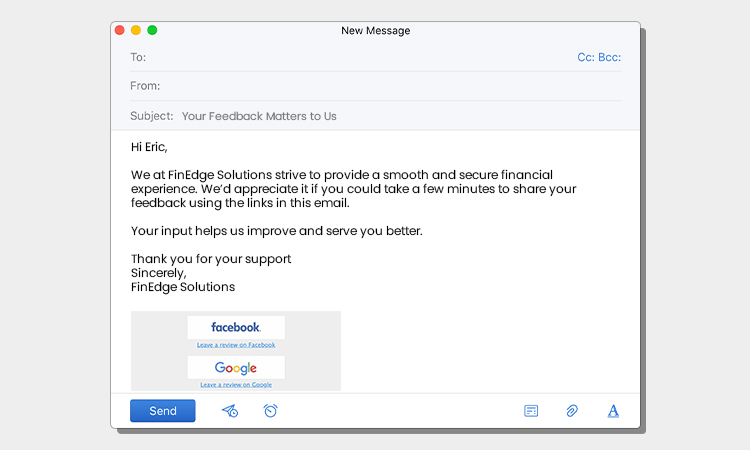
We all know that positive reviews act as social proof of your fintech brand’s credibility and reliability. But the question is – how can you generate positive reviews for your brand?
Yes, most of your satisfied customers may not leave a review if you don’t ask them to. You need to encourage them to share their experiences with your fintech service or products. When your fintech brand has a noticeable amount of positive reviews across the web, it will directly influence your potential customers’ purchase decisions.
- Ask your Satisfied Customers to SLeave Positive Reviews
You must integrate review requests into the user journey by making the review submission process a mandatory exit part.
You need to immediately trigger requests through email or in-app notifications after positive interactions, including 5-star customer support chat, successful loan approval, or the first successful transaction.
- Train your staff to recognize when a customer is satisfied and ask them to share that sentiment.
- After resolving a complex issue, you should always ask the reviewer to share their experience with the resolution they have received.
- Digital reputation management for fintech companies requires you to showcase the positive reviews and testimonials on your website’s homepage, landing page, and social media. Avoid sharing them on third-party sites.
- Time plays a huge role in the success of review generation. You need to ask for reviews at the right time, especially when the satisfied feeling is still fresh in the minds of your customers.
- Simplify the Review Process by Sending Review Page Links
When your review process is seamless and simplified, your customers will be more likely to share reviews. You need to reduce the friction by providing direct and one-click links to Google Business Profile, Trustpilot, or other review sites.
You can also use SMS and or in-app QR codes to make the process effortless for the fintech brand owners. You can stick the QR codes on the walls or the reception of your physical office.
Strategy 2: Respond to Review Professionally
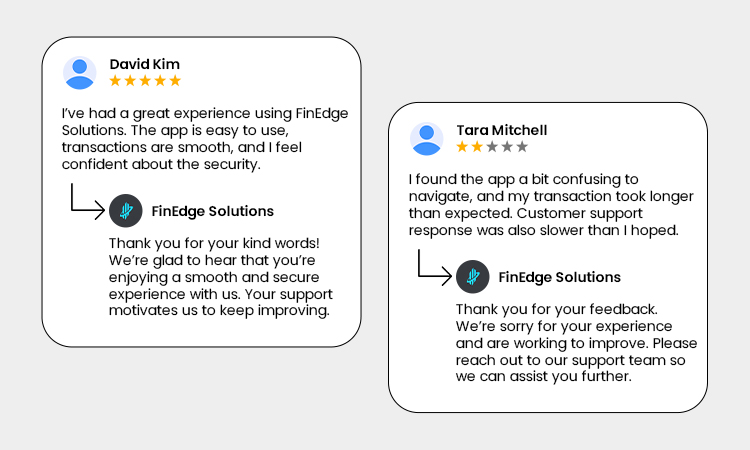
You need to respond to the reviews within the right time and maintain the ultimate professionalism. When you respond professionally, it will showcase how much you care about your customers’ opinions.
Actively managing feedback, whether positive or negative, demonstrates how promptly you’re responding to the reviews. It also showcases transparency, accountability, and commitment to exceptional customer service. Here are some tips and tricks to respond to reviews effectively.
- Send prompt responses: Just as time plays a major role in the review generation, it is also a crucial part of review responses. You need to reply within 24-48 hours to show attentiveness from your end.
- Be personal and specific: You need to be specific about what you want to convey through the response. Always use the reviewer’s name and mention specific features or issues that the reviewer has conveyed through the review. Try not to sound like a bot.
- Stay professional: You should never argue or become defensive while responding to the reviews. Maintain your professionalism even when responding to a negative review.
- Take things offline: You need to move the complex and technical matters to secure channels. If you think that some conversations are too private to have on a public forum, you should definitely take things offline.
- Showcase your accountability: If the mistake is on your end, you must acknowledge it while responding to the review. Apologize and explain the steps your fintech company has taken to resolve the issue.
- Sample Example for Responding to Positive Reviews
Here is an example of a sample response to a positive review:
“Hi Mansi, thank you so much for giving us a 5-star! We’re thrilled to hear that you have liked the services you have hired from our fintech brand RBS Reputation Management. We are glad that our instant transfer feature made your payment experience simpler. At RBS Reputation Management, our team works hard to keep transactions secure and fast! We will definitely pass your kind words to them. Eagerly looking forward to serving you again!”
- Sample Example for Responding to Negative Reviews
“Dear Shivangi, thank you for bringing this to our attention. We are extremely sorry to hear that you experienced a major delay in your account verification. We apologize for the inconvenience caused to you. Our team is taking immediate steps to verify your account by today’s EOD. Please reach out to our team at info@rbsreputationmanagement.com for any kind of issues!”
- Sample Example for Responding to Neutral Reviews
“Hey Divya, thanks for taking the time to share your thoughts on our Review Management service. We are glad to hear that you found our app interface intuitive. However, we apologize that the reporting feature of the app didn’t completely meet your expectations. We’re currently working on it to improve the feature. If you have specific suggestions, feel free to reach out to us at +91-9999683773.”
Strategy 3: Strengthen Customer Support
As a fintech company owner, you need to strengthen your customer base. When your existing customers are supporting you across the web, it acts as social proof for your fintech brand’s reliability.
Let’s know how you can strengthen your customer support to boost your reputation management for your fintech brand:
- Offer Prompt and Efficient Support Channels
Firstly, fintech company openers need to offer prompt and efficient support channels for existing and potential customers. Here are some major support channels fintech brands must prioritize:
- Intelligent Chatbots: It provides 24*7 support for common customer queries like balance inquiries, password resets, and transaction disputes.
- Voice AI Agents: Many conversational AI chatbots offer 24*7 phone support, which is faster than traditional live agents.
- Omnichannel Support: Artificial intelligence enables seamless transition across various channels, including email, chat, social media, and phone, while maintaining conversational context.
- Conversational WhatsApp Banking: You need to utilize platforms like Haptik, chatbots on WhatsApp, as it enables users to check the loan status, perform transactions, and apply for an IPO. All these a customer can perform without leaving your fintech app.
- Use Chatbots and AI-driven Assistance
Do you know that chatbots can immediately help you check balances, freeze cards, and confirm your recent transactions?
Yes, you heard that right! AI-driven chatbots can help you simplify document processing using Optical Character Recognition (OCR). It allows users to directly upload documents into the chat for instant validation. AI answers eligibility questions, collects documents, reduces application drop-offs, and provides real-time status updates as well.
Apart from these, proactive AI agents can help you analyze transaction patterns and promptly alert users to suspicious activity. It also allows them to freeze cards within the chat. Here, AI acts as a financial coach and helps you analyze your spending patterns. It provides personalized actionable insights, budget advice, and investment suggestions.
Strategy 4: Improve Your Transparency for Your Customers
You need to improve your service transparency for your existing and potential customers. It’s a critical strategy for fintech companies, especially those looking to build long-term trust, ensure regulatory compliance, and reduce customer complaints. In today’s digital landscape, transparency is required to shift from a regulatory checkbox to a brand identity and competitive advantages.
- Provide a Clear Fee Structure
The first way you can improve the transparency is to provide a clear fee structure for all your fintech services. It will help the customers have a clear idea of how much investment they need to make to hire your fintech services. It mainly depends on how fintech companies manage their online reputation.
If there are hidden fees and a complex pricing structure, your potential customers may not trust your reliability to meet their digital finance requirements.
- Firstly, display the complete cost of a service, including all mandatory fees, before any translation is complete.
- Secondly, you need to provide a line-by-line explanation of your service charges to eliminate confusion and also the ‘fee friction’.
- You need to offer instant updates on the interest updates, repayment schedules, and transaction costs.
- Lastly, it’s crucial to replace vague ‘service costs’ with clear and properly named charges to ensure building customer trust, as 78% of surveyed consumers are more likely to prefer free platforms that don’t charge convenience fees on financial products and services.
- Maintain Transparent Policies and Terms
Your customers need to understand their rights and obligations before they hire any fintech product or service from your fintech company. They must not require a legal expert to understand this.
Let’s see how you can help fintech companies maintain transparent policies and terms of your fintech company.
- You can simply rewrite the terms and conditions so that even customers with very little knowledge about the fintech industry and services can easily comprehend the terms and conditions. Always avoid using excessive legal jargon while rewriting the terms and conditions.
- Always clearly communicate what your customer data is collected, the place where it is stored, how it is used, and with whom it is shared.
- Fintech company owners can adopt ‘Privacy by Design’ principles to ensure consent for data usage. It must be obtained in a clear and user-friendly manner, rather than just burying them in terms.
- You need to notify them promptly regarding any type of changes or updates in policies, terms, and fee structures.
Strategy 5: Publish Thought Leadership Content
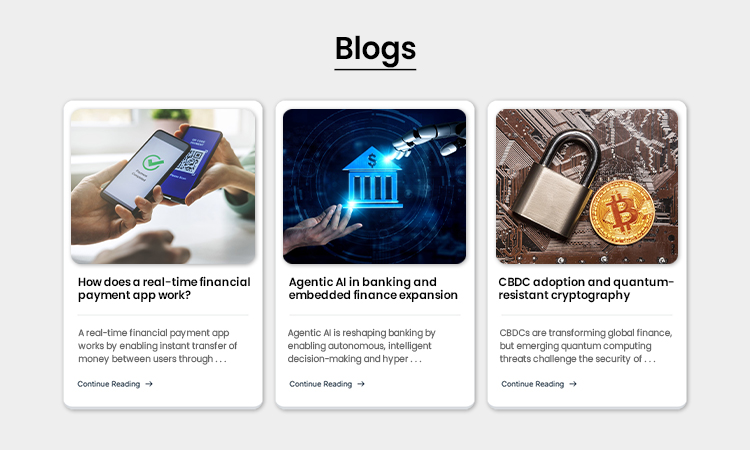
Fintech companies must write leadership articles, including authoritative blogs, white papers, and other financial resources. Through these high-quality write-ups, fintech companies can establish authority in the market.
The following are some major types of thought leadership content. Let’s have a look:
- Types of Thought Leadership Articles
From blogs to whitepapers and other financial education resources, fintech companies can consider producing this type of content to attract new clients and boost their online authority.
Let’s know about this type of content and how it can help fintech companies boost their reputation across the web:
- Blogs
Fintech blogs are the ideal medium to bridge the gap between technical complexity and reader-focused solutions. You can focus on these types of topics for writing fintech blogs:
- Agentic AI in banking and embedded finance expansion
- CBDC adoption and quantum-resistant cryptography
- How does a real-time financial payment app work?
- Building a security-first compliance framework
- BaaS vs. legacy infrastructure
- How does a fintech product help (one of your clients) with (benefit)?
- Founder-driven posts sharing lessons
- Company motivation or 2026 fintech predictions
- Whitepapers
These are text-heavy, data-centric, and formal documents designed to position a fintech brand as an authoritative business in the complex industry issues or regulations.
Here are some sample examples of white paper topic ideas for fintech companies:
- RegTech/Compliance – The EU AI Act’s high-risk obligations or PSD3/PSR updates
- Data Security – The Zero-trust architecture, migration plans, and digital identity verification standards
- Real-World Asset Tokenization – Technical frameworks for bringing bonds, funds, or real estate.
- A Tip to Note: The whitepapers should be written like a sales pitch, rather than providing knowledge to solve an issue or guide a decision.
- Financial Education Resources
Consumers are looking for financial education from their fintech apps. It provides educational content that builds high trust and long-term loyalty. Here are some major financial education resources for fintech companies:
- Financial Wellness ORM Tools: Content centered on FHaaS, as it offers personalized budgeting, automated savings, and debt management.
- Explainers on Emerging Finance: Simple explanations of complex topics like stablecoin mechanics, the basics of decentralized finance, and CBDC uses.
- Case Studies as Education: Success stories of others that navigate financial goals and demonstrate how the company’s technology helps.
Strategy 6: Manage Your Crisis Communication

Effective reputation management for fintech companies requires you to seamlessly manage their actions during a reputational crisis. It demands immediate transparency and proactive updates. However, it requires a preset and cross-functional team. A strong crisis communication plan requires immediate transparency, proactive updates, and, most importantly, a cross-functional team.
A robust fintech PR strategy plan can come to your rescue!
- What is needed in the crisis communication plan?
- Pre-approved message templates
- 24/7 monitoring
- Designated spokespeople
- Communication during the first hour across multiple channels, including email, social media, and app notifications
- Create a Crisis Response Plan
Firstly, a fintech brand needs to develop a robust plan before a crisis even occurs. To ensure a rapid response when a reputational crisis hits your fintech business. Let’s have a look at how you can develop a crisis response plan:
- Establish a specialized team: You need to build a team of skilled professionals, including an executive best in leadership, communication, messaging, legal counsel, and IT security/fraud analysis.
- Identify the reputational risks: You need to conduct quarterly audits to identify potential risks like data breaches, compliance issues, and system outages.
- Develop templates: You need to create pre-approved communication templates for common queries.
- Define authority: Fintech brand owners must establish who has the authority to activate the plan and approve public statements to ensure consistency.
- Communicate Quickly during Service Disruptions
In today’s fintech industry, quickly responding to a fintech crisis during a few initial hours is critical to reducing long-term reputational damage.
Let’s know how you can communicate quickly:
- Act immediately: You need to respond within the first hour of a disruption, even if it is to confirm that you’re investigating.
- Be transparent: Secondly, you need to acknowledge the issue openly. Don’t hide any problems, as this can spread the rumours.
- Use multiple channels: Fintech brand owners simultaneously inform customers via email, SMS, push notifications, and social media channels.
- Provide constant updates: fintech business owners must employ tools like a status page for real-time updates during a service outage.
- Focus on the action part: Fintech companies must clearly explain what steps they have taken to fix the issue and apologize sincerely for the inconvenience.
- Review and revise your plan: After the crisis resolves, you can conduct a comprehensive review to identify what went wrong and improve your crisis communication plan.
- Rebuild the trust: We also suggest that you use post-crisis communication to demonstrate improved security measures or system upgrades.
Strategy 7: Leverage SEO in Fintech Reputation Management
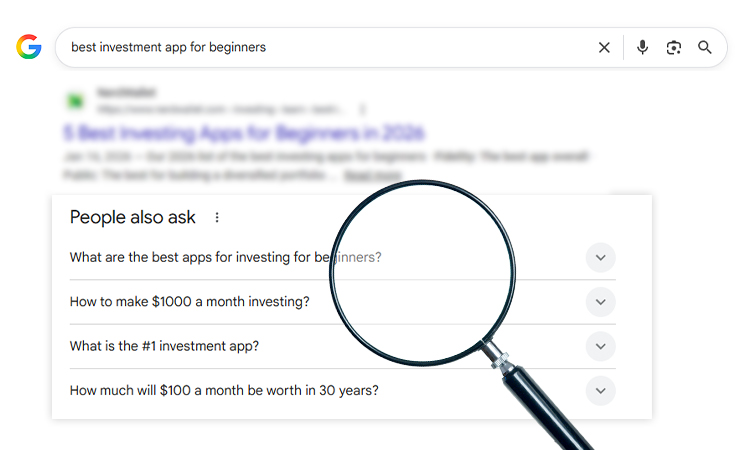
Leveraging search engine optimization in effective reputation management for fintech companies. It involves a proactive, long-term strategy to ensure positive, authoritative content. It can help you dominate the search engine results pages.
In today’s highly regulated and competitive financial technology sector, when you build trust through EEAT (experience, expertise, authoritativeness, and trustworthiness), it lasts longer and offers an extensive list of benefits.
- Navigate the Search Engine Results
Firstly, fintech brand owners need to regularly search their company name online with the aim of identifying what appears on the first page, such as reviews, news articles, and social media profiles.
You need to secure and update your fintech company profiles across high-authority platforms like LinkedIn, Glassdoor, Crunchbase, and social media profiles. Apart from this, you need to analyze the ‘People Also Ask’ boxes to understand user queries and create targeted content.
- Rank Positive Content above Negative Mentions
Fintech companies can create in-depth content clusters on technical financial topics, including ‘embedded finance’ and ‘SEC compliance’, to improve site authority.
You can focus on long-tail keywords, target the specific queries with lower competition but higher intent to rank faster. You can implement keywords like ‘best investment app for beginners’ rather than just ‘investment app’ as such keywords can help you make your fintech brand rank faster on search engine results.
You need to implement structured data as well to ensure search engines correctly index positive reviews and company details on the search engines.
- Publish Authority Content
You need to feature authoritative content on your fintech website, such as interviews, bylines, and bios of internal experts or industry figures. It will help you show the real people behind a specific financial advice that has satisfied YMYL standards. Fintech companies publish original white papers and industry statistics that other financial publications will naturally link to.
Note to fintech brands: You must keep the blogs and guides updated with the latest regulations to show expertise and reliability of your fintech company.
- Prioritize Articles, Case Studies, and Success Stories
Such authoritative content plays a major role in effective fintech reputation management. Fintech company owners need to publish detailed case studies that can showcase how their fintech product solved a client’s specific and complex problem.
Choose keywords like ‘brand vs. competitor’ comparison articles that honestly outline the pros and cons. It will help you capture users in the decision-making phase and develop educational guides. Create ‘how-to’ articles and jargon busters to simplify the complex financial terms for users more simplified.
- Remove or suppress Negative Content
Yes, negative content can often rank at the top of search engine results pages. When your potential customers search for your fintech brand online, the negative content will appear on the first page and damage its online reputation.
The only solution is to suppress the negative content or remove it completely from the search engine results pages. Let’s know how you can remove or suppress negative content:
- Suppress negative content: Fintech company owners must create positive and high-quality content to push down the negative content in search results. Always try to target the same keywords and push down the negative ones to the second or third page.
- Request removal: You can ask Google to remove content that is unlawful. It violates policies and the defamatory articles as well.
- Proactively manage reviews: Fintech companies need to actively encourage satisfied customers to leave positive feedback on platforms like Trustpilot or Google Business Profile to reduce the negativity.
- Use Technology for Reputation Management
You need to ensure your fintech website uses HTTPS and has a fast loading speed as well. The website of the fintech company must be mobile-friendly to avoid penalties. You can claim and optimize your Google Business Profile listing with accurate name, address, and phone number (the NAP details).
You can use tools such as Google Alerts, SEMrush, Ahrefs, and other brand mentions to monitor your fintech brand and competitors in real time.
You can also use AI-powered monitoring tools to assist in generating thoughtful responses.
Strategy 8: Monitor Your Online Presence

Now that you have a clear idea of how you can implement effective strategies to manage your fintech company’s online reputation, it’s time to monitor and measure your strategy plan’s success:
- Track the KPIs
Here are some key performance indicators (KPIs) to measure the success of your ORM strategy plan. Let’s have a look:
- Online Sentiment Score: If the customers are happy, trusting your brand’s reliability, and complaining about your fintech services, fraud, and transaction speed
- Share of Voice: The fintech brand’s strong online presence compared to the competitors, and the percentage of conversations
- Search Engine Reputation Sentiment: The sentiment and content of the top results (SERPs) when users search for your fintech brand, including news, forums, and official listings.
- Review and Rating Monitoring: The average star ratings, review velocity, and response time across platforms like Google Business Profile, App Store, and Trustpilot.
- Brand Mentions: All online mentions of your brand name, executives, and product variations across forums, social media, news, and blogs.
Top 6 Helpful Reputation Monitoring Tools for Fintech Companies
Yes, tools can simplify the complex process of reputation management and monitoring for Fintech companies. Such businesses primarily offer financial services and products, so employing helpful online reputation management tools can actually save your time and guarantee results.
| Reputation Monitoring Tool Name | Features to Use |
| 1. Brand24 | • Ideal for real-time brand monitoring and AI-powered reputation insights • Monitors more than 25 million online sources, such as blogs, forums, social media, and news sites • Offers ‘Anomaly Detector’ AI that detects a sudden increment in negative mentions |
| 2. Mention | • Ideal for real-time social media monitoring and web mention tracking • Tracks brand mentions across 1 billion sources • Allows fintech teams to monitor customer sentiment across various social media channels |
| 3. Birdeye | • All-in-one reputation and review management for multi-location businesses • Uses AI to aggregate reviews from Google, Yelp, and Facebook into one dashboard • Ideal for fintech businesses serving multiple locations |
| 4. Talkwalker | • Enterprise-level social listening and visual AI crisis detection • Provides advanced context understanding and sentiment analysis • Helps fintech differentiate between ‘good feedback’ and ‘bad sarcasm.’ • Offers visual recognition that allows brands to monitor their logo in images and videos |
| 5. Reputation.com | • Enterprise-level reputation management with a primary focus on CX • Designed for large, regulated industries to process data from hundreds of sources and build a holistic reputation score • Helps fintech companies connect customer feedback to operational improvements |
| 6. Sprout Social | • Offers a unified inbox • Excels in social listening and engagement • Allows teams to monitor their fintech brand reputation on X, LinkedIn, and Instagram • Helps in seamlessly handling customer complaints and queries on time |
FAQs
Here are some frequently asked questions and answers related to effective reputation management for fintech businesses:
Ans. Fintech reputation management involves generating, managing, and monitoring a fintech company’s online image to foster customer trust, ensure compliance, and manage customer sentiment. From managing online reviews and addressing the security concerns to enhancing the search results and communicating stability to prevent reputational risks, reputation management for fintech brands covers every requirement and beyond.
Ans. You need to prioritize appropriate time, security, empathy, and regulatory compliance when responding to a negative review. In today’s digital-first financial space, your potential customers are more likely to check your response to the negative reviews. They mostly read reviews to gauge reliability, which means your responses to the negative reviews will showcase how much you value your customers’ opinions. You should never respond to a negative review using abusive or unprofessional language – consider responding with utmost empathy and professionalism even if the review contains criticism.
Ans. We cannot mention a specific timeframe for improving a Fintech company’s online reputation. However, it generally takes 3-6 months to see significant results through your effective reputation management strategy plan. On the other hand, repairing the severely damaged reputation of a financial brand can take more than a year. It requires you to put consistent efforts into generating positive reviews, improving SEO, and responding to each and every piece of feedback you receive. You can notice small improvements within a few weeks.
Ans. As a fintech brand owner, you need to protect your business from malicious reviews. For this, you must implement a proactive and multi-layered strategy that combines immediate reporting, professional engagement, and legal action. Those who share malicious reviews are often the ones who want to destroy the credibility of your fintech business through review bombing or false accusations. You can respond by sharing documents as evidence, including screenshots.
Ans. Handling a security-related complaint requires a structured, calm, and well-documented proactive approach to ensure safety, fairness, and legal compliance. Whether it is a cybercrime incident or a complaint regarding physical security staff, the process generally involves taking immediate action, gathering evidence, and reporting to the relevant authorities.
Conclusion
Reputation is everything when it comes to a business that offers financial products and services. To grow a Fintech brand’s reputation, you need to generate trust among your existing customers that will work as social proof for your potential customers. When your fintech brand has a positive reputation and your existing customers trust your reliability, you can seamlessly acquire new customers for your fintech company.
Yes, the process is quite crucial as the success of the fintech businesses majorly relies on customer trust. And the primary goal of effective reputation management for fintech companies is to achieve trust.
We hope that our ORM guide will help you thoroughly build a desirable online image for your fintech business and grow your customer base. If you still feel skeptical about considering your effective ORM, you can hire a reliable online reputation management agency for your fintech brand.

