






In the financial service industry, your reputation is not just an asset for you but a foundation for your business.When your financial business receives more positive reviews online, it naturally attracts more clients and positions your brand as a trusted financial resource.. Financial service providers such as banks, wealth managers, and insurers must carefully balance regulatory compliance with client confidentiality. Effective online review management for financial services makes navigation seamless and simpler.
Did you know that 97% of people rely on online reviews to make an informed purchase decision?
Yes, you’ve heard that right! Most of your financial service clients will check the online reviews first before choosing your service among the ones your market competitors are providing. If you fail to generate and manage your client reviews, you may lose a significant number of your potential clients.
So active review management is no longer optional – it can be both a critical driver and roadblock to your financial business’s growth. Wondering how you can navigate the complexities of effective online review management for your financial service? Don’t worry! Here, we will provide you with a comprehensive guide to help you know how you can leverage authentic, compliant client feedback to boost your financial service’s online presence.
What Is Review Management for Financial Services?
Online review management for financial businesses is the strategic process of generating, responding to, and managing reviews from your clients across digital platforms such as Google, Facebook, Yelp, and other industry-specific review platforms. To maintain a trusted brand reputation for your financial business, you must implement effective strategies to encourage even your satisfied clients to leave their valuable feedback.
In addition to generating reviews, you need to manage and monitor them to maximize their potential and acquire new clients. Financial service providers, such as banks, advisors, and FinTech companies, can build credibility and a robust digital presence across the web.
Seems a little confusing?
Financial service providers can hire a professional review management agency to seek their expert advice and assistance. They mostly have an expert team that can help you seamlessly navigate the complexities of online review management.
Key Components of Online Review Management for Financial Businesses
Here are some components that financial services must incorporate into their online review management strategies:
- Active Monitoring and Response: This requires you to track online reviews in real time and respond professionally to both positive and negative reviews. It will help you resolve the issues and demonstrate your care for your customers’ opinions.
- Reputation Protection: You need to safeguard your financial service’s online reputation by responding to negative reviews professionally and mitigating their impact with compliant, timely responses.
- Compliance and Accuracy: You need to ensure your responses to client reviews meet industry regulations and do not disclose sensitive client information while responding to the reviews.
- Sentiment Analysis: You need to use tools to analyze client reviews, the positive, negative, and neutral ones, to improve your service quality. This thorough analysis can help you identify the recurring complaints.
- Trust Generation: You need to encourage satisfied clients to leave reviews to build a positive and trustworthy online presence for your financial service. These reviews will act as ‘social proof’ for potential clients.
Why Effective Review Management Matters for Financial Services?
Effective review management is a crucial part of financial services. Financial service providers must address the industry’s low baseline of consumer trust and brand credibility. From enhancing digital visibility and directly influencing customer acquisition, effective online review management can offer you a list of benefits.
Let’s have a look at the list of benefits of effective review management for financial services:
- Builds Customer Trust and Brand Credibility
Financial services reputation management requires building customer trust by showcasing positive reviews. When your potential clients come across the positive reviews that your financial service receives, it positions your business as a high-authority financial service resource.
In today’s digital age, the financial industry often has a low reputation score compared to other industries. When you respond to both positive and negative feedback, it showcases transparency, professionalism, and integrity.
- Acquires and Retains New Customers
When it comes to financial services, people always look for a provider they can completely rely on. When your financial business has a strong, positive review profile online, it serves as social proof.
It encourages your potential clients to choose your financial service among others. Apart from this, timely responses to client reviews can turn unhappy customers into loyal ones, as they see how much value you place on their opinions.
- Impacts on Online Reputation and Visibility
Review signals account for a huge part of Google’s local search ranking factors. Financial services with a bunch of positive, recent reviews improve their online reputation and visibility, especially in search results.It helps position your financial service as a high-authority resource in the niche industry.
- Helps in Identifying Potential Reputational Issues
Effective online reputation management for financial services requires you to regularly monitor a financial service’s online presence and detect potential crises or negative review trends before the situation escalates. It can also allow the financial service providers to identify potential issues like review data breaches, poor customer service, and long waiting times at the office before they turn into a reputational crisis.
- Allows Faster Dispute Resolution
When you actively respond to the negative reviews, it allows financial businesses to quickly address customer grievances. So, when a crisis occurs, you can choose a faster dispute resolution. For example, it can prevent a negative review from causing long-term damage to the financial service’s online reputation. Additionally, it can convert a potential public crisis into a private and resolved issue.
- Majorly Influences Purchase Decisions
Effective online review management requires you to actively respond to the negative reviews that your financial business receives online. The intervention can prevent a negative review from causing long-term reputational damage.
Online review management can help turn a public crisis into a private, resolved issue, significantly influencing potential customers’ purchase decisions. When they see a good number of positive reviews on your financial service’s online profiles, it immediately generates a sense of trust in your potential customers.
- Helps in Gaining Actionable Customer Insights
According to a Harvard Magazine post, a one-star increase in the Yelp rating can lead to a 5-9% increase in revenue. Most consumers in the finance industry often read reviews to evaluate options in terms of reliable service providers.
Through reviews, you can determine which strategies are working for your financial business and which are not. When your financial business has a positive profile, it increases the likelihood of conversions by providing actionable customer insights.
- Drives Competitive Differences
A good review profile comes with a strong online reputation. It differentiates a financial institution from its market competitors in a crowded market. Positive reviews and glowing client testimonials provide a superior and responsive online presence that helps your financial business stand out as a leader.
Top 6 Platforms Where Financial Reviews Appear
Let’s have a clear understanding of the top platforms where financial reviews appear. Here is a list of popular platforms that you can focus on to generate and manage the client reviews that you receive for your financial business or service:
- Google Business Profile
This tool is ideal for local search visibility for financial service providers, such as banks, credit unions, and financial advisors. Google Business Profile is one of the best tools if you want to prioritize review management for financial services. Effective Google review management strategies require you to create an active, up-to-date Google Business Profile for your financial service.
It makes your financial business highly visible in local search results and maps. So, you get to drive exceptional foot traffic to your financial business’s physical office, if any.
Financial service providers with a complete Google Business Profile often catch the attention, while those with no or an inactive Google Business Profile may not. A verified Google Business Profile significantly boosts customer engagement.
- Trustpilot
A leading global and independent online review platform where users rate financial services, banks, and online lenders. Consumers often use it to verify the trustworthiness of a financial service provider, such as banks, online lenders, and other financial services.
However, Trustpilot is one of the review platforms where the prevalence of fake customer feedback is quite high. You can implement advanced strategies to deal with Trustpilot fake reviews and protect your financial business’s online reputation.
- Glassdoor
It’s mostly for those potential employees who may join your financial business, seeing the reviews. Glassdoor is primarily used for employee feedback, as Glassdoor reviews are a key source of evaluating the company culture, stability, and reputation of large financial service organizations.
Glassdoor can also have fake employee reviews, so you can leverage helpful techniques to remove the fake Glassdoor reviews without damaging your financial service’s online reputation.
- Mouthshut
It’s one of the largest online review platforms in India. It’s widely used for honest consumer reviews related to banks, insurance companies, and investment services. Financial service providers must focus on the platform to
Facebook reviews often serve as social proof for local financial branches and advisors. Even the local financial branches and advisors allow users to leave reviews and recommendations. The Facebook reviews often act as social proof for local financial branches and advisors.
- Industry-specific Platforms
Other than these tools, there are also industry-specific multiple platforms or tools that you can prioritize to ensure effective review management for your financial business.
Why?
This is mostly because the majority of financial consumers often choose to leave their reviews on such industry-specific platforms. Specifically focusing on those can help you target your high-value consumers who’re more likely to convert into your loyal paying customers.
| Industry-specific Platforms | |
| 1. Credit Karma | ● A major personal finance platform ● Ideal for user feedback on credit cards, personal loans, home loans, and auto loans ● Allows businesses to respond to online reviews through their listing page |
| 2. Lending Tree | ● Ideal online lending marketplace, connecting borrowers with lenders for mortgages, auto loans, and personal loans ● Serves as a reputation management platform for lenders ● Features detailed reviews and star ratings |
| 3. Supermoney | ● A financial comparison platform that specifically focuses on helping consumers find, compare, and review various financial services ● Provides specialized and detailed reviews for loan product offerings, debt settlement services, and financial services ● Offers a ‘Claim Your Business’ feature that allows financial service providers |
| 4. WalletHub | ● Allows users to write in-depth reviews of financial institutions, including credit card issuers and banks ● Allows for monitoring and managing the reviews and ratings of your financial business ● Offers features like daily credit monitoring, detailed, and in-depth community reviews for financial products |
6 Common Review Management Challenges in Financial Services
Just like the benefits, effective review management often comes with some common challenges as well. Identifying these challenges well in advance can help you prevent the major reputational risks.
The following are some effective review management challenges most financial service providers commonly face. Let’s have a quick look:
- Fake or Malicious Reviews
Automated bots or fake reviewers often leave fraudulent feedback or post false claims about your financial service failures or hidden fees to damage your business’s online reputation. Even if you implement effective online review management strategies, sometimes, it becomes extremely difficult for the financial service providers to distinguish between a fake reviewer and a genuine customer. In such a situation, a manual investigation is needed to identify a fake reviewer.
- Competitor-driven Negative Campaigns
The next and most common review management challenge for financial services is the rise of competitor-driven negative campaigns.
If you have your market competitors, they can also use ‘Guerrilla marketing’ techniques to flood your financial service’s review page with low ratings to gain a relative SEO advantage. The challenge is that popular review platforms like Google and Yelp often require a high burden of proof before removing reviews suspected of being competitor-driven.
- Anonymous Complaints
Users often post serious allegations regarding fraud or mismanagement without revealing their identity.
In such cases, financial institutions often fail to verify the legitimacy of the complaint This creates issues when resolving the specific issue if the user’s identity is hidden. Sometimes, it can also be difficult for financial service providers to contact the reviewer directly if they have shared negative feedback about their experience with your financial services.
- Delayed Responses that Lead to Escalation
Do you know that when you respond to the reviews, strict internal approval chains, including the legal, compliance, and marketing chains, often slow down the response time? In today’s digital age, a 48-hour delay in response can allow a single negative review to go viral or attract media attention.
It can often result in the escalation of the issue. Financial service providers often need to effectively monitor their responses and send responses to reviews promptly to avoid such escalation.
- Misunderstanding of Financial Policies
Customers often leave negative reviews for your financial service due to standard regulatory requirements, such as ‘Hold’ periods on checks or KYC document requests. Your customers will mostly perceive these issues as poor service.Financial service providers often face difficulties explaining complex financial policies in short public responses.
They often explain complex federal or internal banking policies in a short, public-facing comment, which is quite difficult.
- Data Privacy Restrictions in Response
Financial industry-specific regulations, such as GDPR and CCPA, prevent firms from discussing specific account details or transaction histories. Even if you have the proper details, you cannot disclose them when responding to a negative review in a public forum. Responses that you provide must remain generic and make your financial firm appear dismissive or unhelpful to other consumers.
A Comprehensive Guide to Effective Review Management for Financial Services: Top 4 Must-Know Strategies
Many financial service providers often make mistakes by not prioritizing their customer reviews. Yes, it requires a complete strategy plan to effectively manage customer reviews. This is not a strategy that will yield an overnight result.
It will take proper time to offer you the desired results.
Wondering how you can navigate the complexities of effective review management for your financial business? Explore our ultimate guide to know the 4 best strategies of review management for financial services to generate, manage, and monitor your valuable customer reviews.
Strategy 1: Encourage Your Customers to Leave Reviews
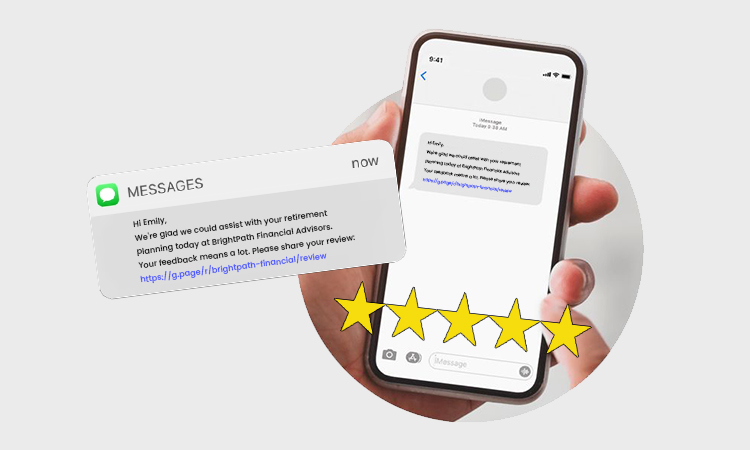
The first strategy you need to implement is to generate a noticeable number of online reviews for your financial business. Encouraging your satisfied customer to share their experience with your financial services is not easy. You need to implement proper strategies to encourage even your satisfied customers to leave reviews.
5 Helpful Tips to Encourage Your Customers to Leave Online Reviews
Here are the 5 most helpful tips and tricks to encourage your customers to leave online reviews:
Tip 1: Consider SMS-based Review Requests
Do you know that text messages have a 98% open rate and 45% response rate?
Text messages are often personal and immediate; they are ideal for getting reviews while the positive experience is still fresh. For example, you cannot expect even your satisfied customers to share their feedback without being nudged at least once.
You can request the happy customers to share their feedback right after a successful financial service delivery. You need to send the request within 24-48 hours of service completion. We suggest you keep it under 160 characters for maximum effectiveness.
You can even directly include a link to your review page in the email or text message request to make the process more seamless and simplified for the customers
Tip 2: Provide QR Codes at Branches
As a financial services provider, you must have a brand or an office in one or more locations. You can place QR codes in a physical location, such as your branch. It helps you turn passive experience into an immediate review-gaining opportunity.
You can display the QR codes on the table tents, menus, and checkout counters. You can even add the ‘Dynamic’ QR code to the back of the employee cards. A dynamic QR code lets you change the destination URL without reprinting the physical code.
Tip 3: Prioritize Utilizing Automated Feedback Systems
You must employ automated tools to ensure no customer is ignored. When you automate the entire review response process, you no longer need to spend more time responding to every review one by one.
You can set up automated triggers in your CRM to send follow-up requests after a successful service completion. Additionally, you can use conditional logic if one of your customers leaves a high rating in a private survey. You can automatically prompt the customer to share that specific review publicly on popular review platforms like Google and Facebook.
Tip 4: Send Post-Service Feedback Emails
Did you know that email is still a solid, reliable channel for gathering detailed customer feedback?
Yes, you heard that right! You can include a clear, direct call-to-action (CTA) button in the email. For example, ‘Click Here to Share Your Feedback’. Schedule your review requests so they arrive after the customer has had enough time to use the financial product or service, especially until the experience is still fresh in their mind (1-2 days after the service completion).
Tip 5: Share Review Requests at the Right Time
Time plays a huge role here in determining whether you will receive a review or not. Now we will identify the timing you must prioritize when a customer is at their happiest, to ensure a higher conversion rate.
The ‘golden window’ is when a job is just completed, and an issue is successfully resolved. It’s that time when they’re more likely to express their gratitude. After you get a positive response from their end, you can just respond –
“That is great to hear! If you could share on Facebook what you just said in a Google review, that would be awesome!”
Strategy 2: Professionally Respond to Customer Reviews
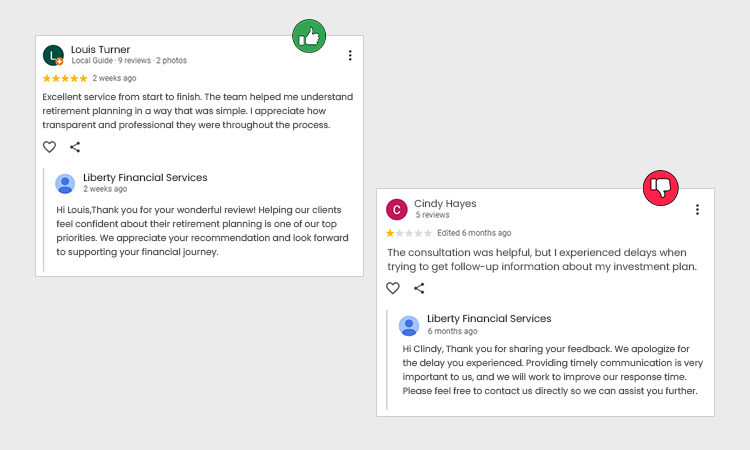
Review generation is not the only thing! You need to professionally respond to the reviews to showcase that you value their opinion. The financial industry is primarily built on trust – how you handle the public communication, whether they are good or bad, signals your competence and reliability to your potential clients.
- Respond to Positive Reviews
When you receive positive reviews, always use them as opportunities to reinforce their loyalty and show appreciation. It will significantly boost your online reputation.
- Always be prompt and respond within the first few days to show your engagement.
- You can use the reviewer’s name and reference specific details from their feedback only to avoid sounding robotic.
- You must express your gratitude and encourage them to return to your business. You can thank them sincerely and invite them to contact your client support team for any future needs.
- You can also share those positive reviews with your team to boost their morale.
Sample Response to Positive Reviews
“Thank you so much for sharing your kind words! We’re thrilled to hear you had a great experience with our company. We appreciate you taking the time to share your rating with us.”
- Handle Negative Reviews Professionally
Negative reviews are inevitable for effective review management for financial services.
Even if the review is critical, you need to respond with professionalism and empathy. Handling the negative review well can help you turn a critic into a loyal advocate for your financial service.
- Do not reply immediately in anger to any kind of negative reviews. You should wait until you respond to the review calmly and objectively.
- You can acknowledge the concerns and empathize with the reviewer.
- Validate their feelings even if the reviews are factually wrong. You can immediately offer a way to resolve the issue privately through email or phone. It will help you avoid an argument on a public forum.
- As actions speak louder than words, you can propose a concrete step to rectify the situation through a suitable resolution. For example, you can either review the transaction or offer a direct line to a manager for the reviewer.
Sample Response to Negative Reviews
“Hey (Reviewer’s name), thank you for sharing your feedback. Sorry to hear that your experience with our financial service was not up to our usual standards. We take pride in our service, and the delivered service is not what we strive for. I would love the opportunity to make things right from our company’s end. Please reach out to us directly at (email/phone) so we can discuss this matter in person.”
- Write Compliance-friendly Responses
While writing a response, you need to balance your professionalism with confidentiality. No matter how much criticism the review contains, you must not reveal details about their hired financial service or any other information without their approval.
- Never disclose sensitive data while responding to the reviews. Do not confirm, deny, or discuss the private financial information in public comments.
- You can focus on the process or the experience rather than their specific account details.
- Always use the pre-approved language to acknowledge complaints and offer to take the conversation offline.
- Consider Maintaining Escalation Protocols
If there is a serious customer complaint, you must prioritize it and ensure the right personnel handle the situation, especially someone with proven expertise in maintaining escalation protocols.
Assign your team members to specific roles. For example, determine which complaints can be handled by which team and which one needs direct attention from a manager or compliance officer.
You can regularly review negative feedback to identify any type of patterns or systemic issues, such as app bugs, slow service, and the like. It will help you fix the issue at the root.
Strategy 3: Analyze Customer Reviews and Insights

Customers’ reviews provide valuable insights for your financial services. You can identify positive, negative, and neutral emotions in the customer reviews, which will eventually help you improve your service.
Here is a quick way to analyze customer reviews and insights. Let’s have a look.
- Prioritize customer Sentiment Analysis
The following tips and tricks can help you prioritize your customer sentiment analysis.
- Deploy NLP: You need to deploy Natural Language Processing (NLP) tools to distinguish feedback, the positive, neutral, and negative ones across all channels.
- Implement Automated Alert Systems: Use automated alert systems to identify sudden increases in negative sentiment. It allows for immediate intervention before the issue escalates and causes major reputational damage to your financial service’s digital presence.
- Aspect-based Analysis: You can focus on specific financial aspects, such as app usability, interest rates, and customer support, to understand which areas drive sentiment.
- Contextualize with Metrics: You must leverage qualitative sentiment data alongside quantitative metrics such as Net Promoter Score (NPS) and Customer Effort Score (CES).
- Identify Recurring Service Issues
This specific process will help you identify issues throughout the entire service lifecycle, such as complex onboarding and opaque fee structures. You can centralize feedback from surveys, call center transcripts, social media, and app reviews to identify the patterns.
You can rank the issues based on frequency and impact on customer loyalty. You can prioritize resources for fixing the most detrimental and recurring problems. If ‘slow service’ is common, it is primarily due to outdated technology or low staffing.
- Improve Internal Processes based on Customer Reviews
As a financial services provider, we use insights to address bottlenecks, such as reducing the number of steps in a loan application or improving the responsiveness of our digital platforms. You can provide specialized training for support staff based on common, identified pain points to enhance the service quality.
You can use the review insights to improve your internal processes, such as guiding product development, ensuring new features, and addressing actual customer needs and preferences. You can also actively communicate improvements back to customers.
Strategy 4: Monitor Your Customer Reviews and Identify Risks
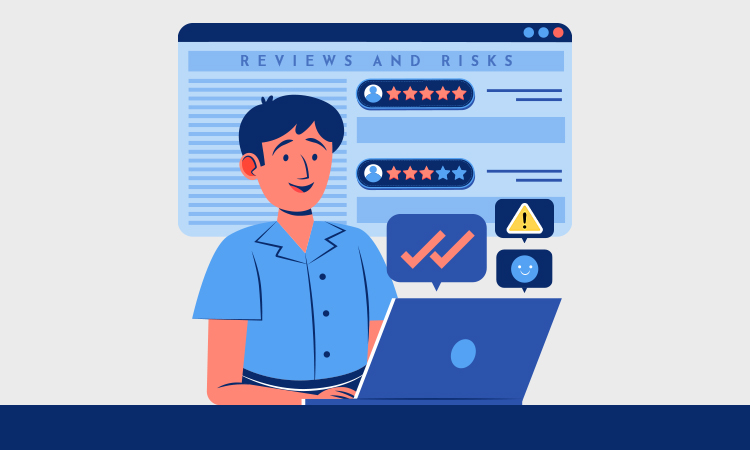
After you implement customer reviews, you must monitor them and identify potential risks. This is a major part of review management for financial services.
Monitoring customer reviews is critical for identifying risks, reducing churn, and maintaining brand reputation. You must monitor the performance of the review management strategy plan, including KPIs such as NPS, CSAT, and Sentiment Index. It will provide you with actionable insights into customer loyalty, satisfaction, and emotional tone. Additionally, it will enable rapid mitigation of negative trends and improve service efficiency.
Track the Key Performance Indicators –
The following are key performance indicators (KPIs) you must track to understand how your effective review management plan is performing.
- Sentiment Index
You can track the emotional tone (positive, negative, and neutral) of customer feedback. You can also use AI to analyze customer sentiment to indicate how they feel about your service. This is extremely important to understand how much your customers like your financial service or not.
- Net Promoter Score
It helps you measure long-term loyalty and likelihood to recommend your brand, key indicators of your customer health. You must prioritize specific interactions, products, and services on a scale to identify immediate pain points.
- Customer Satisfaction Score
It will help you understand whether your customers are satisfied with the financial service you provide. Identifying your customer satisfaction can help you improve your financial service quality and gain more customer trust.
- Review Volume
You must monitor the frequency of customer comments, including sudden spikes in negative feedback. It can indicate potential risks such as service outages and major issues. The total number of reviews you have received indicates how many satisfied customers are sharing their online reviews.
- Average Issue Resolution Time
You can track how quickly support resolves issues; long times indicate service inefficiencies. Reviews allow financial service providers to detect potential and existing issues and find resolutions for the same before they escalate into major reputational damage.
- Average Response Time
You must also track the average time you or your team members may take to respond to a review. This is extremely crucial to measure the speed of the first response from your company’s end and understand whether you’re responding to reviews promptly or not. It’s crucial to mitigate the negative experiences.
- Customer Effort Score
It will help you understand how easy or difficult it was for the customers to get a resolution for their issues. On the other hand, it will also help you understand how fast you or your team members are providing resolution to customers’ issues.
- Customer Retention Rate
As review management is not all about attracting new customers, it is also about retaining the existing ones. You must track the ability to retain your customers – how many customers you’ve retained so far with your effective review management strategies. The quality of financial service you provide directly impacts the ability to retain your customers as well.
- Negative Review Mitigation Rate
Through a positive response to a negative review, you can mitigate the negative experience of a customer who can convert into a loyal one. Tracking the negative review mitigation rate can measure the effectiveness of responding to and resolving negative reviews to turn them into positive and neutral outcomes.
Platform-specific Review Management Strategies for Financial Service Providers
Financial service providers, such as banks, investment firms, and credit unions, must focus on specific platforms to ensure the success of their review management strategy plan. Here are some detailed strategies for specific review platforms for financial service providers.
These tools are best for effective review management for financial services.
Let’s have a look!
- Google Reviews Optimization
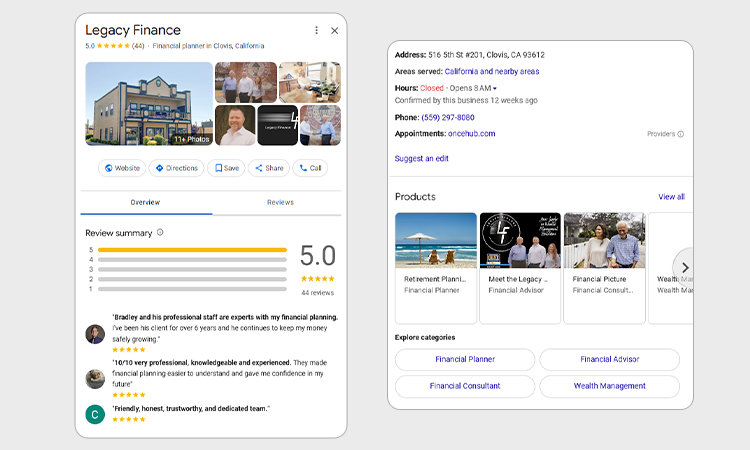
Google is the primary driver of local visibility. For financial institutions, they need to manage their local search across the web to drive exceptional foot traffic to their office. As most of their customers will be more likely to submit reviews on Google about your financial service, optimizing the Google reviews can help you target all the customers and potential ones.
- Optimize Google Business Profile
You need to create individual GBP profiles for each location where your financial business serves. For multi-branch banks, this is a crucial strategy to implement for improving local rankings in that specific location. Always ensure that the NAP details of your financial business’s office, such as its name, address, and phone number, are accurate and consistent across all locations.
You can also use categories like ‘Bank’, ‘ATM’, ‘Financial Consultant’, and ‘Investment Bank.’
- Improve Local SEO
As a financial service provider, you can guide your customers to mention specific services, such as ‘mortgage’ or ‘checking account’, and locations (city branch). The reviews you have received from your local customers must be effectively managed to improve your local search presence. You need to reply to all the positive and negative reviews within 24-48 hours. It signals to Google that your financial service’s online profile is active and that you care about their feedback.
- Encourage Branch-specific Reviews
You need to encourage branch-specific reviews from your satisfied customers. For this, you need to immediately ask for reviews after a high-value interaction, such as opening an account, finalizing a loan, or receiving a good investment. You can send text messages or in-branch QR codes that directly link to the specific branch’s review page. You can guide your customers to mention specific services and locations.
- Third-party Review Platforms
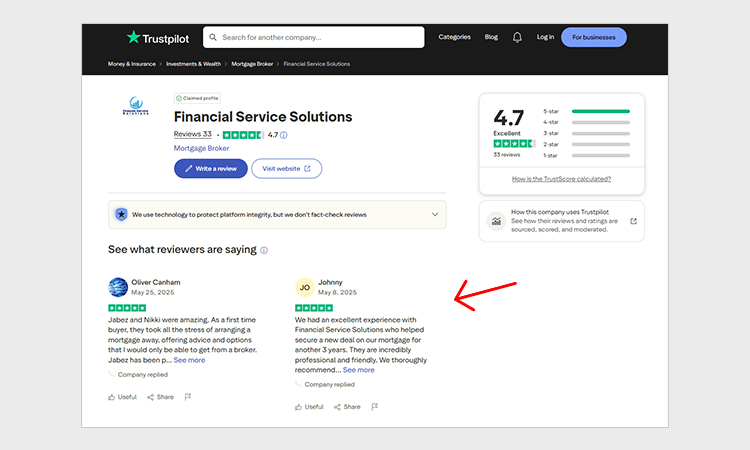
For the third-party review platforms, Fintechs or national banks often lack a solid presence. Here’s how you can leverage effective review management strategies for third-party review platforms.
- Manage Profiles on Trustpilot
As Trustpilot is a high-authority site, you must focus on the platform to manage your financial service’s profile.
You need to implement SEO in your customer reviews. It will help you encourage reviews to get your financial service’s profile top-ranked in online searches. You can display Trustpilot ratings and reviews on your site’s header and footer to instantly build trust and visitors. Additionally, you can use Trustpilot’s reporting tools to flag the fake or non-compliant reviews.
- Handle Finance-related Discussions on Quora
You need to position your financial business on Quora as an expert. For this, you need to answer your potential customers’ questions regarding personal finance and investment strategies, and banking services. You need to focus on the benefits of your financial services rather than hard-selling to build a long-term reputation and authority.
- Social Media Reviews

Social media platforms, such as Facebook, Instagram, and LinkedIn, are some of the platforms where customers share voice complaints in real-time. Here are some important strategies that you need to implement to manage your social media reviews
For Facebook, you need to enable the ‘Reviews’ tab on your business page. You respond to the social media comments on the posts and direct messages that you have received on your financial service’s page. This will act as a public indicator of service quality.
It will encourage your employees, specifically the financial advisors, to request recommendations from your clients. It will build personal credibility alongside your financial service’s brand credibility. LinkedIn reviews are the best medium to build a professional network; you can use the LinkedIn recommendations to showcase expertise in specific financial niches.
- X (previously known as Twitter)
Twitter is mostly used for fast-paced, real-time crisis management or customer service resolution for financial service providers. You can use this platform to monitor your online mentions of your brand name to quickly address negative sentiment before the risk spreads across the specific social media platform.
5 Helpful Review Management Tools for Financial Services
Tools can actually help you simplify the process of effective review management for financial services. The following are some review management tools that you can employ to ensure the success of your review management strategy.
You can compare the review monitoring tools and choose the most suitable ones for your financial service.
| Tool Name | Features to Use |
| 1. Synup | ● Automated review generation through SMS/email ● AI-powered sentiment analysis to identify pain points ● Responding to bulk reviews with custom templates ● Consistent brand presence and accurate location information across all major directories and social media |
| 2. Reviewflowz | ● Review aggregation from 200+ platforms, such as Google, Yelp, and industry-specific sites ● Slack/Microsoft Teams alerts and AI-driven sentiment analysis ● Automated response capabilities |
| 3. NiceJob | ● Automated email and SMS review campaigns ● Photo reviews and widgets that display reviews on your website ● Effortless review collection process |
| 4. BrightLocal | ● Comprehensive review, monitoring, and automated solicitation ● White-label reporting for agencies and competitor benchmarking ● Helps you rank your financial service higher in ‘near me’ searches |
| 5. Stampli | ● A top-tier tool and AP automation platform ● Ideal for managing vendor and invoice-related feedback for B2B financial services ● Centralized system for auditing, controlling, and approving financial documents and communications ● AI-driven invoice processing |
4 Top Review Related Compliance and Legal Considerations
Managing reviews for your financial services requires you to strictly adhere to the legal and regulatory frameworks, specifically in India. We are mentioning this as regulators like the RBI and SEBI have strengthened consumer protection, data privacy rules, and grievance redressal as of early 2026.
- RBI/SEBI/Financial Regulatory Awareness (General Reference)
Financial entities must align their review management processes with stringent regulatory requirements aimed at protecting customers and ensuring fair treatment.
- While the RBI has tightened norms that require that complaints be partially resolved or rejected by the institution. These complaints must be reviewed by an Internal Ombudsman, which specifically applies to banks, NBFCs, and PPI issuers.
- Financial intermediaries must maintain updated client records (KYCs) to ensure that the reviews do not contradict regulatory, risk profiling, or anti-money laundering (AML) standards.
- Institutions must proactively monitor and address the reviews that are mostly misleading or violate the Fair Practices Code. This is specifically regarding digital lending and fintech.
- Disclosure of Customer Data in Public Replies
When a financial service provider reveals specific customer details in public review responses, it comes under a significant legal liability under data privacy laws.
- Banks and NBFCs must maintain complete secrecy regarding customer information, including account numbers, transaction details, and financial health details, arising from the contractual relationships.
- When you share sensitive personal data without explicit consent in a public forum, it can lead to penalties up to INR 250 crore or 2% of the total worldwide turnover under the Digital Personal Data Protection (DPDP) Act.
- The replies you’re sending to public reviews must be generic. And it will direct the users to private channels like email and customer support without acknowledging specific transaction details.
- Handle Defamation and False Allegations
Handling defamation and false allegations is a huge part of online review management for financial services. Financial services are more likely to face malicious or fake reviews that can harm their online reputation. So, the legal actions they take must be countered through defamation laws. You can use platform-specific reporting tools to remove reviews that violate content policies, such as hate speech and false content.
Instead of a defensive, public, angry response, you need to provide a firm, factual, and polite response to the defamatory comments or review your financial business has received. You can urge the customer to resolve the issue through the established grievance redressal mechanism.
- Documentation and Audit Trails
Regulators in 2026 expect to see the logic behind compliance actions. It requires robust, documented, and traceable records for every complaint and review. Under the PMLa and RBI guidelines, financial institutions must maintain records of customer transactions and grievances for at least five years.
The documentation should include the original review, internal notes, investigation process, and the final resolution. It must also include the evidence of communication with the customer.
Review Crisis Management: How to Handle Review Attacks?
An effective review of crisis management can help you. You should look for sudden and high volumes of negative reviews over 24-48 hours. You can look for a sudden, unnatural influx of 1-star reviews.
Situations like review bombing (a sudden, unnatural influx of 1-star reviews from fake or inactive accounts) can often occur. Such negative reviews can damage a financial business’s reputation, often in conjunction with extortion attempts.
- Identify Coordinated Review Attacks
You can check the review profiles of financial services. You need to identify generic, newly created accounts with no other activity/photos. You can also find the identical wording, vague accusations, or mention of services your financial business doesn’t offer. You can also compare reviewer names against your CRM or appointment bookings.
- Develop an Immediate Response Strategy
When in crisis, you should never respond emotionally and get personal while responding to it. Otherwise, it can attack back or create more reputational damage to your financial business.
You need to take screenshots of all malicious reviews, reviewer profiles, and timestamps. You need to flag every review on platforms like Google, Yelp, and Facebook as ‘spam’ or ‘conflict of interest’. You should not pay the money to remove reviews, as this will encourage further attacks and rarely resolve the issue.
- Consider Legal Escalation
If nothing works, you need to consult with an attorney or an internet defamation lawyer to evaluate if the reviews are defamatory or illegal. You can send a legal notice, and it can compel the removal of fake reviews and prevent future attacks.
You can file a lawsuit for defamation or file a complaint with the cybercrime authorities, especially if the attack involves fraud or extortion.
- Prioritize PR Damage Control
Now, for damage control, you need to politely reply to fake reviews stating that ‘We cannot find a record of your visit’. It shows that you are responsible for the inconvenience caused to your online reputation.
You can proactively reach out to satisfied customers to track online mentions of the incident on social media and respond with facts to prevent the spread of misinformation. You can proactively reach out to the satisfied customers to generate a high volume of authentic positive feedback to drown out the negative ones.
- Plan a Transparency Communication Strategy
Now it’s time to acknowledge the issue if the attack attack is public. You need to calmly inform the customers that you’re aware of the ‘suspicious’ or ‘non-genuine activity’ on your profile. You need to transparently inform the loyal customers and your business partners. It will reassure them about your commitment to quality.
You can keep a record of the evidence provided to platforms for the deletion of the review, which will show transparency in your investigation.
Role of Technology in Financial Review Management
Technology has fundamentally transformed financial review management from a manual process. It will help you turn a hindsight-driven process into an automated, proactive, and data-driven function. The integration of Artificial Intelligence (AI), automation tools, and CRM systems allows financial advisors to monitor reputation, comply with regulations, and understand customer sentiment in real time.
- AI-driven Sentiment Analysis
Do you know that AI sentiment analysis tools analyze customer reviews, chat transcripts, and surveys to gauge the emotions behind the reviews? These tools can reduce complaint-resolution times significantly.
Apart from this, Natural Language Processing (NLP) and machine learning models are often used to identify context, sarcasm, and industry-specific jargon. You can leverage proactive customer retention, personalized financial advice, and identification of potential churn.
- Automation Tools
Large financial enterprises often receive a bulk of reviews that they may find difficult to manage properly. Review management also involves invoice matching, reconciliation, and expense tracking. Financial advisors often leverage tools like QuickBooks, Xero, Sage Intacct, and Stampli to automate AP/AR workflows and enhance accuracy.
- CRM Integration
Another review management system often centralizes customer data, interaction history, and communication. When you integrate CRM into your online review management process, it will help you facilitate personalized marketing by making the conversation history instantly visible. It will also ensure a consistent and improved experience.
You need to ensure the data is securely shared and managed by supporting regulatory compliance.
- Dashboard Reporting
Many platforms often offer real-time visibility into financial performance and key metrics. It can eliminate the reliance on static and manual spreadsheets. Such dashboards often help you visualize KPIs and allow management to track cash flow, revenue, and expenses instantly. It will provide an updated and comprehensive view of company performance and enable faster and informed decision-making.
- Chatbots for First-Level Complaint Handling
Artificial Intelligence (AI) -powered chatbots and virtual assistants help financial service providers handle routine customer queries and initial complaints, providing 24/7 service for the users. You need to analyze the transaction history to instantly provide answers and free up human agents for complex and high-value issues.
FAQs
Here is a list of frequently asked questions and their answers related to online review management for financial businesses:
Ans. Online review management for financial services refers to the systematic process of generating, responding to, analyzing, and monitoring customer feedback across various digital platforms, including Google, Yelp, Facebook, and other niche finance sites. In an industry like finance that is majorly built on trust, it’s crucial to actively manage the online reviews your customers or clients have shared regarding their experience with the financial services you offer. It will help a financial service provider acquire and retain clients, build a positive reputation across digital platforms, gain customers’ trust, and also identify potential risks.
Ans. Online reviews have emerged as one of the most crucial drivers of success for banks, financial advisors, and insurance companies. The financial industry is more likely to suffer from low consumer trust. Most reviews serve as a vital and real-life source of validation for customers actively seeking a reliable financial service. Effective review management is more influential than traditional marketing or personal recommendations.
Ans. Financial service providers can ethically generate more reviews by directly requesting the satisfied customers to leave their valuable reviews. You can also provide the review page links through your formal review requests. You must ask your satisfied clients to share their feedback without violating compliance regulations or offering incentives. Trust is paramount in today’s digital-first financial industry, as authentic client reviews or user-generated feedback are more valuable than manipulated and high-volume reviews.
Ans. Financial advisors must respond to the negative reviews professionally without losing their cool. They should acknowledge the client’s feelings and address their concerns. We suggest that they acknowledge their mistake if they are responsible for the clients’ poor experience. They should offer the clients the opportunity to resolve the issues privately through a phone call or email. If you’re a financial advisor, you must maintain compliance by avoiding confidential information. You can also politely explain the situation to correct the misunderstandings.
Ans. Yes, responding to online reviews in the financial industry often involves significant compliance. Financial services are often highly regulated, and public responses like online reviews can easily violate rules related to privacy, advertising, and transparent marketing. It will lead to potential regulatory fines, major legal action, and extreme reputational damage.
Ans. Yes, it improves your financial service’s search engine ranking. When you respond to client reviews, it shows that you value your clients’ opinions. Yahoo is not a major ranking search engine anymore often rank those services that promptly respond to the online reviews they receive. Effective and prompt responses to online reviews can significantly boost SEO for financial services, as the responses send strong engagement signals to Google that your financial business is active and reliable.
Conclusion
Reviews play a huge part in maintaining the online reputation of a financial service provider. That’s why financial service providers must prioritize advanced review management. From generating positive reviews from satisfied customers to monitoring the bulk of feedback after you receive it for your financial business, effective review management involves an extensive list of effective strategies.
We hope that our comprehensive guide will help you understand how you can effectively manage your customer reviews and leverage them to build a strong online reputation for your financial business.
Still confused? You can hire an online reputation management agency for financial services.

