





Receiving too many reviews for your ecommerce store? Struggling to handle a bulk amount reviews and leverage their full potential to grow your ecommerce business? All you need is to follow strategic ecommerce review management tips!
Do you know that 97% of customers are more likely to trust online reviews while making their purchase decisions?
Your website is the digital storefront for your ecommerce business. In the review section of your product pages, the loudest conversation happens whenever a customer shares a review.
Managing your ecommerce store reviews is not just about collecting 5-star ratings – it’s more about navigating your online store’s digital narrative and building solid trust regarding your brand credibility among your existing and potential customers. Here is a comprehensive list of the 10 most effective online store review management tips and tricks that you can follow to build a glowing online review profile and use its potential to attract new customers.
What Is Ecommerce Store Review Management?
An ecommerce review strategy, or ecommerce store review management, refers to the ongoing process of strategically handling positive, neutral, and negative ecommerce reviews. The process requires an ecommerce brand to collect, moderate, analyse, respond to, and monitor customer feedback and online product ratings received across your website and other third-party review platforms.
This strategic approach helps you turn your customer reviews into powerful marketing tools to promote your ecommerce brand credibility, expertise, and reliability. Effective ecomemerce review management strategies help build exceptional customer trust, improve your customer service, and drive more sales.
6 Key Benefits of Ecommerce Store Review Management
In today’s highly competitive digital-first world, reviews serve as the word-of-mouth recommendations for prospective customers looking for a reliable online store to order their favourite products.
Failing to effectively manage ecommerce brand reviews means missing out on too many meaningful opportunities to gain valuable customer insights and improve your offerings. The following are 6 key benefits of a proactive ecommerce review strategy.
Identifying the benefits will definitely encourage online store owners to follow helpful ecommerce review management tips and tricks to maximise the positive impact of those strategies.
1. Builds Stronger Brand Trust & Social Proof
According to a 2023 Power Reviews study, 74% of consumers consider online ratings and reviews a key way to learn about products they have never purchased before. A majority of customers are more likely to be influenced by positive reviews, while many of them may not choose a business if they come across negative reviews.
Effective ecommerce review management requires brands to display verified buyer badges, star ratings, and visual testimonials. All these elements serve as social proof of your ecommerce brand’s credibility and significantly boost your brand trust.
2. Increases Conversion Rates & Sales
Effective review management requires ecomemrce brands to collect positive reviews from their happy customers and build a solid review profile. When your review profile features authentic, positive customer experiences, it significantly increases your potential customers’ purchase likelihood.
Thus, ecommerce brands must feature their glowing customer feedback across their product pages. Customers often rely on these first-hand testimonials (from people who have enjoyed the product or customer experience) to decide whether to purchase something from an online store. This often results in more conversions and boosted sales figures.
3. Influences Purchase Decisions
Real-life customer experiences bridge the gap between abstract product descriptions and practical utility. Most of the time, products tend to have a complex utilisation process. Examining authentic reviews shared by real customers helps prospects get an idea of a product – this largely influences the prospects’ purchase decisions.
Before they decide to buy something from an online store, your future shoppers mostly rely on peer experience to analyse a product’s advantages, disadvantages, sizing, and quality.
4. Reduces Product Returns
One of the most important ecommerce review management tips is to highlight and promote your positive customer feedback throughout your website and other third-party channels. Detailed reviews involve text-based product descriptions talking about the product quality, materials, features, and even ‘how-to-use’ guides.
Reading those reviews helps customers make more informed purchase decisions. It sets the right expectations among your prospective customers regarding your online store offerings. It reduces the rate of mismatched customer expectations and continuous product returns.
5. Unlocks Actionable Product & Service Insights
Online store review management requires brands to analyse negative ecommerce reviews to know about the recurring complaints and reasons for appreciation. When you closely analyse the negative reviews, you get to know about the hidden flaws in your products, shipping, and overall customer support quality.
While you can hire a professional negative review removal service to take down harmful customer feedback, analysing negative reviews reveals actionable insights about products and services. Your online store can use these insights to improve its product designs, quality, functionality, packaging, and more.
6. Increases Customer Engagement & Loyalty
Effective review management for ecommerce brands requires you to publicly respond to customer reviews – whether they are positive or negative. When you regularly respond to customer reviews, it shows that your ecommerce brand truly cares for your customers’ opinions.
Active responses to reviews encourage more customer engagement through regular conversation and post-purchase follow-ups. It helps you build a strong online community and drive massive customer retention.
10 Must-Know Ecommerce Store Review Management Tips to Generate More Sales
Now that you have a clear idea of the benefits you can get by prioritising strategic review management for your online store. Let’s talk about the ecommerce review management tips and tricks online stores must follow to maximise the benefits of their customer feedback management efforts.
Below, we have enlisted the top 10 most helpful online store review management tips and tricks you must follow.
Tip 1: Encourage Customers to Share Their Genuine Experience

Timing plays a huge role in determining whether you will receive a review even from your happy customers. You need to encourage your customers at the right time to share their real purchase experience with your ecommerce store.
When to Ask for Reviews?
Ecommerce brands must ask for feedback right after a purchase, typically within 3-10 days after the purchase. However, this completely depends on the product category!
How to Encourage More Reviews?
You must ensure that your review submission process is easy to understand and involves no complex steps. You can send automated SMS, WhatsApp Messages, or emails along with a direct, one-click link to the product pages. Apart from this, online stores can offer loyalty points, discounts, or store credit in exchange for reviews or visual testimonials to motivate your customers to share their feedback.
Tip 2: Automate Post-Purchase Review Request Emails to Collect Reviews Faster
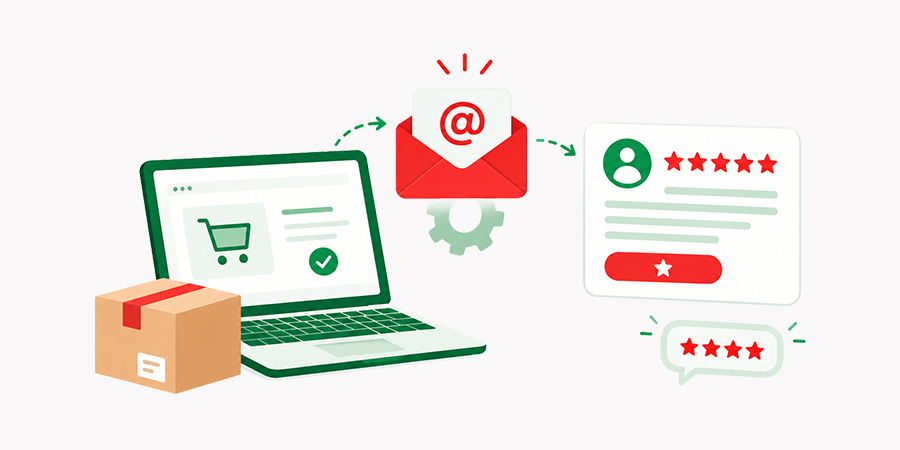
In the list of our effective ecommerce review management tips and tricks, the second one is to automate the entire process of ecommerce review submission.
Do you own a large ecommerce enterprise and receive a large volume of reviews daily? Or do you lack an in-house team to handle positive and negative ecommerce reviews? If yes, then automating the review submission process can help you a lot.
How to Automate the Process?
Online stores can use ecommerce automation tools like Junip, Shopify, and Okendo to ensure that every single buyer receives a review request after a purchase. Apart from this, you can also send an initial review request through email or an SMS reminder if the customer doesn’t respond to your previous review request.
Note: Did you know that 58% of consumers prefer to hear from brands several times a week via SMS? Sending an SMS reminder to your ecommerce clients can be a win-win situation for you!
When to Send the First and Second Review Request?
Ecommerce brands can focus on sending the first request 1-2 days after the product delivery and a follow-up message one week after sending the first request.
Tip 3: Don’t Miss Out on Any Review While Responding!
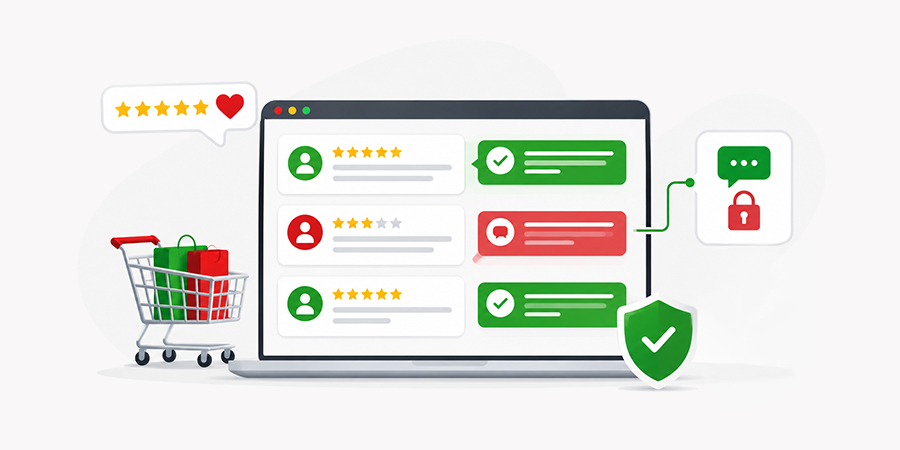
Following effective ecommerce review management tips requires online stores to address every review they receive. Many often avoid responding to negative ecommerce reviews to avoid arguments on public platforms.
However, this is not a correct ecommerce review strategy!
For positive reviews – Ecommerce brands must appreciate those who have shared their detailed shopping experience with your online store. Always showcase that your ecommerce brand is active and truly values your customers’ opinions.
For negative reviews – You must address negative ecommerce reviews and apologise if necessary. You can take the conversation offline to avoid arguing with the reviewers online. Effective negative customer review management strategies require you to improve your offerings based on the data insights collected from the negative feedback.
Tip 4: Promote Customer Reviews where Buyers Shop

Online store review management requires you to promote the glowing reviews throughout your ecommerce website and other third-party channels.
There is no point in collecting positive reviews about your products, customer service, and other facilities your online store provides. You shouldn’t let your good reviews and 5-star ratings passively sit on single landing pages.
Now the question comes: Where to Share Your Ecommerce Reviews?
The following are the three most important places on your website where you can embed your positive customer feedback.
- Product Pages – Allow you to feature dynamic review widgets below the ‘Add to Cart’ button; best for reducing last-minute purchase anxiety for customers
- Retargeting Ads – Feature accurate customer quotes to drive hesitant customers back to your online store
- Checkout & Cart Pages – Helps to showcase micro-reviews or star ratings near the payment gateway window; best way to reduce cart abandonment
Tip 5: Track Every Review on Every Platform!
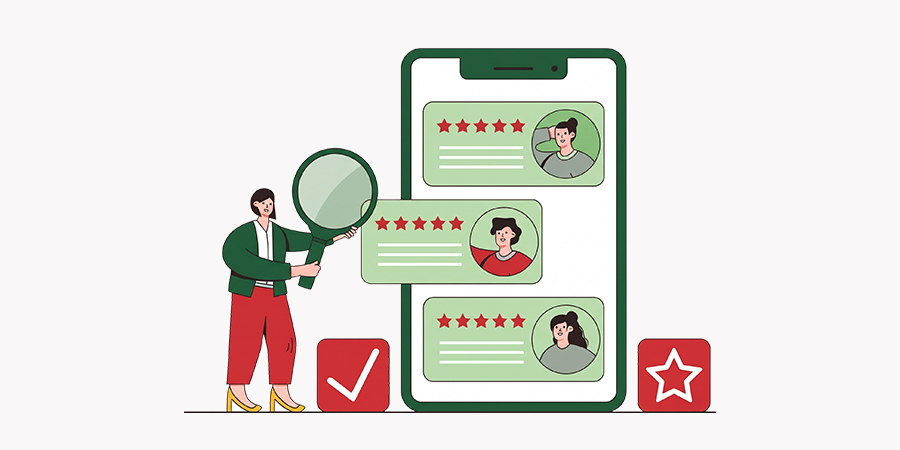
If you want to follow ecommerce review management tips, it requires you to track every review platform possible!
Customers are more likely to talk about multiple products on different platforms. Focusing on just one may lead to missing out on too many opportunities to get valuable customer insights. If you miss a review – especially a negative one- it can adversely impact your ecommerce brand’s reliability.
Why?
Because most of the customers will think that your ecommerce business doesn’t value its customers’ opinions. Many may think that your online store is digitally inactive, so they may think of not sharing any feedback or purchasing any product from your store further.
Now, you must be thinking about how you can track a large number of review platforms.
So, here’s how you can seamlessly track multiple review platforms.
Ecommerce brands can use review management software (we’ve discussed below) to track multiple review platforms through a single dashboard. Such software allows you to set up real-time notifications for new reviews so that you can respond to each within 24 hours of receiving them.
Tip 6: Use Constructive Feedback to Fuel Your Future Growth

Strategic ecommerce review management tips require online store owners to use valuable review insights to improve their offerings and boost their sales.
Even if the reviews are negative – involving criticism or complaints!
We know that addressing and handling negative ecommerce reviews can feel like a daunting task!
But negative reviews can serve as free blueprints for identifying your strategy gaps and improving your ecommerce business operations.
Online stores must politely reply to all complaints and provide their personal contact information to move the conversation offline. If multiple negative reviews mention similar issues, such as ‘broken packaging’ or ‘slow shipping ’, it may indicate a systemic problem in your ecommerce business operations. You can consider authentic and detailed negative reviews as your case studies to train your customer support team regarding how they can handle dissatisfied customers in the best possible way.
Tip 7: Let Your Customer Voices Drive Your Sales

Reviews are user-generated content, which is highly persuasive when it comes to your ecommerce store’s brand reputation management across the digital landscape. Today’s modern shoppers highly rely on peer experiences instead of brand promotions.
According to a 2026 BrightLocal study, 47% of consumers won’t use a business with less than 20 reviews.
Now you can imagine the impact of a solid online review profile for your e-commerce store. Effective ecommerce review management tips require –
- You can incentivise customers to upload video testimonials and product usage guides in exchange for discount coupons on their next purchase from your online store.
- Online stores can develop a dedicated ‘What Our Happy Customers Say’ page on their official website or social media business pages to pin top-rated review graphics.
- You can also prioritise featuring ‘Review of the Week’ in your email newsletter as a part of your ecommerce email campaigns.
Tip 8: Analyse Review Insights to Improve Your Products

Product review sections are the real goldmine for ecommerce stores!
It not only helps you with data-driven product development and digital marketing alignment.
What Can You Do to Analyse Your Review Insights?
- Online stores can detect recurring complaints mentioned in negative customer reviews. Such product or customer service flaws can help you find issues like product sizing, functionality, durability, and material quality.
- You must pay attention to the accurate phrases your customers mostly use to describe a specific product. You can use those words into your custom ad copies and headlines.
Tip 9: Make the Process of Sharing Reviews Seamless & Mobile-Friendly

Strategic ecommerce review management tips require you to make the entire process of review submission easy and seamless. The easier the review submission is, the more opportunities you can get to attract authentic reviews.
What Can You Do Make the Review Submission a Cakewalk?
- Online stores can encourage customers to directly rate and review from their email inbox. They shouldn’t force the customers to log in, navigate to a separate service pages, and follow complex steps to share a review.
- You must include a review request link to the review request email to allow the shoppers directly upload video testimonials from their mobile devices.
- You must ask for a star rating along with quick and short review rather than asking your customers to share lengthy and multi-paragraph questionnaire.
Tip 10: Measure Review Management Performance Regularly

Last but not least, it’s time to measure the performance of your online store review management strategy. Without measuring the performance, you may not have an accurate idea of which ecommerce review management tips are working exceptionally well for your online store and those that are not.
To measure the performance of your online review strategy, you’re required to track certain important key performance indicators.
KPIs to Track –
- Review Volume – Total number of new reviews generated over a specific period
- Average Star Ratings – The overall score your products and ecommerce brand have earned
- Negative-to-Positive Review Resolution Rate – The share of unhappy customers who update their review after your customer support team resolves their issue
- Response Rate – Percentage of customer reviews your customer support team actively replies to
- Review-to-Sale Conversion – How many shoppers who interact with your existing customer reviews convert compared to those who do not
- Review Request Conversion Rate – Percentage of customers who share a review after receiving an automated review submission prompt
5 Best Review Management Tools to Ecommerce Stores Must Consider
Employing helpful review management tools can maximise the benefits of your ecommerce review management tips. Comparing review management tools can help you choose the right platform to manage your ecommerce reviews.
Here are the 5 best review management tools ecommerce businesses can benefit from.
| Review Management Tools | Features to Use |
| Judge.me | • Ideal for startups and SMBs on Shopify or WooCommerce • Supports rich media attachments within customer testimonials. • Allows you to send unlimited automated review collection emails |
| Bazaarvoice | • Best for enterprise-level retailers and global brands • Helps distribute your brand’s product reviews across major global retail partner sites • Offers built-in community question-and-answer modules to address product queries pre-purchase |
| Google Business Profile | • Ideal for local-hybrid ecommerce and D2C stores with physical showrooms • Directly impacts local pack rankings and Google Maps discovery • Helps in easily generating custom review links, and negative reviews can be taken down with Google review removal services |
| Yotpo | • Ideal for Growth-to-enterprise e-commerce brands and seamlessly connects with Shopify, Klaviyo, and major e-commerce backends • Automatically generates review highlights and smart sentiment summaries from customer feedback • Allows customers to upload photo and video feedback directly to product pages |
| Trustpilot | • Best for open-platform and service-wide public reputation building across global industries • Often ranks your reviews higher on Google search pages for brand-name reputation queries • Damaging customer feedback can be removed by professional Trustpilot review removal services |
5 Common Mistakes That Can Ruin Your Ecommerce Review Management Efforts
Till now, we were talking about ecommerce review management tips and tricks that online stores must follow to build a solid review profile across the digital landscape.
But do you know that making certain mistakes can actually ruin your ecommece review strategy plan? Yes, you’ve heard that right! However, identifying these mistakes helps you avoid making them and maximise the benefits of your online store review management efforts.
Here is a list of the 5 most common ecommerce review management mistakes you must avoid.
Mistake 1: Collecting Reviews Without Taking Any Action
Are you just collecting reviews from your happy clients one after another? If yes, you’re missing out on opportunities to attract high-quality leads for your ecommerce business. Collecting positive feedback is completely pointless if you don’t act upon those suggestions. Addressing reviews and taking necessary steps to improve your service and products offers you opportunities to enhance your customer satisfaction.
When you act upon your customers’ recommendations, it shows that your business truly cares for its customers’ opinions.
Mistake 2: Focusing Only on Star Ratings, Not Reviews!
One of the most important ecommerce review management tips says that you shouldn’t just focus on star ratings. Many customers often just share online star ratings to review your products or ecommerce services.
But do you know that Google and even your potential customers consider reviews with text-based feedback fake or incentivised? A star rating fails to tell the whole story, while detailed written feedback reflects the real customer experience. Written reviews help you gain insights about your product flaws, customer service experiences, and shipping speeds. You can implement effective strategies to earn 5-star reviews for your ecommere brand.
Mistake 3: Failing to Monitor Multiple Review Channels
Your ecommerce shoppers are more likely to review your ecommerce business across many popular online platforms. If you’re only tracking and managing the reviews you’ve received on your official store website, it’s a major mistake you’re making. You should also focus on customer reviews received on third-party sites like Trustpilot, Google, Yelp, and Amazon.
When you track every review platform where your customers may share feedback, it helps you quickly handle recurring issues before they turn into a reputational crisis.
Mistake 4: Using Copy-Paste Templates for Review Responses
If you’re constantly copy-pasting robotic scripts as a response to your customer reviews, it tends to feel cold and mechanical. Your potential and existing customers are more likely to detect such generic template responses. It may make them feel unvalued, unheard, and unappreciated.
Ecommerce review management tips require you to have an in-house customer support team to craft tailored responses to customer reviews – no matter whether those are positive, negative, or neutral. When you address the customer by their name and share personalised responses, it showcases that you truly value their opinions.
Mistake 5: Treating Reviews as a One-Way Street
Your customer feedback is what always plays the role of an ongoing conversation between your business and your customer base. If you’re failing to engage back through the reviews, it can create a cold distance between your ecommerce business and your customer reviews. It discourages future shoppers from sharing their opinions.
Reviews are the perfect medium through which you can interact with the reviewers and build a strong community with them. It transforms your everyday buyers into loyal brand advocates who share word-of-mouth recommendations through their reviews.
Conclusion
An effective ecommerce review strategy is no longer an optional marketing technique for online stores. In today’s digital-first competitive landscape, building a solid online review profile and managing them to establish a positive digital reputation is non-negotiable.
Though online store review management is not as easy as it seems, implementing ecommerce review management tips can make the process a little easier and less complex. We hope that our strategic tips and tricks will help you navigate the complexity of ecommerce store review management.
Want to seek professional help? Partner with a renowned online reputation management agency to hire their custom review management services for your ecommerce brand.
Frequently Asked Questions (FAQs)
Here are some frequently asked questions and answers on effective ecommerce review management tips.
- Do customer reviews help increase ecommerce sales?
Ans. Yes, customer reviews can help boost your ecommerce sales. They help you build customer trust, provide social proof, and reduce purchase friction by generating confidence regarding your ecommerce expertise.
- Where should ecommerce businesses display product reviews?
Ans. If you run an e-commerce store, you can consider displaying your product reviews across various touchpoints on your official website, along with external channels. From product listing pages and category grids to checkout or cart pages, you can highlight your reviews to boost conversions. You can also prioritise displaying customer reviews across Google Local Service ads and your Google Business Profiles.
- How often should ecommerce stores monitor customer reviews?
Ans. Ecommerce businesses must monitor their online customer reviews through automated alerts or notifications for every new review submission. They can employ helpful tools for real-time tracking, regular manual review checking, and a deeper monthly review audit.
- How does review management impact how AI platforms showcase my e-commerce brand?
Ans. AI platforms like ChatGPT or Google Gemini use reviews to determine which e-commerce brand to recommend in their user query result summaries. A glowing review profile with authentic customer feedback signals reliability to AI platforms. In such cases, these AI search engines are more likely to rank your products higher and feature them in their shopping recommendations. On the other hand, these tools may filter out your ecommerce brand completely.
- How should my e-commerce brand respond to ‘review manipulation’ or deliberate slander?
Ans. E-commerce brands must act quickly and strategically when facing deliberate slander or review manipulation. It’s important to safeguard your public image and legal positioning in the market. Avoiding an aggressive or emotional response to a troll or a competitor who is spamming your review profile with fake negative reviews is one of the most important ecommerce review management tips.

