





Artificial intelligence increasingly dominates the online search landscape in today’s competitive digital scenario. Around 37% of consumers use AI tools like ChatGPT, Google Gemini, and Perplexity rather than Google for searching anything online. Nowadays, earning positive online visibility is not just about securing a position on SERPs; it’s about winning great visibility across the summaries of AI tools. That’s where AEO reputation management strategies come into play!
Effective reputation management strategies help you control what AI systems say about your brand or your personal identity – how you’re appearing in the AI search results.
Sounds interesting, right?
Optimising your content for appearing in AEO results can help you improve your online reputation as well as reach a broader audience. In this guide, we will talk about how you can optimise your SEO results and effectively manage your onlien reputation.
What Are AEO Reputation Management Strategies?
It refers to the practice of shaping how AI-powered answer engines, such as Google AI Overviews, ChatGPT, Gemini, and Perplexity, describe or showcase you or your business in their summaries. Through effective AEO reputation management strategies, you can make your personal or professional presence appear across the AI search result summaries for conversational questions.
Understanding Answer Engine Optimisation (AEO)
AEO, or answer engine optimisation, refers to a technique of structuring and formatting online content to make it appear on AI platforms as search result summaries. Voice assistants also extract, summarise, and cite your AEO-optimised content in their search results.
Why does it differ from SEO?
Traditional search engine optimisation, or SEO, focuses on ranking your content across search engine results pages and driving more clicks. Answer engine optimisation targets a zero-click experience, making your content appear in featured snippets, voice search results, and generative AI tool search result summaries.
Why AEO Reputation Management Strategies Matter: 5 Key Reasons
AI reputation management makes your reach broader – to those specific audiences who are actively searching for the services you offer or similar brands. Your brand will be accurately cited and recommended by AI-powered search engines – and all the credit will be for your proactive AEO reputation management strategies.
Let’s have a look at the list of 5 major benefits that reputation management with AEO offers.
1. Controls First Impressions in AI Summaries
AI search engines extract data from across the web. Nowadays, a majority of people prefer these AI search engines when searching for something online, as they provide summerized result which is most relevant to the search query.
When you effectively manage your AEO reputation, it helps you navigate your first impression. Managing your footprint across AEO search results helps generate positive overviews about you or your business as well as prevent negative information from distorting your AI summaries.
2. Drives High-Intent Conversions
Most users ask AI search engines for specific product or service recommendations. When you optimise your content for AEO search results, it grabs the attention of ready-to-buy users, driving more conversions for your business. Apart from these, AI tools filter options based on your positive reviews and authority. Good AEO visibility makes your website or content appear in front of buyers.
3. Strengthen Brand Authority
AEO reputation management strategies allow you to strengthen your brand authority. Most AI platforms heavily rely on trusted and authoritative sources. When you optimise your content for AEO results, you can establish your brand as an industry leader through valuable mentions. The higher the brand authority, the more chances you get to make answer engines prioritise your data over others.
4. Mitigates Compliance and Governance Risks
It’s crucial to build a robust AI reputation, as it can reduce the risk of compliance and governance. AI models tend to hallucinate or repeat false data. When you regularly monitor your online reputation across AI search results, it allows you to correct inaccurate facts about you or your business present across AI search result summaries.
5. Helps in Outranking Competitors
While traditional SEO targets standard search engine results pages and makes your online presence rank across them, effective AEO strategies help you win the single, direct answer provided by AI platforms like ChatGPT, Perplexity, Gemini, and more. You can dominate AI responses about your business and take AI visibility away from your rivals.
How Do Answer Engines Build Reputation-Based Answers?
Answer engines, or generative search engines, extract reputation-based answers by shifting the focus from simple keyword matching to evaluating the credibility, authority, and trustworthiness of sources.
Professional AI reputation management services help you optimise your content and ensure a prominent appearance across the AI search engine results.
Here are 6 step process that answer engines follow to build and show reputation-based answers. Identifying the process can help you strengthen your AEO reputation management strategies.
Step 1: Online Information – AI search engines explore the vast internet and assess the raw data to check the accuracy. They explore billions of articles, forums, databases, and documents ot extract accurate data. They generally look for signals like expertise, consensus, and author credentials among different websites.
Step 2: Crawling & Indexing – Answer engines deploy automated bots to continuously discover and copy web pages among the ones they’ve explored. These AI tools crawl through the available content, especially the updated, historically reliable, and highly linked-to websites. During indexing, they store structural metadata, including the author name, the domain, and historical updates to the page.
Step 3: Entity Understanding – AI search engines employ knowledge graphs to understand ‘real-world’ entities, such as people, places, organisations, and concepts. These tools also understand the relationships between these entities. Additionally, they connect the author entity to their institutional affiliations, professional fields, and past publications.
Step 4: Source Evaluation – Before the AI search engines generate the answer response, they score the trustworthiness of the retrieved information by checking domain authority, historical accuracy, and consensus verification.
Step 5: AI Processing – Once the AI search engines filter reputable facts and sources, they examine the information through a Large Language Model or a specialised retrieval-augmented generation (RAG) pipeline. They’re instructed to showcase only the verified and high-reputation snippets and weigh information from tier-1 sources.
Step 6: Generated Answer – Lastly, the AI search engines deliver the final results to the user as a cohesive and natural-language response. The AI tools prominently display citations or links next to facts that allow users to verify the actual source’s online reputation.
8 Most Effective AEO Reputation Management Strategies You Must Implement for a Stellar AI Reputation
Wondering how you can make your online content rank for AI search results?
Optimising your online reputation management across AI search results requires you to follow a strategic approach. Here in this section, we will explain the top 8 AEO reputation management strategies you can follow to effectively optimise your online content to appear in AI search results.
Strategy 1: Build a Strong and Accurate Brand Knowledge Base
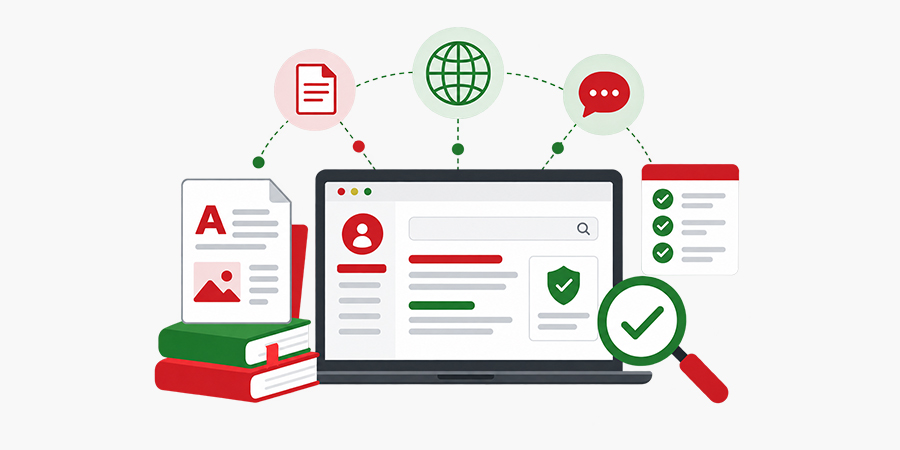
The first thing you need to do is to strengthen your brand knowledge base. You must ensure that AI search engines know about your or your whereabouts.
Create a Centralised Source of Accurate Information
Firstly, professionals and business owners must create a centralised source of accurate information for their personal or professional online presence.
Always remember, you must ensure the information available about you or your business online is consistent across different platforms. If it is not, AI platforms may consider you unreliable.
You need to structure your online content, including your website presence. Through content, you need to clearly explain the following factors –
- Who You Are – Your official company name, legal entity status, and brand identity
- What you do – A precise, one-sentence mission statement along with a brief overview of your operational focus
- Products/services You Offer – Your core offerings using the exact terms your customers use to search for them
- Your Business Locations – Your office address, regional offices, and physical service areas
- Leadership of Your Organisation – Name your executives, founders, and key board members, along with their official LinkedIn profiles
- Industry Experience – Your founding year, years in business, major milestones, and industry awards
- Contact information – Consistent NAP details, including your business name, address, and phone number, along with corporate email addresses
Strategy 2: Create Content to Answer User Questions
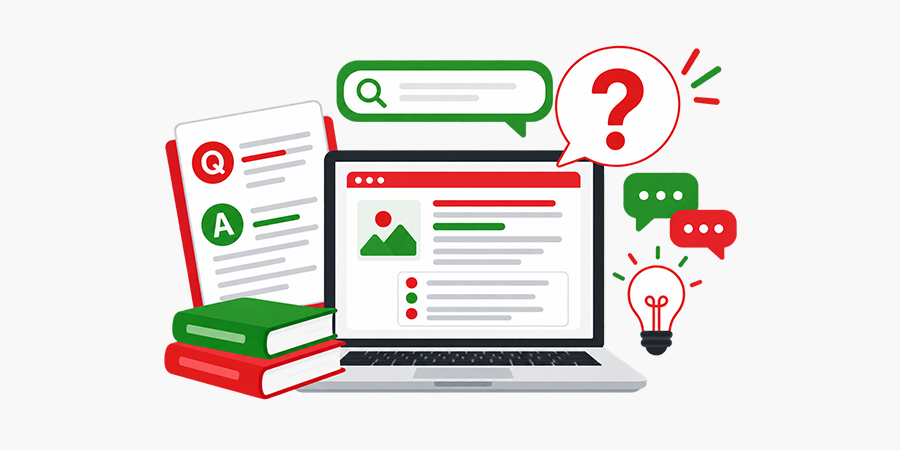
To boost your AEO reputation management efforts, you need to create content that can directly answer user queries. This allows you to rank your content in AI search result summaries.
Target Question-based Searches
To target query-based searches, you need to place a clear and 40-60 word direct answer just below your question headings. We also suggest you to address the consumer doubts like your service pricing, legitimacy, and product feature sets.
You can add a dedicated FAQ page and How-to guide schema markup to help crawlers easily understand your question-and-answer pairs.
Examples of Questions You Can Consider –
- What Does Your [company] Do?
- Is [company] Legitimate?
- How Does [service] Work?
- How Much Does [service] Cost?
- What Makes [company] Different?
- What features are included in [Product/Service Name]?
- Do I need training to use [Product/Service Name]?
- Are there any hidden fees with [Service Name]?
Strategy 3: Create a Comprehensive FAQ Section
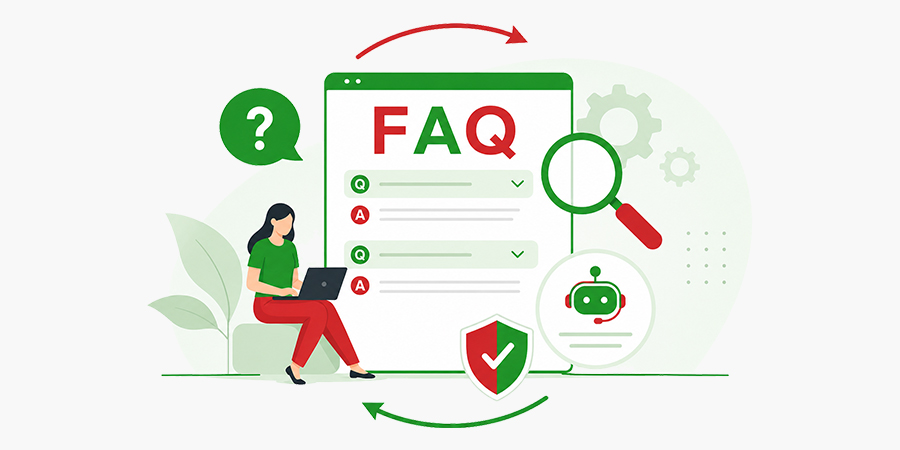
To strengthen your AEO reputation management strategies, you must create a comprehensive FAQ section on your website to resolve common customer queries. You must structure answers related to the core categories of questions your audience asks.
You can cover questions like –
- Frequently asked Questions: These are broad queries related to your niche or basic concepts about your profession or business.
- Brand-related Questions: In these questions, you can explain who you’re, your mission, your business history, and factors that make your company unique.
- Product/service Questions: In these questions, you can cover specific features, use cases, pricing tiers, and capabilities of your offerings.
- Trust-related Questions: Always address security, data privacy, guarantees, and compliance
- Customer Concerns: You can answer common objections, troubleshooting steps, and refund policies through these questions.
- Industry Questions: You can provide expert suggestions and definitions related to complex trends in your niche market through these questions.
Strategy 4: Strengthen Your Entity Signals
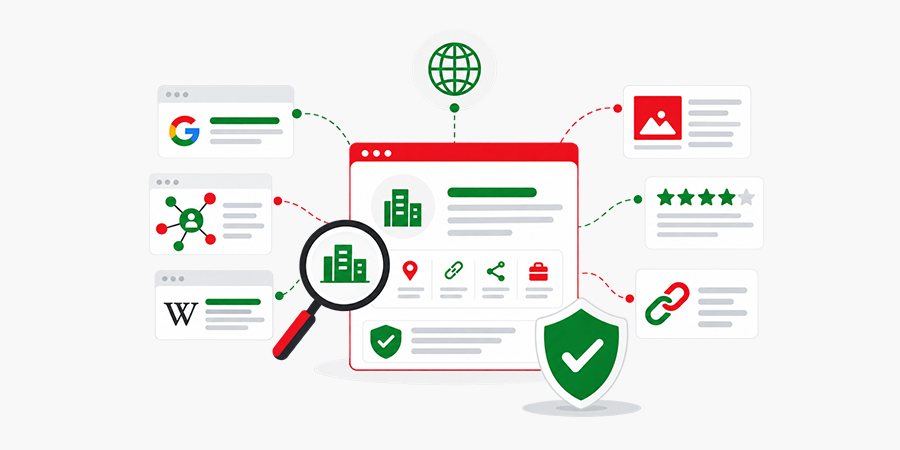
To build a robust AI reputation, you need to rely on clear entity recognition. This allows you to verify who you’re and whether you are credible enough. This requires a strategic approach; you need to follow the steps below:
a. Consistent Business Name
You can use the exact name your business uses across websites, social media platforms, and local directories. Inconsistent business names can confuse AI systems.
b. Consistent Descriptions
We suggest that professionals and businesses keep their organisation bio and core message uniform everywhere, across all platforms.
c. Website Information
Important website information, such as About Us, contact details, and physical or digital presence, must be transparent and accurate. You cannot hide any details, as these are the sections through which your target customers learn about your brand.
d. Author Information
To boost your AEO reputation management strategies, you need to build robust author bios with clear credentials. This is crucial for your website presence and to satisfy E-E-A-T factors, including experience, expertise, authoritativeness, and trustworthiness.
e. Organization Information
You need to implement schema markup on your website to feed structured data to the AI search crawlers. This allows the AI search engines to easily identify your organisation details.
f. Social Profiles
You can link all your active social media channels to your official website. You can add the links to your social media profiles on the ‘contact us’ page or footer of every page of your website.
g. Business Listings
Always maintain accurate profiles on popular and relevant third-party directories. This accurate and consistent business listing helps AI search crawlers easily find your business online and provide the details in their summaries.
h. Relevant Third-Party References
To achieve the full potential of AEO reputation management strategies, showcasing third-party references is important. You can also partner with popular external websites and authoritative sources to earn citations and mentions.
Strategy 5: Publish Authoritative, Original Content

Now, it’s time to publish high-quality, genuine content and promote it across the internet. AI search engines prefer verified and well-structured content with unique insights to showcase them in their summaries.
Types of Content You Can Prioritise
The following are some important types of content that you must prioritise creating.
| Types of Content | |
| Expert Insights | Professional viewpoints that reflect real-world experience |
| Research-based Articles | Findings backed by primary research or verified testing |
| Data-driven Articles | Specific metrics, numbers, and percentages to increase citation rates in AI answers |
| Industry Guides | Comprehensive long-form resources covering core topics |
| Case Studies | Concrete proof of business outcomes with quantifiable results |
| Expert Commentary | Quotes from recognised industry leaders |
| Original Reports | Proprietary data that other sites will want to reference |
| Comparison Pages | Structured comparisons with clear pros, cons, and tables for easy AI extraction |
| Glossaries | Industry terms within 40 to 60 words to target direct answer boxes |
Strategy 6: Build High-Quality Third-Party Mentions
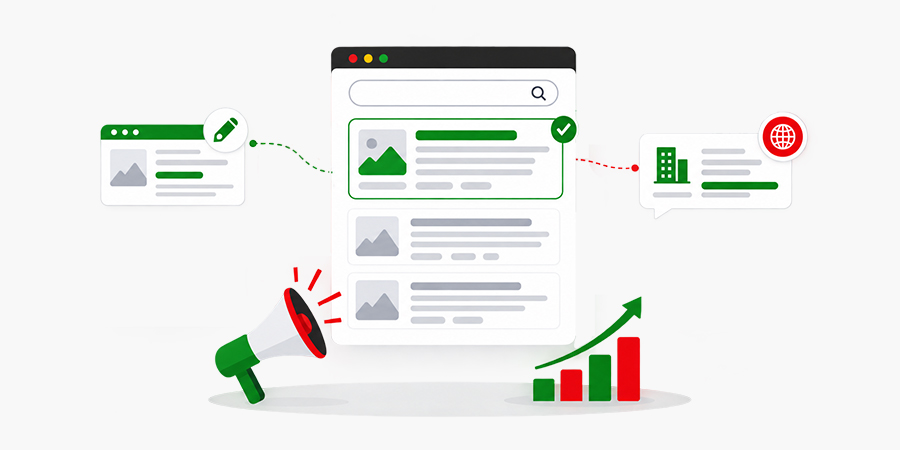
Third-party mentions allow professionals and businesses to build authority across the internet. This proves your brand’s real-world value to AI search engines and their crawlers.
Sources You Can Build Third-Party Mentions from –
- Digital PR: You can pitch your stories to popular media professionals and earn trusted media coverage.
- Industry Publications: We recommend you to write articles for your own websites to focus on your specific niche market.
- Expert Interviews: Through these interviews, you can share your knowledge on podcasts and expert panel discussions.
- Guest Contributions: This helpful content is crucial for effectively implementing AEO reputation management strategies. Because it helps you publish content on other trusted industry sites and reach their audience.
- Industry Associations: You can join official trade groups online to build recognized entity trust.
- Relevant Directories: You can list your business on popular high-authority local and industry directories to allow AI crawlers easily find your location and business details.
- News Coverage: Build interpersonal relationships with popular journalists or media persons working in your niche. This will help you earn mentions in daily news and press updates to boost your brand credibility.
Strategy 7: Address Negative or Inaccurate Search Information
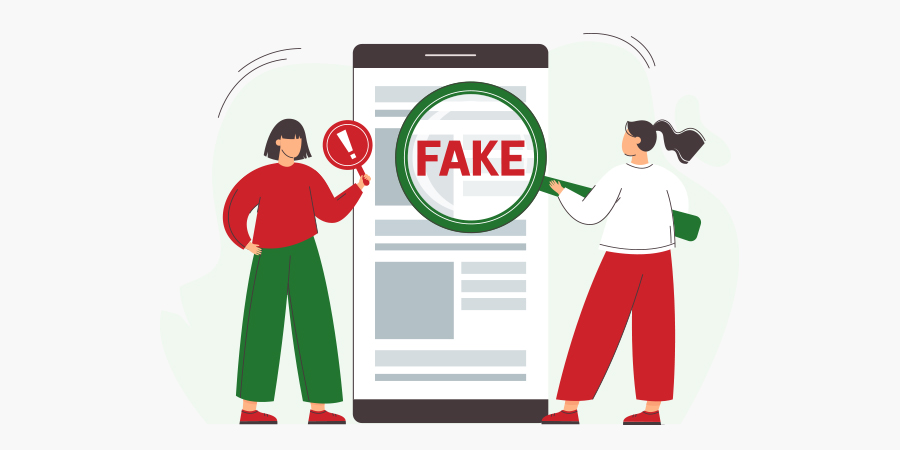
Addressing negative online content and taking it down is crucial to boost your AI reputation. Answer engines majorly rely on trust and authority. AI search engines may extract negative, outdated, false, and malicious data about your personal and professional presence.
Effective AI reputation management strategies can help you identify this inaccurate information and take it down at the earliest.
If it happens, it can severely damage your online reputation and visibility, eroding potential customer trust. The following are some important content types that you must check to identify their context.
Content You Need to Check –
- Outdated Information – Old pricing, retired products, former executives, or defunct brand messaging
- Factual Inaccuracies – Wrong specifications, false statements about your offerings, or incorrect historical data
- Misleading Claims – Content that showcases your brand’s offerings irrelevant or misrepresents what your product or service actually does
- Duplicate Content – Mirrored articles, copied product pages, or scraped blogs
- Defamatory Content – Malicious, unverified, or deliberately false statements
- Incorrect Business Information – Discrepancies in your name, address, and phone number (NAP) data across online directories and maps
How to Remove Incorrect Online Information?
Follow these steps to successfully take down negative online information and boost your AEO reputation management strategies.
Step 1: Contact Publishers
You need to reach out to the webmasters, editors, and bloggers who have published the incorrect data. You can send them a polite request to remove the information or update it accordingly. Don’t forget to mention the reason why you want the content removed and how it is damaging your online reputation.
Step 2: Request Corrections from the Source
If the content is user-generated, you can directly reply with verified data. You can also message the original author to provide the accurate details. Deleting the content from the source itself can guarantee its removal from the entire SERPs.
Step 3: Use Platform Reporting Mechanisms
You can also use formal content reporting tools if the content is published on uncooperative sites. For this, you need to submit flags for copyright infringement, content policy violations, and terms of service breaches.
Step 4: Request Removal based on Legal Grounds
Do you know that you can also remove negative content online on legal grounds? Yes, you’ve heard that right! If the specific content has violated copyright policies, involves trademark infringement or severe defamation, you can remove it on legal grounds. Consult with a legal professional and issue a formal content take-down notice.
Step 5: Publish Accurate and Authoritative Information
The best defence you can do against the negative content is to publish accurate and authoritative content to boost your SERP rankings. Correctly structured content can help you rank your website at the top of SERPs – so that the AI search engines naturally prioritise your content and verified data to showcase in their summaries rather than the negative information available online.
Strategy 8: Continuously Monitor Answer Engine Results
Now that you know how you can optimise your online presence for SEO results, let us tell you that this is not the end. Effective AEO reputation management strategies involve proactive content optimisation and beyond.
You need to continuously monitor your answer engine results to detect any negative content appearing.
Monitor How You or Your Brand Appears in –
- AI-generated Answers of ChatGPT, Gemini, Perplexity, and the like
- Search Answer features
- Featured Snippets, AI Overviews, and knowledge panels
- Online forums like Reddit, Quora, and other review sites
- AI-powered Search Experiences
- Relevant Third-party sources
How Can Businesses Improve AEO Visibility: Top 4 Tips to Follow
Now that you have a clear idea of how you can optimise your online presence for AEO results, we will provide you with a list of tips. Following these tips can help you leverage the highest potential of the above-mentioned AEO optimisation techniques and boost your AEO visibility.
Check out the four most helpful tips that businesses must follow to improve their visibility across AI search result summaries.
Tip 1: Provide Concise Answers
AI search engines mostly prioritise clear, direct, and brief explanations rather than displaying long paragraphs. Thus, we suggest you keep your core answers within 40-60 words. You must use simple language and clear sentence structures, avoiding complex jargon as it can confuse AI search engines.
Tip 2: Answer the Question Immediately
To boost your AEO reputation management strategies, you need to add the most critical information at the top of every page or section. Always structure your content like this: add an introduction with a bolded conclusion or direct definition. To do this, you can adopt an ‘inverted pyramid’ style for writing your answers. So the conclusion will come first, and the supporting details will be mentioned below.
Tip 3: Avoid Unnecessary Introductions
We suggest you skip the fluff, lengthy historical context, and pleasantries while curating your answer. Never start a section with phrases like ‘In today’s digital world…’ or ‘Many people think that…’ to avoid unnecessary introductions. You should directly talk about the facts to prevent AI crawlers from getting lost in too much text.
Tip 4: Use Structured Content
Always structure your content well to allow AI search engines to read your text easily and effortlessly. Here’s how you can structure your content strategically to boost your AEO reputation management efforts.
| Elements to Add | What It Is? |
| Summaries | Short overviews to highlight the main takeaways of a section or article |
| Definitions | Brief explanations to clarify specific terms or concepts |
| Step-by-step instructions | Ordered guides to show how to complete a task or implement a strategy |
| Bullet points | Use lists for sequential steps or types of anything related to the topic |
| Numbered lists | Sequential items used when order or count matters |
| Tables | Comparisons or brief descriptions of certain sections |
| FAQs | Answer common queries asked by potential or existing customers |
5 Common Mistakes You Must Avoid While Implementing AEO Reputation Management Strategies
Now we will talk about certain common mistakes that you should avoid while optimising your content for AEO results.
Making these mistakes can ruin your AEO reputation management efforts and make negative content appear as negative content in AI search results. Check out the list of 5 most common AI reputation management mistakes that you must avoid.
Mistake 1: Focusing Only on Traditional Keywords
Traditional SEO heavily relies on matching keywords and search volume with user queries. On the other hand, AEO focuses on natural language processing (NLP) and user intent. As AI search engines look for direct answers rather than complex and conversational questions, optimising your content for fragmented or traditional keywords can ruin your opportunities to appear in AI search results.
What to DO? You must answer specific questions like ‘who, what, why, and how’ that your target audience commonly ask.
Mistake 2: Publishing Thin or Generic Content
AI models are generally trained to prioritise authoritative and high-quality content. Thus, you must not publish superficial and generic articles with no value or relevance to the actual data. Generic content can never be prioritised by AI search engines.
What to Do? Create content that demonstrates your proven expertise in a niche market, original expertise, first-party data, and unique case studies that AI platforms cannot easily find anywhere else.
Mistake 3: Leaving Outdated Information Online
Is there any outdated information regarding your business across the internet? If yes, it can ruin the potential of your AEO reputation management strategies. Answer engines like ChatGPT and Google Gemini prioritise accuracy and recency. Leaving outdated content online unmanaged can lead to inaccurate AI-generated summaries about you or your business.
What to Do? We suggest that you remove or update your old product specifications, defunct addresses, outdated pricing, and legacy press releases that are available online. You can implement proactive strategies to suppress negative search results from AI platforms.
Mistake 4: Trying to Manipulate AI Answers
If you attempt to trick or manipulate large language models by stuffing keywords, adding hidden text, or employing artificial consensus, it can backfire. It can even result in your website domain being filtered out or deprioritised by the data crawlers.
What to DO? Instead of performing malicious practices, you should focus on implementing genuine and honest strategies to rank your content in AI search results.
Mistake 5: Using Fake Reviews or Fake Mentions
All it needs is authentic validation – if you’re promoting fake reviews or mentions, it can ruin your online reputation as well as your ranking across AI search results. You should never flood social media platforms, review platforms, or online forums to encourage a temporary boost in your AI reputation.
What to Do? You must generate genuine reviews from your satisfied clients and provide them as social proof across the internet, driving more customer acquisition.
Conclusion
Just like your traditional SEO techniques, optimising your content for answer engines has also become extremely crucial for professionals and businesses. However, appearing in AI search result summaries and achieving a stellar AI reputation is not a cakewalk!
It requires you to follow a strategic approach. We hope that our comprehensive guide on effective AEO reputation management strategies helps you navigate the complex AEO landscape. Follow our strategies to leverage the ultimate potential of your AI presence.
Still confused about where to start? Partnering with a reliable online reputation management agency can help you effortlessly boost your AI reputation and make your online presence appear in AI search results.
Frequently Asked Questions
Here are some frequently asked questions and answers related to an AEO reputation management strategy plan
Ans. AEO can significantly influence which information about your brand appears in AI-generated summaries and which may not. While positive, consistent, and authoritative content can strengthen your brand reputation across AI platforms, outdated or negative information can harm your AI image.
Ans. Yes, reviews can contribute to how AI search engines understand customer sentiment, brand credibility, and the quality of a business. When you have a glowing online review profile, it increases the chances that answer engines recommend your business in their search results.
Ans. Strategic content marketing establishes your brand as a reliable source of information. Content marketing requires you to write helpful articles, expert insights, case studies, FAQs, and original research to give AI platforms or AI search engines more high-authority information to cite.
Ans. Your AEO search results vary depending on your existing reputation, content quality, website authority, and market competition. When you implement effective AEO reputation management strategies, it may take from 2 weeks to 3 months to show initial AI mentions and positive changes in sentiment. On the other hand, you may witness measurable and compounding business impact within 3-6 months.
Ans. Your business can build trustworthy online mentions for AEO by partnering with credible and authoritative websites, industry publications, review platforms, and relevant communities. You can prioritise securing valuable media coverage, encourage authentic customer reviews, and maintain consistent brand information.

