





When people plan a family dinner at a fancy restaurant or order meals from an eatery, most of them prefer to select a restaurant based on its reviews across online platforms. Building your restaurant’s online review profile must be your ultimate priority, as 53% of 18- to 34-year-olds consider that online reviews largely impact dining decisions. Following beneficial restaurant review management tips is no longer an option – it has become a necessity to grow your food business, especially in today’s highly competitive hospitality industry.
A restaurant’s online image can be its greatest asset, which can be established through a glowing guest review profile. It’s a big challenge to face for restaurant owners as well!
Want to know the secret to managing your restaurant reviews? Let’s dive into our list of online review management tips to keep your restaurant’s image shining brightly in the digital world.
What Is Review Managment for Restaurants?
It refers to the comprehensive process of generating, responding to, promoting, and monitoring customer or diners’ feedback your restaurant receives across digital review platforms. A restaurant is more likely to receive or encourage reviews from its diners on Google, Yelp, TripAdvisor, OpenTable, and other third-party food delivery platforms.
What Can Online Reviews Do? Online reviews for restaurants are considered a core driver of marketing for your food business. Additionally, it makes your restaurant prominently visible for relevant local search queries and signals to search engines that your restaurant is popular among diners.
The food and ambience at your restaurant are great, as are its services. But what if your prospective customers have no idea about your expertise?
Effective management of customer reviews allows restaurant owners not only to generate authentic feedback from happy diners but also to promote it across your website or third-party channels. Following restaurant review management tips directly helps you acquire new guests and fill your table booking calendar.
5 Key Reasons Why Your Restaurant Must Prioritise Effective Review Management
Effective review management highly influences your potential guests’ decision to visit your restaurant – it significantly impacts your restaurant’s public opinion and business metrics.
What your online audience perceives about your restaurant – yes, you can control this also.
According to a 2025 SevenRoom study, 94% of diners use online sources like Google, social media platforms, and other online channels to find new restaurants. They mostly track those platforms to check your restaurant’s online customer reviews.
In this section, we’ll talk about why you must prioritise review management.
1. Builds Trust Among Potential Diners
A restaurant business thrives depending on its guests’ trust and loyalty. An effective restaurant review strategy ensures a strong online review profile, followed by a stellar brand reputation. It requires you to generate positive and authentic reviews from happy diners.
Additionally, it assures potential customers that your eatery consistently delivers great food and ambience along with exceptional customer service. This encourages your diners to trust your reliability and brand credibility.
2. Improves Local Search Visibility
Search engines like Google prefer ranking restaurants with a positive online reputation as well as a glowing online review profile. It significantly rewards active engagement and frequent user signals.
Restaurant review management tips require you to consistently respond to every piece of feedback, which significantly optimises your restaurant’s local SEO footprint. In a nutshell, effective review management keeps your flooring brand visible when nearby diners search for great dining options.
3. Encourages Repeat Visits
A restaurant review strategy helps build a strong online presence, which is what a diner looks for before they choose a place to have a great dining experience. Think about the last time you decided where to eat.
Did you check the online reviews of top restaurants? If yes, you’re not alone! A restaurant’s online review profile offers the golden opportunity to leave a memorable first impression, attracting new guests and ensuring repeat guest visits.
4. Provides Insights into Customer Expectations
When your customers share reviews on your website and other online platforms, it helps your restaurant gain valuable insights related to real customers’ experiences. Customer reviews act as a continuous feedback loop regarding your restaurant’s menu, food quality, and ambience.
Addressing positive and negative reviews can help you identify the factors your diners are impressed with and those failing to create an impact. Addressing the issues allows you to refine or improve your customer service.
5. Uncovers Operational Blind Spots
Following effective restaurant review management tips requires you to professionally handle negative customer reviews. We all know that negative reviews function as early warning signs of a full-blown reputation crisis.
When you closely address and track negative review trends, you get the opportunity to identify recurring issues like customer service insufficiencies, staff-training gaps, and cleanliness issues. You can rectify these issues and fix the underlying problems present in your restaurant operation.
12 Most Helpful Restaurant Review Management Tips to Attract More Diners
If you’re a restaurant owner, managing your customer reviews is a huge task for you! Every day, hundreds of customers can visit your eatery and have different experiences. It may seem like a challenge when you try to handle all the reviews at once!
Implementing beneficial reputation management strategies may not be enough in today’s digital-first landscape. Following helpful restaurant review management tips can help you ace the game. Let’s dive into the list of 12 most helpful tips for restaurant review management!
Tip 1: Collect Reviews to Make Your Restaurant the Talk of the Town!
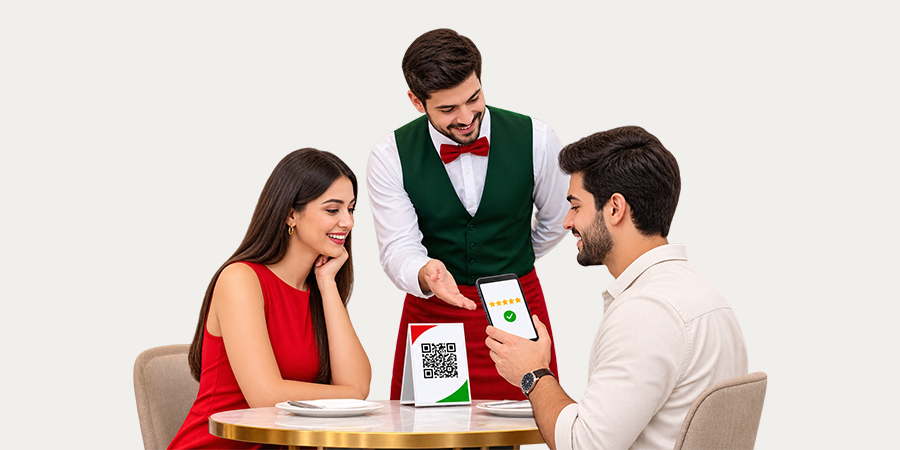
To manage the reviews, you need to collect authentic feedback from your satisfied diners.
- Follow the ‘Just Ask’ culture! You must train your staff, who are generally present on the floor, to request reviews when the satisfaction level of the diners is at its peak. They must know what the high point of a dining experience is, especially right after serving a dessert.
- Restaurants can place well-designed QR code cards on every table or customised bill holders.
- You can also train your waiters with a warm closing script. For example, they can just communicate: “If you loved the dishes we served and your experience today, don’t forget to share a quick review on Google!”
Tip 2: Turn Google Reviews into Your Restaurant’s Digital Welcome Card
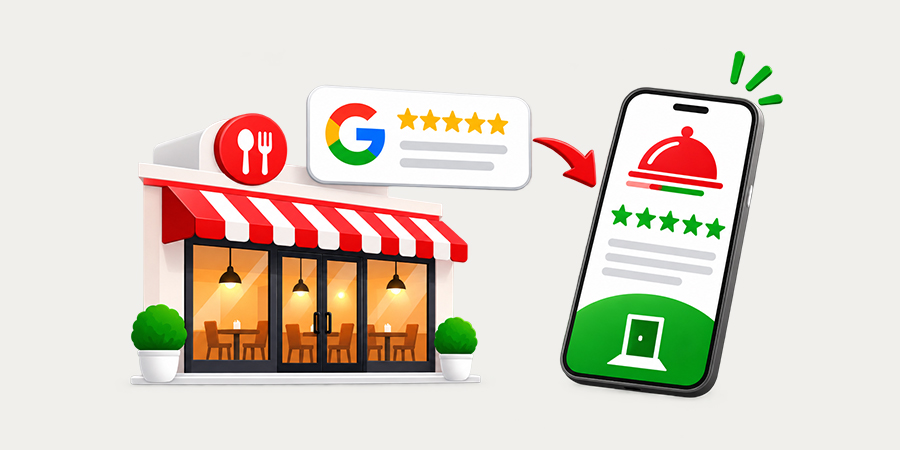
Following restaurant review management tips requires you to turn your Google reviews into the best way to acquire new guests.
- Firstly, every restaurant must claim its digital real estate! You need to optimise your Google Business Profile by including accurate location details, high-resolution images, and updated business hours.
- You can pin your most glowing diner feedback to the top of your Google Business Profile to ensure the hungry searchers come across the review first.
- Don’t forget to link your direct table reservation system and a digital menu card to your GBP listing. It can help you turn your reviews into immediate bookings.
Tip 3: Never Miss Any Review from Your Guests

Without implementing an effective restaurant review strategy, owners may not earn the opportunity to leverage the complete potential of their customer reviews. Be it a great appreciation for your ambience or a criticism for poor food quality – restaurant owners must address every piece of feedback they receive.
- You must set up instant alerts across major review platforms, such as Google, TripAdvisor, food delivery apps, and any other specialised local dining apps.
- You can set a strict internal deadline for your review management team for acknowledging every piece of review within 24 hours after receiving it.
- You can even assign a specific team member to own a review pipeline to ensure a consistent brand voice across all the platforms.
Missing out on even one specific review platform can make you lose opportunities to identify operational gaps, address recurring concerns, and offer relevant resolutions.
Tip 4: Turn One-Star Reviews into Five-Star Opportunities
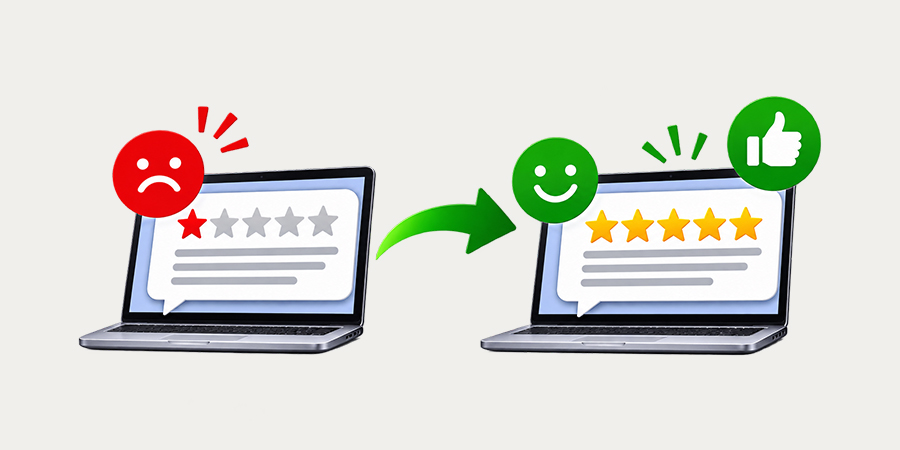
Received negative feedback for poor waiter behaviour?
Don’t worry! You can turn this 1-star rating into an opportunity to regain your customers’ trust and win a 5-star review for your restaurant. One of the most important restaurant review management tips is to turn a poor customer experience into an opportunity to identify and fix the issue.
- Let the issue cool down a little! Reacting just after you receive a negative review can make things worse. Always respond professionally and calmly with an empathetic tone, no matter how harsh the review sounds.
- If there is a fault on your end, you must acknowledge and apologise for the same without being defensive.
- Take accountability gracefully and provide a personal contact detail to request the reviewer to initiate further communication offline.
- Resolved the issue? Don’t forget to send a personalised invitation to the reviewer for a better dine-in experience.
- If you’re struggling with fake online reviews that are damaging your restaurant reputation, you can hire professional online review removal services to successfully take down the damaging reviews.
Tip 5: Let Your Best-Selling Dishes Advocate Your Restaurant Through Customer Testimonials
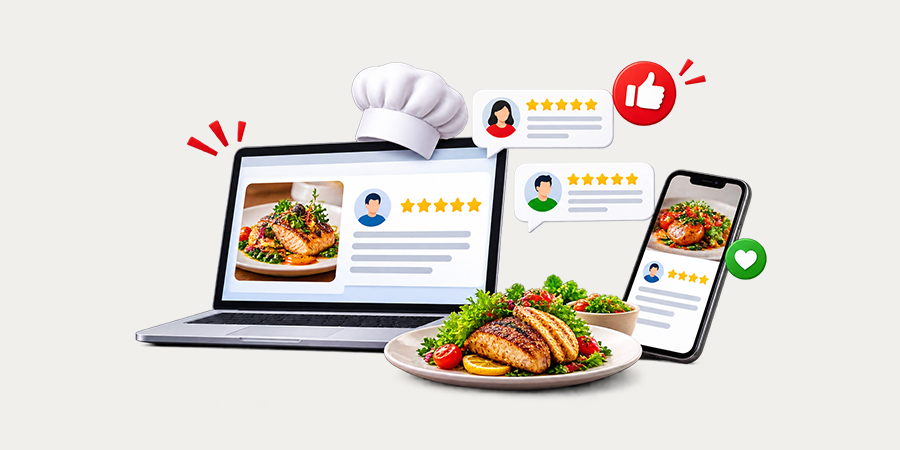
Effective restaurant review strategy implementation requires you to let your customer service do all the TALKING!
When you provide a 5-star experience, you don’t need to worry about receiving poor reviews.
- Have a digital or physical menu on your restaurant’s tables? Embed your glowing 5-star ratings for different dishes next to the specific dish name mentioned on the menu.
- Following restaurant review management tips requires you to post positive text reviews regarding specific signature dishes with high-quality user-generated photos on your Facebook and Instagram pages.
- Craft a ‘guest-favourite spotlight’ on your website’s homepage. You can feature such a dedicated section for your restaurant’s site, highlighting those dishes as ‘must-try culinary masterpieces!”
Tip 6: Keep Your Restaurant’s Online Image Fresh with Regular Review Monitoring
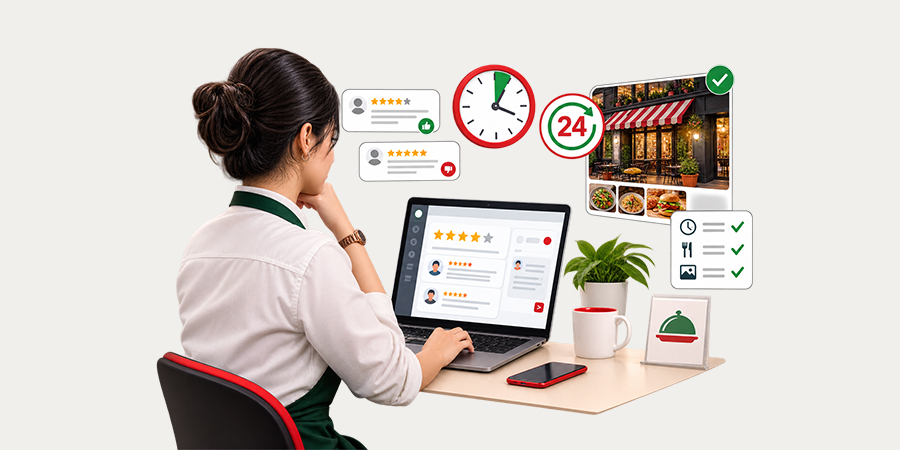
It’s important for your restaurant to keep its brand image fresh and top-of-mind for your customers always, even when a customer is not visiting your restaurant for a while.
- You need to dedicate at least 5-10 minutes every day to track your online reviews across major platforms like Google Business Profile, Yelp, or TripAdvisor. You can utilise this time before your rush hours begin!
- Received a review? Try to address them within 24 hours to show that your restaurant is active, responsive, and cares about every diner’s experience.
- Restaurants must always update their online photo galleries, business hours, and seasonal menu changes. This can help them ensure their digital storefront (websites and online profiles) aligns with their restaurant’s real-world vibe.
Tip 7: Turn Customer Feedback into a Secret Ingredient for Better Dining Experiences

Your diners’ reviews have everything you need to know about your restaurant operation and customer service. Regularly tracking feedback is one of the most important parts of restaurant review management tips. It allows you to identify major positive and negative aspects of your restaurant that you may not be able to detect otherwise!
- Imagine you have received quite a lot of reviews about slow billing times, long reception waiting times, or overly salty food. You can transform these mentions into quick actions by conveying all these issues to your management, staff, and operational team during pre-shift meetings.
- You can also fix food or serving issues immediately after you receive two or more reviews about the same.
- If a diner complains about a specific aspect of your restaurant or shares a suggestion in their review, you can request that they visit your restaurant to experience the upgrade.
Tip 8: Manage Your Online Customer Reviews with Helpful Tools

We have talked about certain helpful review management tools in the next section. Employing these tools can help you manage your diner feedback like a PRO!
- While using any tool, you must turn on instant push notifications. So that you never miss an opportunity to address an urgent complaint that requires your attention.
- You can extract reviews from your social media business pages, food delivery apps, and search engines to display them on a unified or centralised dashboard.
- Following restaurant review management tips allows you to print dynamic QR codes on bills, brochures, e-cards, or other traditional advertising materials to guide happy customers straight to your preferred review platform with a single tap.
Tip 9: Build a Five-Star Review Profile by Training Your Restaurant Staff
Do you know that restaurant staff can actually help you build a glowing, 5-star review profile?
Yes, you’ve heard that right! Let’s learn how you can train your staff to collect more reviews from the diners.
- You can provide a welcome script to the host and food servers on how they can warmly welcome or greet every diner right from the front door.
- Restaurants can train the floor staff to resolve small issues on the spot and prevent those from becoming a diner’s dissatisfaction. For example, they must have the authority to clean a spilt drink or swap an unsatisfactory dish on the spot before the situation turns into a poor diner experience.
Tip 10: Stay Ahead of Competing Restaurants with Smart Review Analysis

One of the most beneficial restaurant review management tips is to implement an effective restaurant review strategy plan to outrank your market competitors.
- Track your competitor’s online review profile to identify the reasons why they’re receiving 1-star or 5-star reviews.
- Perform detailed research on the most popular menu items, dishes, specific customer service, or any other factors to see what about those competitor restaurants is impressing local diners.
Tip 11: Help Your Restaurant Get the Spotlight in the Local Market
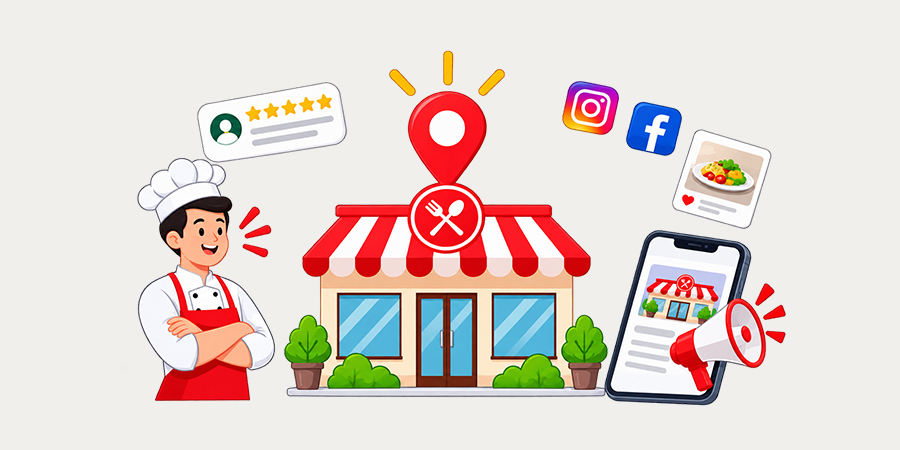
If you focus on local diners, you must drive enough foot traffic to your restaurant. Without a strong local presence, your restaurant may not be able to get the limelight it deserves.
- You must keep your restaurant’s NAP details, including the name, address, and phone number, along with the cuisine tags, identical and consistent across all local online directories.
- Don’t forget to post your mouth-watering user-tagged photos of your popular dishes on Instagram and Facebook. You can also tag local reviews mentioning those specific dishes with those photos.
- Following restaurant review management tips requires you to encourage your local food bloggers to collaborate with your restaurant and promote their table experience on their social media.
Tip 12: Turn Happy Diners into Loyal Regular Customers with a Continuous Feedback Loop

Another crucial restaurant review strategy is to turn the happy one-time visitors into loyal regular customers. And it can only be achieved with a continuous feedback loop.
- Restaurants can send a gentle automated SMS or email within 2 hours of thanking the diner at the door during check-out. You can also ask them about their dining experience at your restaurant.
- You can also send personal invitations to your most frequent reviewers to test our seasonal menu rollouts. Additionally, inviting them for a VIP food testing night can be a great idea!
- Always ensure that you promptly respond to reviews shared by the one-time visitors to make them feel heard, valued, and appreciated.
Top 5 Review Management Platforms You Must Employ for Your Restaurant
Helpful tools can actually make your restaurant review management easier, maximising the impact of effective restaurant review management tips. As it’s not a one-time strategy, employing tools can actually help you speed up the process and ensure accuracy.
From Google to the industry-specific platform OpenTable, comparing the major review management tools and choosing the right one is important for your restaurant. Here is a list of the top 5 review management platforms restaurants must consider prioritising.
| Review Management Platforms | Features to Use |
| • Ideal for local discovery, map rankings, and AI-driven search visibility • Allows restaurant owners to publicly reply to customer feedback and publish photo or menu updates. • Helps in collecting fresh reviews and posting daily updates | |
| Yelp for Business | • Best for high-intent food seekers, local reputation control, and community engagement • Connects with millions of daily users actively searching for nearby dining and food experiences • Enables private messaging to resolve customer complaints before or after a review goes live on the platform |
| TripAdvisor | • Best for tourist-heavy spots, fine dining, and global traveller reviews • Allows owners to post official, public management responses to address traveller feedback • Compares your restaurant’s star rating and ranking against competitor restaurants in your local area |
| OpenTable | • Ideal for reservation-driven feedback loops and post-meal surveys • Automatically sends feedback requests to diners shortly after their reservation ends • Links review history directly to guest reservation profiles to personalise future service • Allows taking down damaging or fake feedback with professional OpenTable review removal services |
| MalouApp | • Ideal for multi-location restaurant groups and scaling hospitality brands • Aggregates and monitors reviews from Google, TripAdvisor, Facebook, Uber Eats, and 50+ other channels in one place • Helps in crafting location-specific, context-aware reply suggestions personalised to local brand voice |
5 Most Common Review Management Mistakes Restaurants Often Make
Now that you have a clear idea of how to manage your restaurant’s online reviews effectively, identifying common mistakes can help you avoid making them and maximise the benefits of restaurant review management tips.
Here in this section, we will talk about the 5 most common mistakes restaurants often make. Restaurant owners must avoid making those mistakes to prevent a damaging impact on their brand reputation.
Mistake 1: Ignoring Negative Feedback from Diners
Most restaurant owners often avoid addressing or responding to complaints and negative feedback from their unsatisfied diners. If you stay silent about criticism, it may showcase a lack of care on your end. It can upset the diner who has shared the negative reviews as well as your potential customers browsing your website.
What to Do? You must acknowledge your customer complaints promptly, within 24 hours of receiving them. You can request the diner to move the conversation offline and resolve the issue at the earliest.
Mistake 2: Aggressively Responding to Negative Reviews
Have you ever snapped at or blamed a customer who has shared a negative review about your restaurant? If yes, let us tell you that it’s a huge mistake! Blaming an unsatisfied customer for sharing their real, negative experience at your restaurant makes your management appear unprofessional. It can even deter your future prospects.
What to Do? Always keep yourself calm while handling negative reviews. It’s one of the most beneficial restaurant review management tips to apologise for the unpleasant experience the diner had at your eatery.
Mistake 3: Posting Fake Reviews/Offering Incentives to Guests for Positive Reviews
Search engines like Google, online review platforms, and even modern customers can easily spot unnatural or fake reviews by identifying patterns. If your review profile suddenly witnesses a spike of 5-star reviews, review platforms may consider that you’re posting fake or purchased reviews to boost your digital reputation. But it can actually damage your restaurant’s long-term brand credibility.
What to Do? Restaurant owners must prioritise organically generating authentic customer reviews. They can politely ask in person or send automated review requests to a diner after their visit. They can also print QR codes on the food bill to make the review submission process more seamless.
Mistake 4: Using Generic Responses for Every Review
You should never copy-paste all your review responses. Just a generic ‘Thanks for Visiting!’ message to every single review may not create any impact on your diners. Do you know that 52% of consumers tend to switch brands if a company doesn’t make any effort to personalise communication to them? Generic review responses often seem robotic and insincere! It can even make the reviewer feel less valued and unheard.
What to Do? You must talk about the specific experience of the diner at your restaurant while responding to his/her review. Following restaurant review management tips requires you to mention specific dishes they’ve ordered, any special service moments, or any staff name mentioned by the reviewer.
Mistake 5: Failing to Monitor Multiple Review Platforms
A restaurant can receive reviews on multiple platforms, including Google, review platforms (TripAdvisor/OpenTable), social media platforms (Facebook), and food delivery apps (Swiggy/Zomato). If you’re just focusing on one single platform to monitor your customer feedback, you’re missing out on too many opportunities to acquire new diners for your restaurant.
What to Do? You can use centralised restaurant review management tools to set up notification alerts across all the major review platforms. So you can get a notification each time your restaurant receives a review. Such tools allow you to track all your online brand mentions in one place.
Conclusion
Excelling in effective review management for your restaurant is not just about managing your public relations. When you strategically manage your online reviews, it directly drives exceptional foot traffic to your restaurant and ensures long-term revenue growth.
A restaurant is more likely to offer both positive and negative experiences for diners.
However, consistently monitoring all types of customer feedback, including criticism and appreciation, along with unfair reviews, can be a daunting task. We hope that our restaurant review management tips help you transform your review profile into a powerful marketing tool for your restaurant and build a loyal dining community.
Still confused? We recommend that you partner with a renowned online reputation management agency to seek their professional review management assistance.
Frequently Asked Questions
The following are some frequently asked questions and answers related to restaurant review management tips.
- How long does it take to improve a restaurant’s online reputation?
Ans. There is no single fixed timetable to improve a restaurant’s online reputation. The timeline completely depends on how fast you can fix your restaurant’s underlying operational issues. It also depends on how many new reviews you have generated.
- What is review gating, and why should restaurants avoid it?
Ans. It refers to the prcatice of pre-screening your customers based on their sentiment before you ask for their review on a public platform. If you want to follow restaurant review management tips, it requires you to use review gating to send a survey or QR code through SMS or email asking if their dine-in experience was good or bad. When the customers share a happy experience, they’re automatically diverted to a public platform like Google or TripAdvisor. On the other hand, unhappy clients are mostly diverted to a private complaint form.
- Can offering free food or discounts in exchange for reviews backfire on my restaurant?
Ans. Yes, it can negatively impact your restaurant’s online reputation. If you offer incentives, free food, or discounts to your diners in exchange for positive reviews, it can trigger severe penalties and even your account suspension in the worst-case scenario. Your restaurant’s profile can be permanently banned on major platforms like Google or Yelp due to a platform policy violation.
- What should you do with a 5-star review that has no text?
Ans. When your restaurant receives a 5-star review with no written text, you can either briefly acknowledge it or leave it unaddressed. Because Google doesn’t require a response to star ratings.
- How can my front-of-house staff help collect more reviews?
Ans. You can train your front-of-house staff to collect more reviews by asking the guests for their feedback during the final billing, especially when the experience is still fresh in their minds. You can assign your staff to display small tent cards or receipts with quick-access QR codes that can guide diners to your preferred review page.

